
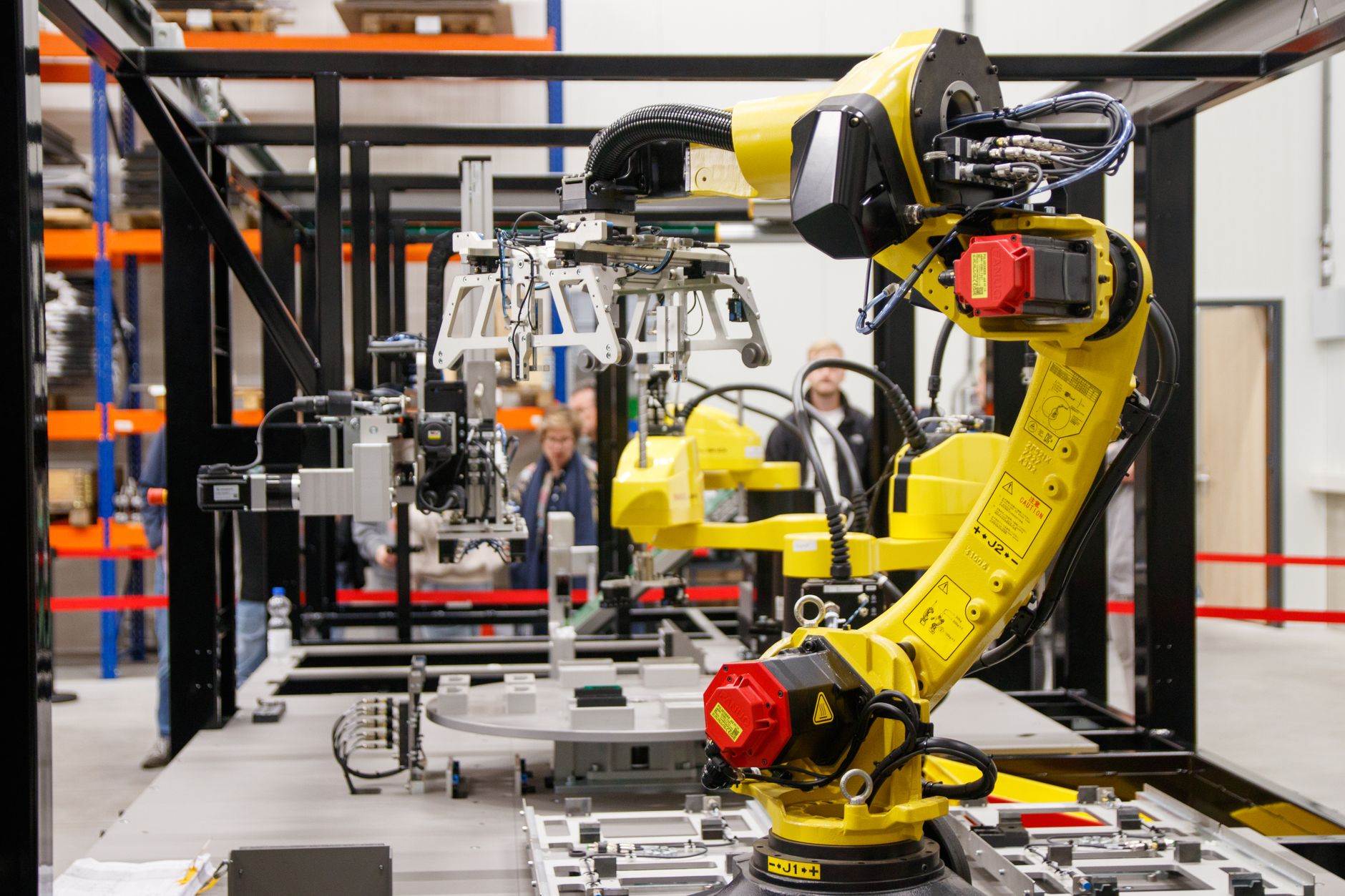
For three decades, Foxconn — formally known as Hon Hai Precision Industry Co., Ltd. — defined contract manufacturing. Its factories in Zhengzhou, Shenzhen, and Chengdu assembled more than 70% of the world’s iPhones at peak production. Its workforce at one point exceeded one million employees in China alone. Revenue topped $200 billion. The model was simple: take complex consumer electronics designed by Western brands, scale production with ruthless efficiency, and deliver on time.
That model is now undergoing its most significant transformation in the company’s 50-year history. Facing margin compression from Apple’s cost negotiations, geopolitical pressure to diversify away from China-concentrated production, and the rise of two technology waves — electric vehicles and artificial intelligence — Foxconn’s chairman Young Liu has committed the company to a full strategic reinvention. The pivot is not hypothetical. It is generating revenue, signing partnerships, and reshaping how the world’s largest contract manufacturer operates.
Why the iPhone Model Reached Its Limits
Apple accounted for roughly 45 to 50% of Foxconn’s revenue for much of the 2010s and early 2020s, giving Apple enormous negotiating leverage. Gross margins on iPhone assembly historically hovered between 2% and 5% — Foxconn was running one of the world’s most complex manufacturing systems at very thin profitability.
The dependency risk became viscerally clear in late 2022, when COVID-19 lockdowns at the Zhengzhou campus — the world’s single largest iPhone manufacturing facility — disrupted global iPhone 14 Pro shipments ahead of the holiday season. Apple responded by accelerating supplier diversification, shifting production to Pegatron and to Foxconn’s own India facilities in Tamil Nadu and Karnataka. The China-centric model had become both a competitive liability and a geopolitical exposure.
Meanwhile, global smartphone shipments plateaued and PC demand normalized after the pandemic surge. The high-volume, low-margin assembly business Foxconn mastered was not disappearing, but it was no longer a growth engine. The next chapter required moving up the value chain.
The Electric Vehicle Bet: FOXTRON and the MIH Platform
Foxconn’s most ambitious pivot is into electric vehicles — not as a component supplier, but as a full platform provider. Young Liu calls it “the AWS of EVs.” Just as Amazon Web Services allows companies to launch cloud infrastructure without building data centers, Foxconn’s MIH (Mobility in Harmony) Open Platform is designed to allow automakers and startups to launch EVs without engineering the underlying hardware from scratch.
The MIH consortium launched in 2020 now has over 2,500 member companies, including semiconductor firms, software developers, and tier-one auto suppliers. (For context on who makes the batteries inside these vehicles, see our analysis of China’s lithium-ion battery supply chain.) Foxconn has developed three electric vehicle architectures — a sedan, an SUV, and a bus — under the FOXTRON brand in partnership with Yulon Motor. In 2022, Foxconn acquired Lordstown Motors’ Ohio manufacturing plant for $230 million and began producing electric vehicles there. It has since signed EV manufacturing agreements with Saudi Arabia’s CEER program and multiple Asian automakers.
The business logic is compelling. The global automotive industry manufactures approximately 90 million vehicles per year, and contract manufacturing accounts for a tiny fraction. If Foxconn captures even 5% of EV production through its platform model — something it believes is achievable within a decade — the revenue opportunity dwarfs its consumer electronics business. This model also creates a genuine bilateral trade bridge: American and European EV brands seeking lower-cost flexible manufacturing now have a credible non-OEM alternative grounded in proven assembly expertise. (Chinese automakers themselves are moving in parallel: see our coverage of Chery, Great Wall Motor, and SAIC’s MG.)
AI Infrastructure: Servers, Data Centers, and the Nvidia Partnership
The second pillar of Foxconn’s transformation is artificial intelligence infrastructure. As the AI buildout accelerated in 2023 and 2024, demand for AI servers — the physical machines running large language models and inference workloads — exploded. Foxconn, through its cloud and enterprise solutions division, is one of the world’s largest assemblers of AI servers.
Foxconn assembles servers for Nvidia and for major hyperscalers including Microsoft and Amazon. Its server business revenue grew more than 40% year-over-year in both 2024 and 2025, and AI-related products now represent a significant share of its cloud and enterprise segment. The company has invested in new facilities in Mexico, the United States, and India to serve customers seeking non-China supply chains for sensitive infrastructure.
This positions Foxconn uniquely: it is one of the few manufacturers globally with deep expertise in both high-precision consumer electronics and the thermal management, power systems, and interconnect complexity required for AI server racks. Foxconn’s decision to expand manufacturing in Ohio, Texas, and Mexico also aligns it with US industrial policy under the CHIPS and Science Act in a way that few large Asian manufacturers can replicate. For US companies navigating export control rules around AI hardware, Foxconn’s geographic flexibility is a genuine operational asset. The same supply-chain logic applies to the critical materials layer: our coverage of China’s rare earth export controls details how material dependencies shape hardware manufacturing decisions.
India: The New Manufacturing Pillar
India has become central to Foxconn’s geographic diversification. The company operates iPhone assembly plants in Sriperumbudur, Tamil Nadu, producing iPhone 15 and 16 series devices, and has committed to a second major facility in Karnataka. Total investment commitments in India have exceeded $1.5 billion, with Foxconn employing over 50,000 workers in the country.
India’s government has actively supported Foxconn through the Production Linked Incentive (PLI) scheme, offering financial incentives for electronics manufactured in-country. Apple’s aggressive India localization push has made Foxconn’s expansion there a strategic imperative rather than an optional hedge. The India facilities are now mature and producing iPhone units for global markets, a milestone that would have seemed implausible a decade ago.
Lessons for US-China Business Professionals
Foxconn is a Taiwanese company, but its story is inseparable from the China manufacturing ecosystem it built and is now partially diversifying away from. Several practical lessons emerge for professionals navigating the US-China business landscape.
First, the era of singular reliance on China-concentrated contract manufacturing is ending for high-visibility supply chains — and Foxconn itself is leading that diversification. Second, the EV and AI buildout creates new bilateral opportunities: American AI chip designers need Asian assembly partners, and Asian EV platform builders need American engineering, software ecosystems, and regulatory access. Third, Foxconn’s MIH platform is a model for how manufacturing-intensive companies can transition from selling labor hours to selling platforms and standards — the same strategic shift that Western technology companies made decades ago.
For sourcing professionals, understanding Foxconn’s capabilities in 2026 means recognizing it is no longer simply an assembly partner. It is a platform company with opinions on vehicle architecture, AI server design, and digital health hardware. That changes the negotiation dynamic and the potential depth of partnership for Western firms engaging with the broader Asian manufacturing ecosystem.
Financial Trajectory and Outlook
Foxconn’s total revenue for fiscal year 2025 exceeded $220 billion (approximately NTD 6.9 trillion), with smart consumer electronics still contributing the largest share. The cloud and enterprise infrastructure segment — encompassing AI servers and data center hardware — grew to represent roughly 20% of revenue and remains the fastest-growing unit.
The EV segment remains pre-scale: revenue from FOXTRON and contract EV manufacturing is still modest relative to total group size, but Foxconn has guided for EV-related revenue to reach $30 billion by 2030. Chairman Young Liu has identified three transformation pillars — EVs, AI infrastructure, and digital health — and has been explicit that the company’s long-term ambition is to be a platform-driven industrial technology group, not merely the world’s largest assembler.
The question is not whether every bet will pay off on schedule. It is whether applying Foxconn’s industrial scale, customer relationships, and manufacturing DNA to the next generation of hardware-intensive technology markets will prove as transformative as the original Apple partnership did. Given the company’s track record of executing at scale, there is strong reason to believe the answer is yes.