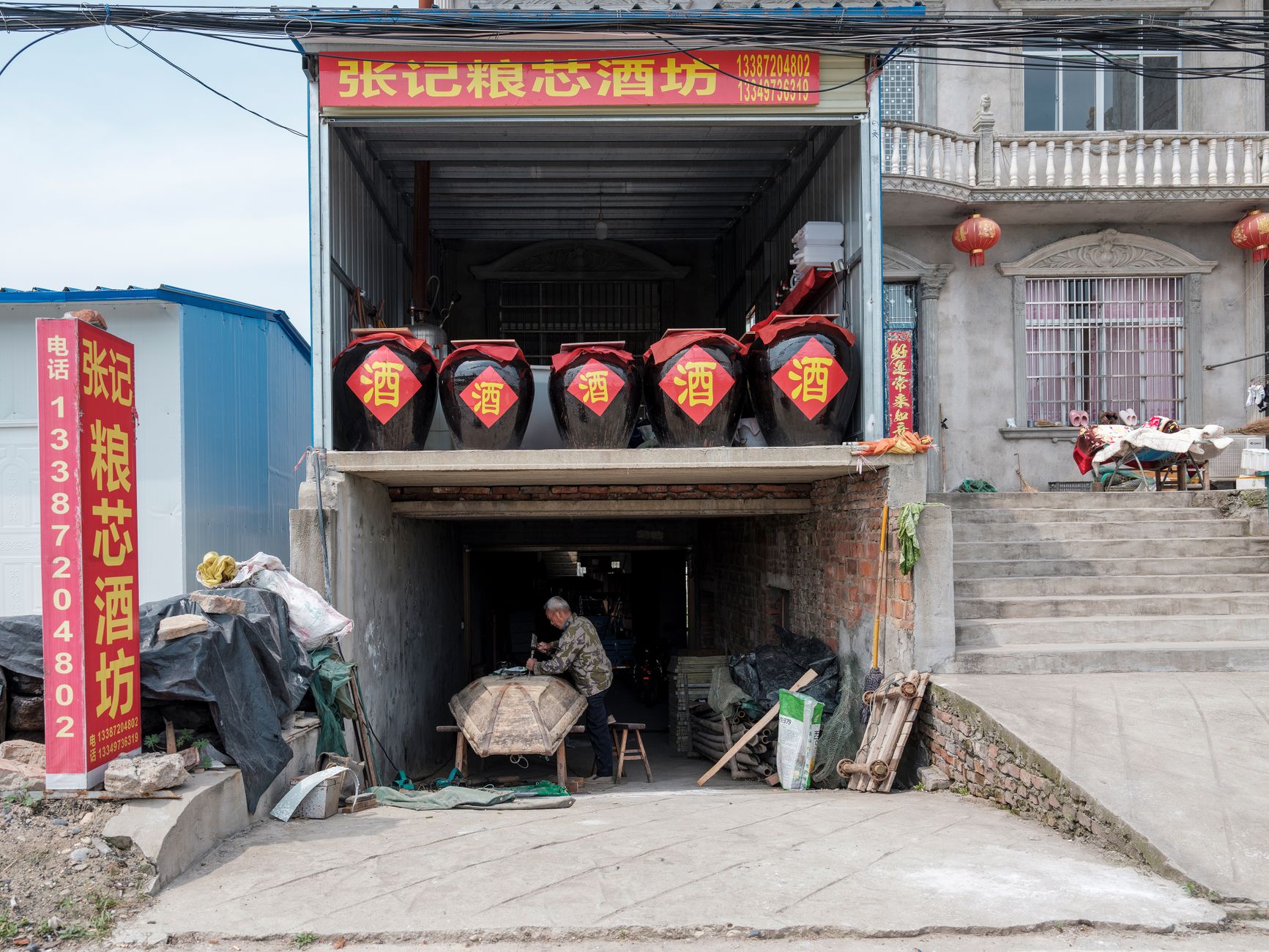
When most people think of Chinese spirits, Moutai comes to mind first. But any trade consultant who operates in China will tell you: understanding baijiu without studying Wuliangye is like analyzing American brewing without Budweiser. Wuliangye Group, headquartered in Yibin, Sichuan Province, is China’s second-largest baijiu producer by revenue and, in several recent years, the most profitable consumer brand on Chinese exchanges. Its story is a master class in how Chinese brands build loyalty, pricing power, and now, deliberate global ambitions.
What Is Baijiu — and Why Does It Matter to Business?
Baijiu (白酒, literally “white liquor”) is distilled from fermented sorghum, wheat, rice, or combinations thereof, typically at 40 to 60 percent ABV. It is the world’s best-selling spirit by volume: global sales consistently exceed 10 billion liters per year, dwarfing whisky, vodka, and gin combined. Nearly all that volume is consumed within China, where baijiu occupies a social function Western executives consistently underestimate. The brand of baijiu on the table at a business dinner signals the host’s seriousness, generosity, and standing with a precision that no Western beverage category matches.
There are three dominant quality tiers: sauce-aroma (represented most famously by Moutai), strong-aroma (the category where Wuliangye is the undisputed king), and light-aroma. Wuliangye’s flagship product is made from five grains — sorghum, rice, glutinous rice, wheat, and corn — a distinction encoded in its very name: “wu” (五) means five, “liang” (粮) means grains, “ye” (液) means liquid. The recipe traces its documented lineage to the Song Dynasty, over a thousand years ago, and the company’s brewing cellars in Yibin have been in continuous operation since at least the Ming Dynasty (1368–1644). That heritage is not marketing fluff — it is a genuine competitive moat against any attempt to replicate the product elsewhere.
From State Enterprise to Listed Consumer Giant
Wuliangye Group was formally established as a state-owned enterprise in 1959. For decades it operated in central planning’s orbit, supplying state banquets with little competitive pressure. The transformation began in 1998 when Yibin Wuliangye Co., Ltd. listed on the Shenzhen Stock Exchange (000858.SZ), gaining access to public capital markets and institutional shareholder accountability.
The listing proved transformative. Through the 2000s and 2010s, Wuliangye expanded its portfolio, launching sub-brands across price points. At peak premiumization circa 2012, its flagship eighth-generation bottle (第八代五粮液) was retailing above 1,000 RMB — positioning it alongside Moutai in the diplomatic and corporate gifting tier.
That trajectory was interrupted by Beijing’s 2012–2014 austerity campaign: Xi Jinping’s anti-corruption drive curtailed government banqueting and official gift-giving, and Wuliangye’s revenue dropped roughly 30 percent in two years. The company’s response was to reduce dependence on state procurement and rebuild through genuine consumer demand. By 2017 the recovery was complete, and by 2023 the group reported revenues exceeding 83 billion RMB ($11.5 billion USD), with net profits over 27 billion RMB — placing it among the world’s most profitable food and beverage companies.
The Yibin Advantage: Geography as a Competitive Moat
A critical and often overlooked dimension of Wuliangye’s competitive position is its geographic anchoring. The distillery sits at the confluence of the Minjiang, Jinsha, and Yangtze rivers in Yibin, Sichuan — a microclimate whose humidity, temperature, and soil microbiology directly shape fermentation outcomes. The company maintains over 37,000 square meters of ancient fermentation cellars (老窖池), some dating back more than 600 years. These cellars host microbial ecosystems that cannot be relocated or replicated industrially — a moat that no competitor, domestic or foreign, can simply engineer around.
This lock-in has direct implications for foreign distributors. Wuliangye cannot be contract-manufactured offshore; its authenticity is protected under Chinese geographic indication laws and internationally filed trademarks. Western importers must engage through Wuliangye Group’s official export arm, Wuliangye Import and Export Co., Ltd., or its designated global distribution partners.
Global Expansion: Early Stage, High Ambition
Wuliangye’s international revenues remain small — export sales are estimated at less than 2 percent of group revenue as of 2025. But the global ambitions are unmistakably serious. Since 2018, the company has established distribution agreements in over 100 countries, opened brand experience centers in New York, London, Frankfurt, and Sydney, and invested in Formula 1 sponsorships and international cultural events to build recognition outside China.
The strategy echoes, at an earlier stage, how Moutai globalized. Moutai’s use of diplomatic channels and state banquets as global awareness vehicles gave that brand a head start in Western luxury markets. Wuliangye leans more toward commercial partnerships and consumer marketing — a recognition that its strong-aroma profile, somewhat more accessible to unfamiliar palates than sauce-aroma, may be an asset in mainstream Western on-trade channels.
The key challenge is cultural translation. Baijiu etiquette — the ganbei (干杯, “bottoms up”) culture, the ritual of pouring for others, the way the spirit signals respect and reciprocity — is deeply embedded in Chinese social practice. Understanding Chinese business gift and hospitality norms is essential for any foreign partner operating within Wuliangye’s distribution network.
What Western Importers and Distributors Need to Know
For Western importers, retailers, hospitality operators, and brand investors, Wuliangye represents a category that is enormous and largely untapped outside China. Several dimensions are worth understanding in detail:
Regulatory Compliance
Importing baijiu into the United States requires compliance with the Alcohol and Tobacco Tax and Trade Bureau (TTB), including Certificate of Label Approval (COLA) filings. Labels must meet TTB standards for alcohol content disclosure, origin statements, and health warnings. As of 2026, no specific import restrictions apply to Chinese baijiu beyond standard alcohol tariff schedules, though importers should monitor Section 301 tariff developments through the Office of the United States Trade Representative (USTR).
Pricing and Positioning
Wuliangye’s flagship retails in China between 1,000 and 1,200 RMB per 500ml bottle. With import duties, shipping, and distributor margins, Western retail prices typically run $180–$280 USD — firmly in the premium tier alongside aged single malts and Cognac XO. Hospitality operators have found that cocktail applications can serve as an effective entry point: baijiu-based cocktails have growing followings in New York, London, and Berlin before consumers progress to neat consumption.
Reaching the Chinese Diaspora Market
A significant and immediate opportunity for Western importers is the Chinese diaspora — over 50 million people globally, concentrated in North America, Australia, and Western Europe. Chinese-American and Chinese-British consumers actively seek authentic premium baijiu for New Year celebrations, weddings, and corporate gifting, a market requiring far less cultural translation than mainstream Western consumers. Sourcing relationships through China’s major trade events can be a practical starting point for building distributor connections.
Wuliangye’s Listed Entity and Investor Profile
For Western investors tracking China’s consumer sector, Wuliangye (000858.SZ) is one of the most scrutinized stocks on the Shenzhen Stock Exchange. Financial disclosures are available through the China Securities Regulatory Commission’s CNINFO disclosure platform. Wuliangye Group, the parent state-owned enterprise, retains a controlling stake of approximately 40 percent in the listed entity, with the remainder held by institutional investors, retail shareholders, and foreign institutions via the Stock Connect program.
The stock trades at a premium to global consumer staples peers — reflecting scarce production capacity, pricing power, and the demographic tailwind of China’s expanding upper-middle class. Key risks include regulatory exposure (anti-corruption campaigns remain the largest demand shock variable), Moutai competition at the ultra-premium tier, and macroeconomic sensitivity. Understanding how China’s state-controlled investment entities interact with listed consumer companies adds important context for any foreign investor.
The Broader Strategic Picture
Wuliangye’s story is ultimately about the emergence of Chinese consumer brands with genuine global potential — built not on price competition, but on irreplicable heritage and authentic scarcity. The same dynamic is reshaping premium Chinese tea exports, luxury furniture, and fine art at Western auction houses.
For businesses operating in China, awareness of what Wuliangye represents at the table is a component of cultural fluency. A bottle of eighth-generation Wuliangye at a partnership dinner in Chengdu or Shanghai communicates that the host understands quality and takes the relationship seriously. The private-sector commercial culture of Wenzhou and the state-linked prestige economy of Wuliangye’s Yibin represent two poles of Chinese business — and professionals who can navigate both will be far better positioned for sustainable bilateral success.
Wuliangye’s stated ambition is to become a globally recognized luxury brand by 2050. Whether that timeline proves realistic depends on cultural globalization, regulatory developments, and marketing execution. What is not in question: this is one of China’s most strategically significant consumer companies, and any professional serious about US-China business should understand what it represents.