
When most Western executives think about China’s industrial giants, they picture consumer electronics, e-commerce platforms, or steel mills. They rarely think about aviation, armored vehicles, or satellite guidance systems. Yet some of China’s most consequential commercial companies trace their origins directly to the defense sector — and understanding this dual-use pipeline is essential for any business navigating global supply chains, technology licensing, and geopolitical risk.
AVIC (Aviation Industry Corporation of China), NORINCO (China North Industries Group Corporation), and CASIC (China Aerospace Science and Industry Corporation) are not household names in Western boardrooms. But their commercial subsidiaries supply components to global OEMs, manufacture products sold in dozens of countries, and hold patents underpinning civilian industries from automotive to construction. The strategic logic is deliberate: China’s military-civil fusion (MCF) policy, formally elevated under Xi Jinping in 2015, mandates systematic transfer of defense technology into the commercial economy.
AVIC: From Fighter Jets to Automotive Components and Regional Aviation
Founded in 1951 and restructured in 2008, AVIC is one of the world’s largest aerospace and defense conglomerates, with revenues exceeding $70 billion and a workforce of over 400,000 across more than 200 subsidiaries. It manufactures China’s J-10 and J-20 fighter aircraft, Z-series military helicopters, and a range of UAVs. But that is only half the story.
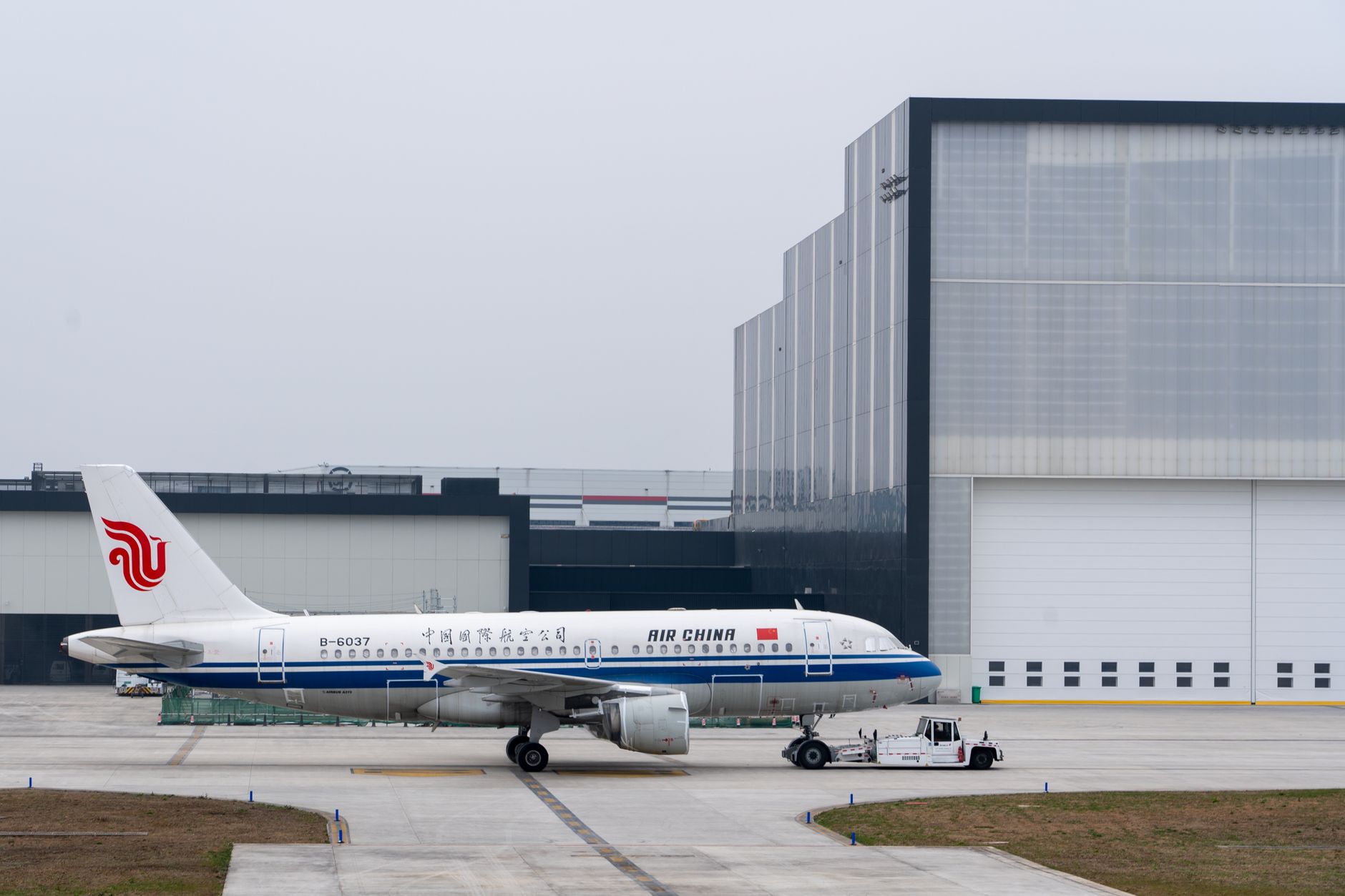
AVIC’s commercial aviation division produces the MA60 and MA600 turboprops and is a core partner in the COMAC C919 program — China’s first domestically produced single-aisle jet, which entered service with Air China in 2023. COMAC delivered its 20th C919 in early 2026, with over 1,000 orders from Chinese carriers. As COMAC scales production, it will progressively replace foreign content with domestic alternatives from AVIC’s supply chain — a competitive signal Western aerospace suppliers cannot ignore.
AVIC’s non-aviation commercial businesses are equally significant. AVIC Automobile supplies automotive stampings and structural components to major Chinese OEMs. AVIC International trades commodity goods, engineering equipment, and chemical products globally. Harbin Aircraft Industry Group manufactures EC series civil helicopters under an Airbus Helicopters partnership. Foreign companies sourcing helicopter components, structural aircraft parts, or aerospace subassemblies in China are very likely already touching AVIC’s extended network.
NORINCO: The Defense Giant Hiding in Plain Sight Across Global Markets
NORINCO was established in 1980 as the commercial export arm of China’s weapons manufacturing establishment. It initially focused on small arms, artillery, and armored vehicles — business that continues today. But NORINCO’s commercial portfolio has expanded dramatically into oil and gas equipment, construction machinery, optical instruments, chemicals, and civilian explosives used in mining and infrastructure.
In the energy sector, NORINCO’s subsidiary CNPC Equipment Corporation manufactures drilling rigs and wellhead equipment deployed across Central Asia, the Middle East, Africa, and Latin America. Construction equipment lines compete directly with Caterpillar and Komatsu in price-sensitive emerging markets. Its civilian explosives and mining services divisions — through subsidiaries like Poly Mining — are active across sub-Saharan Africa, where Chinese infrastructure investment has created captive demand.
For Western companies, NORINCO’s significance extends beyond direct competition. Because NORINCO entities appear on the US Department of Commerce Entity List, any American company considering a relationship with NORINCO subsidiaries — knowingly or not — faces export control liability. Due diligence on Chinese counterparties in energy, mining, and construction equipment must include screening against the Entity List, SDN List, and the OFAC Consolidated Sanctions List.
CASIC and the Commercial Satellite Economy
China Aerospace Science and Industry Corporation is the country’s primary manufacturer of tactical missiles and space launch systems — and increasingly a major player in commercial satellite services. CASIC’s subsidiary ChinaSat operates a fleet of commercial communications satellites covering Asia, Africa, and parts of Europe. Its subsidiary ExPace Technology offers dedicated small satellite launch services using the Kuaizhou solid-fuel rocket, competing with SpaceX’s Transporter rideshare program on cost and turnaround time.
The commercial implications are significant. As low-orbit satellite constellations proliferate — driven by demand for global broadband, precision agriculture, maritime tracking, and IoT connectivity — Chinese providers are offering services at price points Western operators cannot easily match. China Aerospace Science and Technology Corporation (CASC), CASIC’s sister company, is equally active in this commercial space buildout, and together they represent a vertically integrated aerospace-to-service pipeline that no other country has replicated at scale.
Military-Civil Fusion: The Strategic Framework Behind the Pipeline
Understanding individual companies is not enough. The pattern matters. China’s military-civil fusion strategy is not merely a procurement policy — it is a national economic architecture designed to eliminate the boundary between civilian R&D and military capability development. Under MCF, universities, research institutes, private tech companies, and state-owned enterprises all participate in a shared innovation ecosystem where technologies developed commercially can be rapidly adapted for defense use, and vice versa.
This has direct implications for Western companies considering technology licensing, joint ventures, or R&D partnerships in China. The US Department of Justice’s National Security Division and CFIUS have both flagged MCF as a structural risk factor in any transaction involving Chinese counterparties with dual-use technology exposure. This is not about hostility to bilateral business — it is about informed risk management.
Companies that have successfully navigated this environment — from Airbus in its helicopter JV with AVIC to Honeywell’s long-standing avionics relationships in China — have done so by maintaining clear contractual boundaries around technology transfer, securing strong IP protections, and engaging proactively with export control counsel. Understanding the institutional framework helps set realistic expectations on both sides. For more, our guide to protecting trade secrets when working with Chinese partners provides a practical framework for structuring these relationships.
What This Means for Western Companies: Three Practical Scenarios
1. Sourcing and Supply Chain
Western manufacturers sourcing precision-machined components, structural castings, or advanced materials from China should conduct enhanced due diligence on tier-2 and tier-3 suppliers. AVIC subsidiaries are deeply embedded in China’s civilian manufacturing base. This doesn’t mean you can’t source from them — many global aerospace primes do — but you need to know who you’re sourcing from, what export control classifications apply, and whether your end-use certifications are airtight. Our overview of China’s semiconductor equipment industry explores similar dynamics in another dual-use sector.
2. Market Entry and Joint Ventures
For companies entering Chinese aerospace, satellite, or advanced manufacturing markets, AVIC and CASIC subsidiaries are often the mandated local partners. COMAC’s supply chain was built through government-directed partnerships requiring foreign suppliers to establish Chinese JVs and conduct significant local content production. Terms have become more demanding since 2018, and companies entering this space in 2026 should expect Chinese partners to push for broader technology access than previous generations of JVs permitted.
3. Competitive Intelligence
Commercial subsidiaries of China’s defense conglomerates are often systematically underpriced relative to their cost structures — cross-subsidized by state contracts and policy financing from China Development Bank and the Export-Import Bank of China. When NORINCO’s mining equipment or AVIC’s regional turboprops compete against Western products in third-country markets, price parity analysis alone will mislead you. See also our analysis of China’s sovereign wealth funds and state capital deployment for the broader financial picture.
The Bilateral Opportunity Inside the Complexity
None of this analysis suggests Western companies should avoid China’s defense-adjacent industrial ecosystem. On the contrary — the commercial scale and technical capability embedded in AVIC, NORINCO, and CASIC subsidiaries represents genuine opportunity for companies that enter with clear eyes and strong compliance frameworks.
The C919 program alone has created a multi-billion-dollar commercial aviation supply chain that foreign companies have competed for successfully. GE Aviation’s joint venture with AVIC supplies the LEAP-1C engines powering the current C919 variant. Honeywell provides avionics and auxiliary power units. These are profitable, growing relationships — because both sides understood the institutional context and negotiated accordingly.
China’s defense-commercial pipeline is explicit government policy, documented in official five-year plans, and visible in the corporate structures of the companies involved. Western businesses that treat it purely as a compliance problem to be avoided will miss significant commercial opportunities. Those that treat it as a structural feature to be understood and navigated will find themselves better positioned in one of the world’s most consequential industrial markets.
As US-China commercial aviation, satellite services, and advanced manufacturing relationships continue to evolve through 2026 and beyond, the companies that thrive will be those that build deep institutional knowledge of their Chinese counterparts. The dual-use technology pipeline is complex, but it is navigable. That is what GreatHandshake is here to help you do.