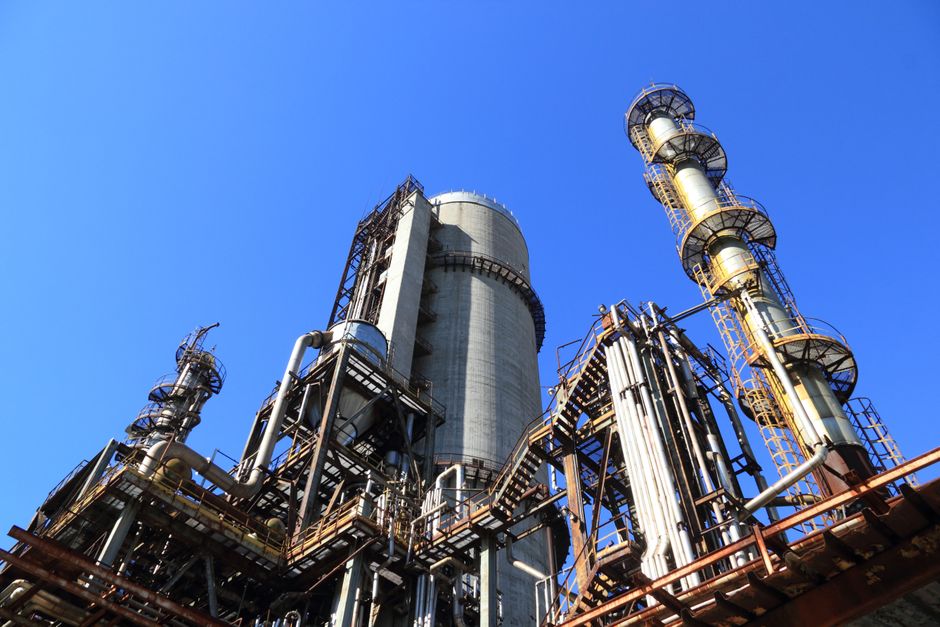
When global businesses talk about China’s industrial dominance, they typically focus on steel, electronics, or electric vehicles. But quietly, methodically, and at a scale that rivals the economies of entire nations, China has also built the world’s largest petrochemical and chemical industry. From the sprawling ethylene crackers of Dalian to the polymer plants of Guangdong and the fertilizer complexes of Shandong, China’s chemical sector now accounts for roughly 40% of global chemical output by volume and generates annual revenues exceeding $1.7 trillion. For any business involved in packaging, agriculture, textiles, construction, pharmaceuticals, or advanced manufacturing, the decisions made inside Chinese chemical plants shape global supply chains more than most executives realize.
From Scarcity to Supremacy: The Arc of China’s Chemical Industry
In the 1970s, China imported the majority of its industrial chemicals. By 2000, it had become a significant producer. By 2025, it had extended its lead to the point where no single country or regional bloc could match its installed capacity. The trajectory was not accidental. Beijing’s planners identified basic chemicals as a foundational input into virtually every downstream industry they wanted to develop, and they funded capacity accordingly.
State-owned giants such as Sinopec Group (China Petroleum and Chemical Corporation) and ChemChina received preferential financing, land allocations, and government contracts to build out refining and chemical capacity in parallel with China’s explosive industrialization. Sinopec alone is the world’s largest chemical company by revenue, reporting approximately $486 billion in annual sales and operating over 30 ethylene production units across China. Meanwhile, private giants like Rongsheng Petrochemical and Hengli Petrochemical built world-class integrated complexes in Zhoushan and Dalian, competing aggressively on cost and scale. Hengli’s Changxing Island complex processes 400,000 barrels of crude per day, converting a substantial portion into high-value chemical intermediates rather than simply producing transportation fuels.
Where China Dominates: Key Segments
Ethylene and Polymers
Ethylene is the backbone of the polymer industry, producing polyethylene, PVC, polystyrene, and dozens of plastics that flow into packaging, medical devices, and automotive components. China’s ethylene production capacity crossed 50 million metric tons per year in 2024, representing roughly 30% of global capacity. This has created direct competitive pressure on US and Middle Eastern petrochemical producers. Companies like Dow Chemical, LyondellBasell, and SABIC now monitor Chinese capacity additions with the same vigilance they once reserved only for OPEC announcements.
Fertilizers: Feeding the World Through Chinese Chemistry
China produces approximately 30% of the world’s nitrogen fertilizers and dominates global phosphate fertilizer production, accounting for over 40% of diammonium phosphate (DAP) output. When Beijing introduced fertilizer export quotas in late 2021, global urea prices surged more than 80% in some markets within months. Farmers in Brazil, India, and Southeast Asia scrambled for supply. The episode confirmed that China’s chemical industry is a critical node in global food security infrastructure, not merely a domestic asset.
Specialty Chemicals and the Race Up the Value Chain
The window for foreign companies to supply high-margin specialty chemicals that local producers could not yet match is narrowing. BASF recognized this so acutely that it committed $10 billion to its Zhanjiang integrated complex in Guangdong, preferring partnership over external competition. Wanhua Chemical became the world’s largest MDI (methylene diphenyl diisocyanate) producer by 2020, displacing BASF and Huntsman through licensed technology, relentless engineering, and decades of capital investment.
The ChemChina-Syngenta Acquisition: Strategic Intent at Scale
ChemChina’s 2017 acquisition of Syngenta, the Swiss agrochemical company, for $43 billion was the largest overseas acquisition ever made by a Chinese company at the time. The deal was not primarily about near-term financial returns. It was about acquiring Syngenta’s patented crop protection chemicals, seeds, and agronomic expertise to address China’s long-term food security concerns. By controlling Syngenta’s IP and distribution networks across 90-plus countries, ChemChina (now consolidated under Sinochem Group) gained access to formulations that would have taken Chinese companies 20-30 years to develop independently.
This acquisition is a case study used in boardrooms globally on how Chinese state-backed acquirers approach M&A as a tool of industrial policy. Businesses considering joint ventures or technology licensing with Chinese chemical companies should understand this context: Chinese partners often have long-term strategic objectives that extend well beyond the initial commercial terms.
Supply Chain Implications for Western Buyers
For procurement professionals sourcing chemical inputs, several dynamics require active management. China’s feedstock cost advantage, while real, is constrained by its heavy reliance on imported crude oil (approximately 11 million barrels per day, the world’s largest). US producers with access to cheap shale-derived ethane maintain a genuine cost edge in polyethylene, a gap that has widened as US natural gas prices have stayed relatively low.
Quality convergence is accelerating in commodity and mid-tier specialty segments. Buyers sourcing polyester fiber, PVC compounds, or standard engineering resins from Chinese suppliers typically achieve comparable quality at 15-25% lower cost. Persistent gaps remain in pharmaceutical-grade APIs, high-purity electronic chemicals for semiconductors, and certain high-performance engineering plastics where consistency standards are most demanding.
Regulatory complexity is also increasing. China’s Ministry of Ecology and Environment has progressively tightened emissions standards, causing periodic capacity shutdowns for non-compliant producers. The major state-owned energy companies like Sinopec have adapted better to tightening rules than the thousands of smaller chemical producers concentrated in Shandong, Hebei, and Jiangsu. Buyers sourcing from smaller Chinese chemical producers need robust supplier qualification processes and regular audits.
Section 301 tariffs have added further complexity. The US Trade Representative’s Section 301 tariff schedules cover a significant range of Chinese chemical products, requiring procurement teams to factor tariff costs into total landed cost calculations. China’s 14th Five-Year Plan (2021-2025) specifically identified specialty chemicals as a priority sector, directing resources toward domestic production of high-value intermediates currently imported from Germany, the US, Japan, and South Korea.
Understanding how China’s port and logistics infrastructure operates is essential for sourcing chemical products at scale, given the bulk nature of most shipments and specific hazardous materials handling requirements. Similarly, the Yangtze River Delta corridor anchored by Nanjing and Wuxi hosts a significant concentration of fine chemical and specialty chemical producers increasingly important to global pharmaceutical and electronics supply chains.
What Foreign Businesses Should Do Now
Most industrial businesses cannot afford a China chemical strategy based on assumptions formed five or ten years ago. Companies sourcing chemical inputs should conduct regular benchmarking across quality, total landed cost, regulatory compliance, and supply reliability dimensions. A dual-sourcing strategy, maintaining relationships with both Chinese and non-Chinese producers, provides the best balance of cost optimization and resilience. Companies that went exclusively Chinese during the 2010s efficiency cycle discovered that vulnerability during the COVID-19 disruptions of 2020-2021.
For companies entering China as sellers, the window for commodity chemical sales is largely closed. Growth lies in high-specification specialty chemicals, application engineering services, proprietary catalyst systems, and digital process optimization tools where Chinese producers still depend on foreign expertise. Germany’s specialty chemical industry has remained competitive in China precisely because it has continued to innovate faster than local competitors can replicate in segments like automotive coatings, high-performance adhesives, and electronic chemicals.
The broader lesson is consistent with patterns observed across China’s industrial development: what begins as low-cost volume manufacturing progresses toward technology intensity and global market leadership, given sufficient time, capital, and policy support. The China Ministry of Ecology and Environment publishes updated standards that directly affect which chemical producers remain competitive, making regulatory monitoring a core part of any China sourcing strategy. Executives who plan for this trajectory, rather than assuming the current competitive equilibrium will persist, will be better positioned to navigate the next decade of US-China industrial competition.