
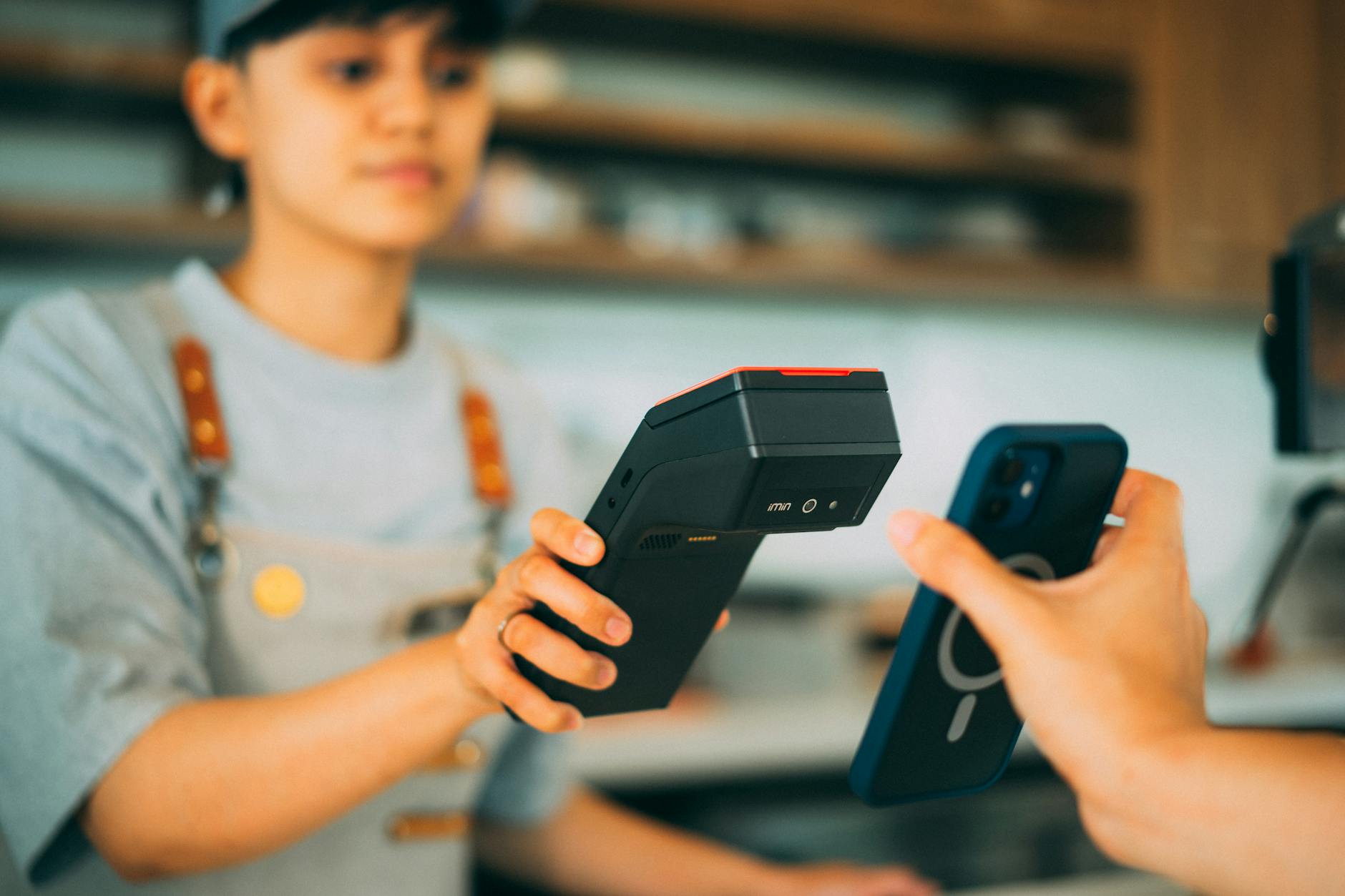
China’s digital payment ecosystem is one of the most advanced in the world, and it operates almost entirely outside the infrastructure Western businesses rely on. Credit cards, PayPal, bank transfers — the tools that power commerce in North America and Europe are marginal or irrelevant in China’s daily economy. Alipay and WeChat Pay dominate, processing the overwhelming majority of consumer and business transactions. For any company doing business in China, or accepting Chinese customers abroad, understanding how these platforms work is not optional background knowledge. It is operational necessity.
Why Mobile Payments Took Over China
China leapfrogged the credit card era. While the West built decades of infrastructure around plastic cards and point-of-sale terminals, China moved directly from cash to mobile payments in the span of roughly a decade. Several factors accelerated this shift: the near-universal adoption of smartphones, a population that was highly comfortable with app-based commerce, and aggressive merchant adoption driven by the low cost of QR code acceptance versus traditional card terminals.
By 2024, mobile payments accounted for over 80% of all consumer payment transactions in China. That figure includes everything from street food vendors to luxury retail to corporate invoicing. Understanding the two dominant platforms — Alipay and WeChat Pay — means understanding how money moves in modern China.
Alipay: The Commerce-First Platform
Alipay was launched in 2004 by Alibaba Group as an escrow service for Taobao marketplace transactions. The premise was simple: buyers would deposit funds with Alipay, and the money would only be released to sellers once buyers confirmed receipt of their goods. This trust mechanism solved a critical problem in early Chinese e-commerce and drove rapid adoption.
Today, Alipay is operated by Ant Group and serves over one billion users. Its core use cases include:
- E-commerce payments: Deeply integrated with the Alibaba ecosystem (Taobao, Tmall, 1688, Lazada). Any company selling on these platforms needs to work within Alipay’s payment flows.
- In-store QR code payments: Merchants display a QR code; customers scan and pay in seconds. No card terminal required.
- Bill payments and financial services: Users pay utilities, insurance premiums, and transfer money through the app. Alipay has evolved into a comprehensive financial super-app.
- International merchant acceptance: Alipay has expanded internationally, allowing Chinese tourists and expats to pay with Alipay at merchants in over 60 countries. In 2023, Alipay also launched a version accessible to international visitors in China using foreign credit cards linked to the app.
For B2B transactions, Alipay offers enterprise payment solutions through its corporate platform, though large-scale B2B settlements in China often still use bank transfers (particularly through the CNAPS system) rather than consumer-facing apps.
WeChat Pay: The Social Commerce Layer
WeChat Pay is embedded within WeChat (Weixin), the dominant messaging, social, and commerce platform in China operated by Tencent. With over 1.3 billion monthly active users, WeChat is China’s equivalent of combining WhatsApp, Facebook, Instagram, LinkedIn, and a payment app into a single platform. WeChat Pay is not a standalone app: it is a financial layer built into an indispensable social tool.
Key characteristics of WeChat Pay:
- Social payments: Red envelope (hongbao) transfers, bill splitting, and peer-to-peer payments are deeply integrated into social interactions. Sending money on WeChat is as frictionless as sending a message.
- Mini Programs: WeChat’s mini program ecosystem allows businesses to build lightweight apps within WeChat itself — essentially a storefront, booking system, or service portal that users can access without downloading a separate app. Mini Programs are a critical channel for brands reaching Chinese consumers, and they integrate natively with WeChat Pay.
- Offline QR payments: Like Alipay, WeChat Pay is ubiquitous at physical retail. Most Chinese merchants display QR codes for both platforms side by side.
- Official Accounts and advertising: Brands maintain WeChat Official Accounts (similar to Facebook Pages) and can link promotions, loyalty programs, and purchases directly to WeChat Pay, creating a closed-loop commerce experience.
Alipay vs. WeChat Pay: What Actually Differs
In daily life, the two platforms are largely interchangeable for basic transactions: both scan QR codes, both transfer money instantly, both work at virtually every merchant. The real differences emerge at the ecosystem level.
Alipay is stronger in e-commerce (Alibaba ecosystem) and financial services. WeChat Pay is stronger in social commerce, content marketing, and Mini Program-driven business models. Brands selling through Tmall lean heavily on Alipay; brands building community and repeat purchase behavior lean on WeChat’s ecosystem.
For foreign companies, the strategic question is less “which one” and more “how do we integrate with both.” Most successful brands in China operate across both ecosystems rather than choosing one. The U.S. International Trade Administration’s China market resources note that digital commerce readiness, including payment integration, is consistently cited as a top barrier for foreign brands entering China.
How Foreign Companies Can Accept Chinese Payments
This is where practical complexity begins. Alipay and WeChat Pay accounts are linked to Chinese bank accounts and require Chinese national identification for individual users. As a foreign business, you cannot simply sign up for a standard merchant account without a Chinese legal entity.
Your options, broadly:
Option 1: Establish a Chinese Legal Entity
If you have a WFOE, representative office, or joint venture in China, you can open a Chinese corporate bank account and apply for merchant status with both Alipay and WeChat Pay directly. This gives you full-featured access to both platforms, including settlement in RMB. See our guide on setting up a WFOE in China for the legal entity requirements this entails.
Option 2: Use a Payments Aggregator
For foreign companies without a Chinese entity, licensed payment service providers (PSPs) can facilitate Alipay and WeChat Pay acceptance. Companies such as Adyen, Stripe (through its China integration partners), and specialized providers like Pacypay and 99Bill offer cross-border settlement solutions that allow foreign merchants to accept Chinese payment methods and receive funds in their home currency. Fees and settlement timelines vary; this route is often the fastest way to start accepting Chinese payments without a China legal presence.
Option 3: Sell Through Chinese Platforms
If your primary China channel is a marketplace like Tmall Global or JD Worldwide, payment handling is built into the platform. You sell in RMB; the platform handles Alipay settlement and remits proceeds through its cross-border payment infrastructure. This removes the payment integration challenge but does not give you independent payment capability.
Cross-Border Payment Considerations
China’s cross-border payment flows are governed by the State Administration of Foreign Exchange (SAFE) and the People’s Bank of China. RMB is not freely convertible: moving money out of China requires proper documentation of the underlying commercial transaction. For companies using Chinese payment platforms, understanding the remittance process — and building it into your cash flow planning — is important.
Alipay and WeChat Pay have both developed international versions for use by visitors in China and Chinese users abroad, but these differ significantly from the domestic product in terms of settlement and currency handling. For a broader look at how money moves across the China-West divide, our article on cross-border payments between China and the West covers the regulatory and practical dimensions in depth.
The Bank for International Settlements’ analysis of Chinese payment infrastructure provides authoritative technical detail on how Alipay and WeChat Pay’s clearing systems work at the systemic level.
What This Means for Your China Strategy
Payment infrastructure is not just a back-office consideration. In China, it shapes how customers discover you, how they interact with your brand, and how they complete purchases. A brand that cannot accept WeChat Pay or Alipay is effectively invisible to the majority of Chinese consumers in physical and online contexts.
Key decisions to make early:
- Which channels will you sell through in China: own platform, marketplace, social commerce, or offline retail?
- Do you need a Chinese legal entity, or can a PSP aggregator meet your needs at this stage?
- How will you handle RMB settlement and repatriation within your treasury operations?
- Will you build a WeChat Mini Program, a Tmall store, or both?
The answers to these questions determine which payment integration path is right for your business. What is certain is that ignoring the Chinese digital payment ecosystem is not a viable option for any company serious about the market.