
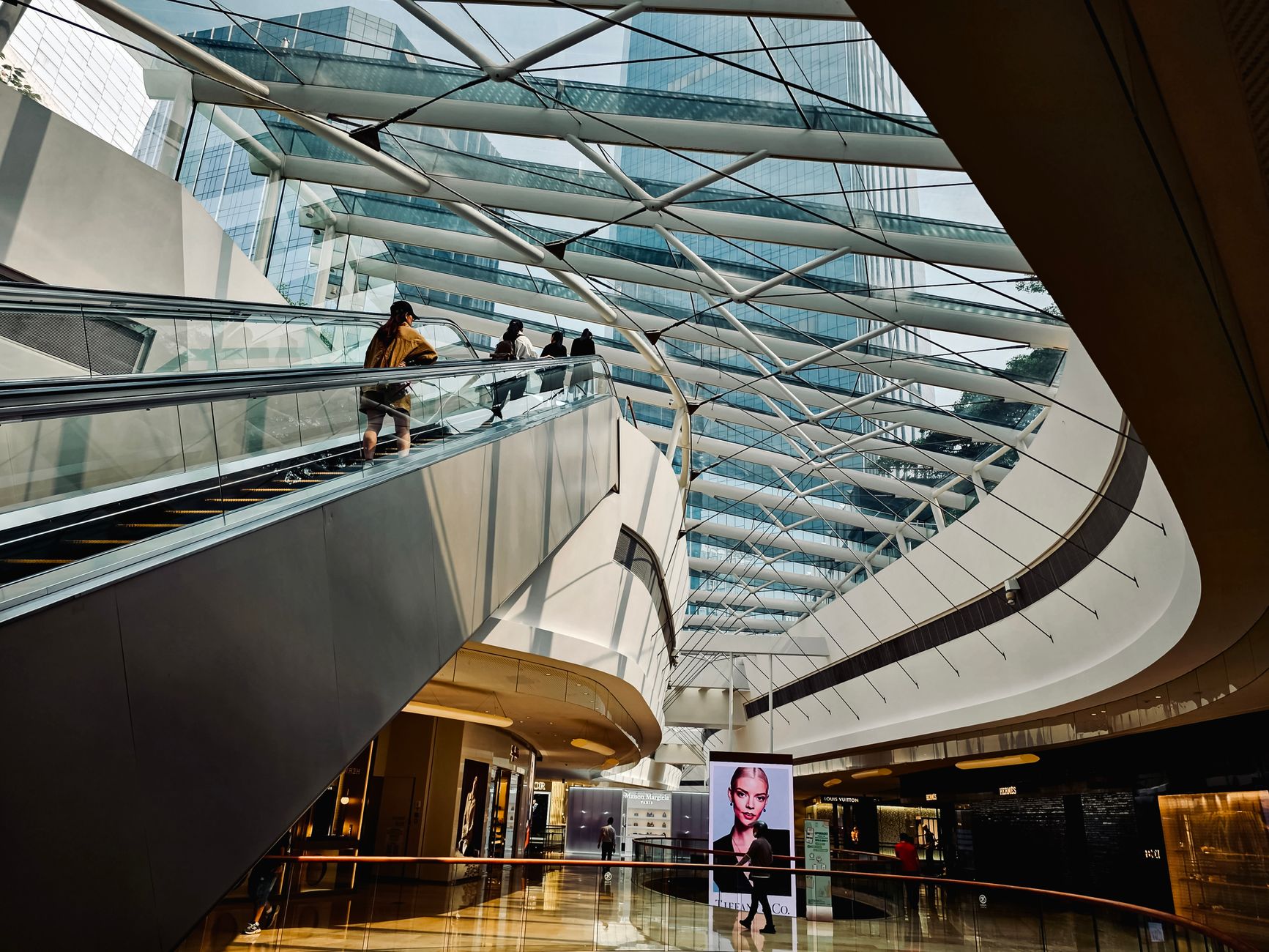
Between 2000 and 2021, Chinese consumers went from an afterthought to the single most important demographic for Hermès, LVMH, Kering, Richemont, and virtually every major Western luxury house. At its peak, China accounted for roughly 21% of global luxury goods purchases, and analysts at Bain & Company projected that number would reach 40% by 2030.
That projection now requires revision. Post-pandemic spending failed to rebound as expected, youth unemployment hit record highs in 2023, and a prolonged property market correction damaged household wealth. For Western luxury brands, the era of opening Shanghai flagships and waiting for lines to form is over. What’s replacing it is more complex, more competitive, and for brands willing to adapt, more durable.
The Numbers Behind the Slowdown
By early 2024, the data was stark. Kering – parent of Gucci, Saint Laurent, and Bottega Veneta – saw Greater China revenue fall over 22% in the first half of 2024. Burberry issued a profit warning citing China weakness. Even LVMH, typically insulated by its scale, reported slower Asia growth than Europe and the Americas.
The structural causes are familiar: China’s property sector, historically holding 60-70% of urban household wealth, contracted sharply since the Evergrande crisis of 2021. The “wealth effect” that drove impulse luxury purchases eroded. The Chinese government’s “common prosperity” framing, which discourages ostentatious displays of wealth, has also made conspicuous consumption less comfortable for some buyers.
Yet the long-term fundamentals remain compelling. According to China’s Ministry of Commerce, consumer spending on services and experiences continues to grow. As China’s middle class continues its evolution, the segment of consumers aged 18-35 who aspire to luxury ownership remains enormous – even as their purchasing behavior shifts.
The New Chinese Luxury Consumer
Gen Z aspirants (born 1997-2010) are China’s most digitally native luxury buyers. They discovered brands through Xiaohongshu (RED), Douyin, and Bilibili before they ever set foot in a boutique. They are less brand-loyal than prior generations, more knowledgeable about design history and craftsmanship, and significantly more likely to purchase based on cultural resonance than legacy prestige. A handbag with a compelling brand narrative that connects to Chinese aesthetics will outperform a generic logo product with this cohort.
Post-80s and post-90s affluent professionals represent the core volume segment. Many accumulated wealth through the property boom and now find themselves more cautious. This group is increasingly shopping “quiet luxury” – understated, high-quality pieces without visible logos. Brands like Loro Piana, Brunello Cucinelli, and Bottega Veneta have benefited from this trend. Paradoxically, the “logo fatigue” that Western markets experienced in the 2010s is now hitting China’s major cities – and brands that adapted their product mix accordingly are faring better.
UHNW and HNW buyers are the most resilient segment. Individuals with significant liquid wealth continue to purchase watches, fine jewelry, art, and top-tier fashion regardless of macroeconomic turbulence. This group, however, increasingly shops internationally. With China’s outbound travel recovering strongly through 2024 and 2025, high-end Chinese consumers are buying in Paris, Milan, Tokyo, and Dubai – where prices can be 20-40% lower than mainland China due to import duties and VAT differences.
The Price Arbitrage Problem
One of the most operationally vexing challenges for Western luxury brands in China is price harmonization. China imposes import tariffs of 6-15% on luxury goods, plus a 13% VAT and a consumption tax that can add another 10-20% on top. The result is that a Chanel Classic Flap bag retailing for $10,000 in New York may cost the equivalent of $14,000-$16,000 in Shanghai.
This price gap has historically fueled a massive daigou (personal shopping proxy) industry, estimated at over $7 billion annually at its peak. Customs crackdowns since 2019 have dampened this channel, but the differential remains a structural challenge. Several major brands have pursued global price harmonization – Chanel raised European prices while reducing Asian prices – retaining purchases that would otherwise happen internationally.
Digital Infrastructure: What Western Brands Must Get Right
China’s luxury e-commerce ecosystem is distinct from anything in the West. Tmall Luxury Pavilion, launched in 2017, has become the de facto digital flagship for over 200 international luxury brands including Burberry, Valentino, and Moncler. It offers a curated, brand-controlled environment with authentication guarantees and white-glove delivery – critical trust signals for high-ticket purchases.
JD.com’s luxury vertical, JD Luxury, handles a different segment of the market – often slightly more accessible luxury and premium brands. And Farfetch, before its 2023 acquisition crisis, had built meaningful China operations that illustrated both the opportunity and the risks of cross-border luxury e-commerce.
Beyond platforms, WeChat remains the most important CRM tool in Chinese luxury. Brands that have invested in WeChat Official Account ecosystems with personalized product launches and exclusive member events consistently outperform those treating China as a standard e-commerce market.
Xiaohongshu (RED) has become the discovery layer for luxury brand consideration. As covered on GreatHandshake, the platform’s user-generated content model creates authentic brand narratives that reach younger affluent consumers in ways traditional advertising cannot.
Localization: Beyond Chinese New Year Capsules
The standard playbook for luxury brand “China localization” – releasing a red-and-gold capsule collection for Chinese New Year, placing a Year of the Dragon logo on a limited bag, and calling it cultural engagement – has reached its limit. Chinese consumers, now among the world’s most sophisticated luxury buyers, recognize and resent shallow tokenism.
The brands gaining real traction in China are those investing in genuine cultural collaboration. Dior’s partnership with Chinese artist Chen Man for its China-exclusive campaigns is frequently cited as an example of authentic engagement. Loewe’s collaboration with Chinese ceramics traditions generated significant press and genuine consumer enthusiasm. These are not product adaptations – they are sustained creative dialogues with Chinese artistic culture.
At the operational level, brand localization in China extends to store design, staff training, and after-sale service standards. VIP client programs in China’s luxury retail market typically involve a level of personalization – private viewing events, home delivery, and dedicated relationship managers – that would be considered exceptional in Western retail but is table stakes in Tier 1 Chinese cities.
Tier 2 and Tier 3 Cities: The Underestimated Frontier
Much of the conversation about luxury in China focuses on Shanghai, Beijing, and Shenzhen. Yet some of the most interesting growth is happening in Tier 2 and Tier 3 cities – places like Chengdu, Hangzhou, Chongqing, Nanjing, and Xi’an.
Chengdu has emerged as one of China’s most important luxury markets, ranking in the top five for domestic luxury consumption. Its large, high-spending leisure economy and lower cost-of-living pressures than Beijing or Shanghai have made it a consistent outperformer. Brands that opened Chengdu flagships in the early 2020s – including Prada, Cartier, and Dior in IFS Mall on Hongxing Road – have generally found the market more robust than anticipated.
The United States Trade Representative’s annual reports on China regularly note that market access for foreign consumer brands has improved in certain inland and Tier 2 markets even as trade frictions persist at the policy level – a reminder that business reality and diplomatic temperature don’t always move in sync.
What the Next Five Years Look Like
Bain & Company’s most recent luxury market analysis projects that Chinese consumers will account for 35-38% of global luxury spending by 2030, with a significant portion happening overseas rather than on the mainland. This “channel dispersion” complicates revenue tracking for brands but also presents an opportunity: a Chinese consumer buying Hermès in Paris is still a Chinese consumer buying Hermès.
Brands building for the next decade in China are focusing on three things: deepening CRM infrastructure to maintain relationships with clients wherever they shop, investing in Tier 2 city presence before competitors saturate those markets, and building genuine cultural credibility through artist collaborations, museum partnerships, and heritage storytelling that resonates with Chinese consumers’ growing sophistication.
The brands that have failed in China share a common characteristic: they treated the market as a revenue extraction opportunity rather than a relationship-building one. The luxury segment is, in many ways, the most demanding test of that principle – because Chinese luxury consumers, more than almost any other consumer segment in the world, can tell the difference.
For Western brands with the patience, capital, and cultural humility to adapt, China’s luxury market remains one of the most significant commercial opportunities of the next decade. For those still running the 2015 playbook, the correction ahead will be painful.