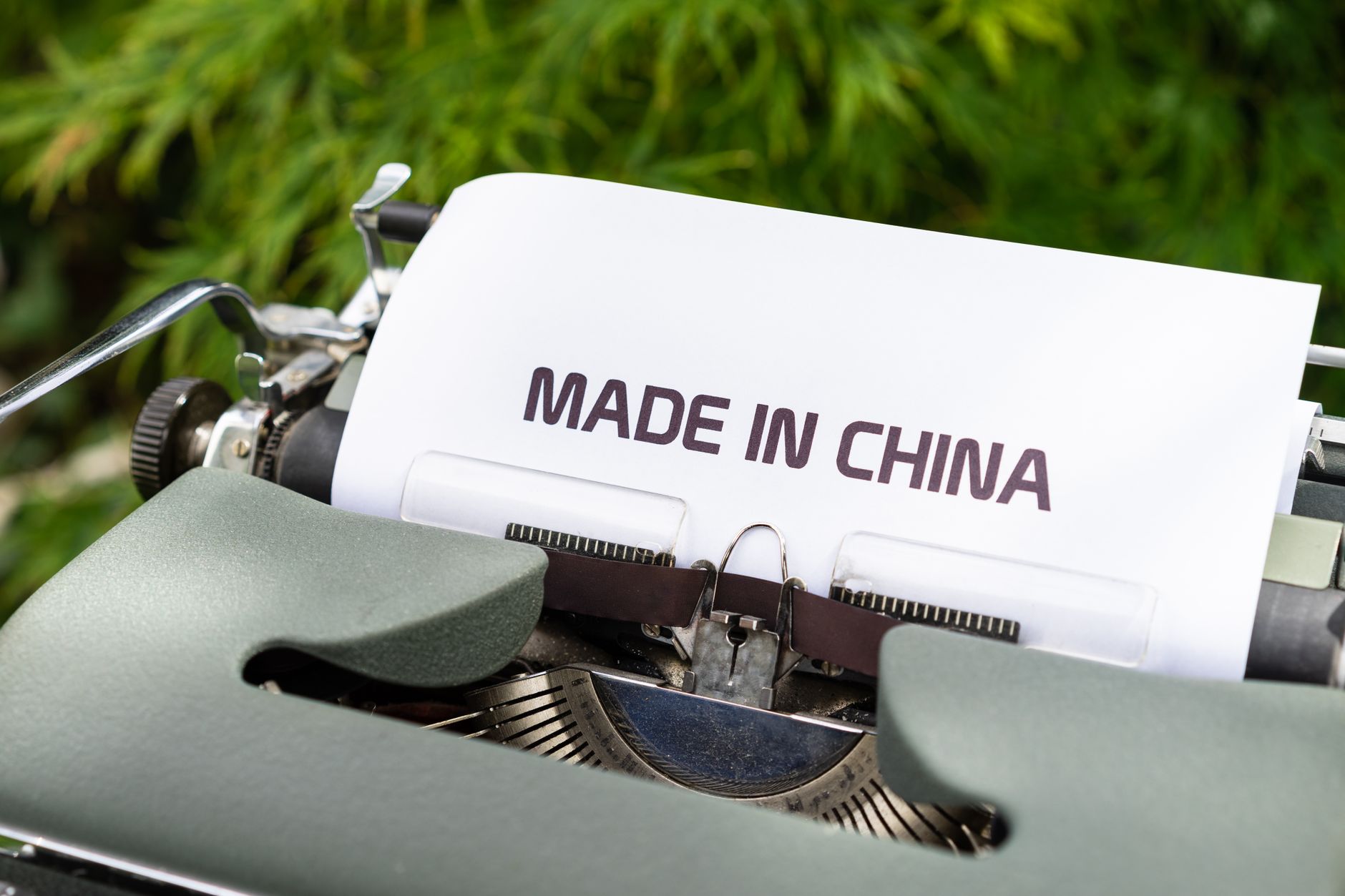
China is no longer just the world’s factory floor. Rising wages, geopolitical friction, technological upgrading, and deliberate industrial policy have transformed what it means to source from or sell into China’s manufacturing sector. Western companies that built their supply chains around cheap, low-skill Chinese production in the 2000s are operating with an outdated map. The terrain has changed.
This guide is for procurement directors, operations executives, and market entry strategists who need a current, actionable picture of China’s manufacturing landscape — what’s moved, what’s stayed, what’s upgraded, and how to position your business accordingly.
The Structural Shift: From Low-Cost to High-Value
China’s average manufacturing wage has risen roughly 300% since 2005. In coastal industrial hubs like Shenzhen, Guangzhou, and Shanghai, monthly factory wages now regularly exceed RMB 6,000–8,000 ($820–$1,100 USD), putting China well above Vietnam, Bangladesh, and even some Eastern European markets for unskilled assembly work.
Beijing’s response has not been to compete on labor cost — it has been to move up the value chain. The Made in China 2025 initiative, launched by the State Council in 2015, identified ten priority sectors for technological self-sufficiency: new energy vehicles (NEVs), next-generation IT, aerospace equipment, advanced robotics, power equipment, agricultural machinery, new materials, biopharmaceuticals, high-end CNC machine tools, and marine engineering. These are not aspirational categories — they represent where China’s industrial subsidies, tax incentives, and state financing are actively flowing.
The practical result: Chinese manufacturers in these sectors are no longer simply executing Western designs. Many are developing proprietary technology, filing patents at record rates, and competing head-to-head with Western OEMs in third-country markets. According to the World Intellectual Property Organization (WIPO), China filed more PCT international patent applications than any other country in 2023 — over 69,000 — surpassing the United States for the fourth consecutive year.
Where Manufacturing Has Moved — and Where It Hasn’t
The “China Plus One” narrative has real substance in certain sectors, but it’s frequently overstated. Understanding what has actually shifted is essential for making sound sourcing decisions.
What Has Moved (or Is Moving)
- Basic textile and apparel: Low-margin, labor-intensive production has migrated substantially to Vietnam, Bangladesh, Cambodia, and Myanmar. Major brands including Nike, Adidas, and Apple supplier Foxconn have diversified assembly operations.
- Simple electronics assembly: Low-complexity PCB assembly and consumer electronics components are increasingly produced in Vietnam’s Red River Delta and Mexico’s northern maquiladora corridor.
- Footwear and leather goods: Similar pattern to apparel — commodity-grade production has shifted, though premium and technically complex work remains in China.
What Has Stayed (or Deepened) in China
- Complex electronics and precision components: Taiwan Semiconductor Manufacturing Co. (TSMC) supply chain dependencies, specialized PCB fabrication, and high-tolerance machined parts remain concentrated in China’s Pearl River Delta and Yangtze River Delta clusters.
- Chemicals and specialty materials: China produces roughly 40% of the world’s chemical output. Relocating this capacity is a decade-long project, not a quarterly decision.
- Automotive components: China’s EV supply chain — batteries, motors, power electronics — is so vertically integrated that sourcing alternatives represent a structural, not tactical, challenge. CATL alone controls approximately 37% of global EV battery supply.
- Industrial machinery and tooling: China’s machine tool industry, supported by MIIT (Ministry of Industry and Information Technology) subsidies, has become a globally competitive supplier for mid-tier CNC equipment.
The bottom line: China’s manufacturing advantage has narrowed in labor-intensive categories and deepened in technology-intensive ones. Your sourcing strategy should reflect which category your products fall into.
Selling Into China’s Industrial Market: The B2B Opportunity
While much attention focuses on China as a sourcing destination, the opportunity on the demand side is equally significant and less discussed. China’s domestic industrial market is enormous and, in many segments, still hungry for Western technology.
Key demand segments where Western industrial companies maintain a genuine competitive advantage:
- Precision measurement and inspection equipment: Companies like Zeiss, Hexagon, and Renishaw maintain strong market positions because Chinese substitutes in ultra-precision metrology remain technically inferior.
- Specialty chemicals and advanced coatings: Dow, BASF, and Henkel all report significant China revenues in industrial specialty chemicals where formulation expertise creates real barriers.
- Industrial software (ERP, MES, PLM): SAP and Siemens maintain substantial China market shares in enterprise manufacturing software, though domestic competitors like UFIDA and Kingdee are gaining ground in SME segments.
- Medical devices and diagnostics: China’s hospital expansion — the government has pledged to build or upgrade thousands of county-level hospitals — creates sustained demand for imaging equipment, surgical instruments, and diagnostic systems.
- Semiconductor equipment: Despite U.S. export controls, China’s chip industry remains a major buyer of process equipment in categories not subject to BIS restrictions.
Western companies that understand the role of state-owned enterprises in China’s procurement decisions will be better positioned to navigate these markets — SOEs dominate heavy industry, infrastructure, and energy, and their purchasing processes differ substantially from private-sector buyers.
Entering China’s B2B Manufacturing Market: Practical Steps
1. Choose the Right Legal Entity
Most Western industrial companies entering China for B2B sales should establish a Wholly Foreign-Owned Enterprise (WFOE) rather than a Representative Office (RO). An RO cannot sign contracts or issue Chinese VAT invoices (fapiao), which are required for all formal B2B transactions in China. A WFOE can do both, and it allows you to hire staff directly, open RMB bank accounts, and remit profits.
For companies selling to government-adjacent buyers (SOEs, local government procurement), a WFOE also signals a deeper commitment to the market — an RO is read by Chinese counterparts as a tentative, low-commitment presence.
2. Qualify and Vet Your Channel Partners
Most Western B2B manufacturers sell through distributors in China rather than direct. This is sensible — building a national direct sales force requires significant capital and years of relationship development. But distributor selection is where deals are made or lost.
Key qualification criteria for industrial distributors in China:
- Business license (营业执照) scope that explicitly includes your product category
- Existing relationships with your target customer segments (ask for named references)
- Technical staff capable of pre-sales support and installation — in B2B, the sales cycle requires technical credibility
- Financial health: request audited financial statements or use a credit reporting service like Qichacha (企查查) or Tianyancha (天眼查) to verify registered capital, litigation history, and ownership structure
- Compliance posture: do they have documented anti-bribery policies? This matters for your FCPA exposure
Our guide on how to negotiate contracts with Chinese companies covers the specific clauses you need in distributor agreements — exclusivity terms, performance benchmarks, IP ownership, and termination rights.
3. Get Your Pricing Architecture Right
Industrial pricing in China is structurally different from Western markets. Chinese B2B buyers expect:
- VAT-inclusive pricing on invoices: The standard VAT rate for manufactured goods is 13% (reduced from 17% in 2019 under MOFCOM reforms). Your distributor will need to issue compliant fapiao to their customers for tax deduction purposes.
- Negotiation room built into list prices: Chinese industrial buyers, whether SOEs or private manufacturers, routinely expect 10–20% discounts from list. Build this into your pricing architecture or you will either get squeezed on margin or fail to close deals.
- Financing terms: Net-60 or Net-90 payment terms are standard in Chinese B2B. Western companies used to Net-30 must either adapt or provide distributor financing facilities.
4. Navigate the Certification Gauntlet
Industrial products entering China require a range of mandatory certifications depending on category:
- CCC (China Compulsory Certification): Required for 18+ product categories including electrical equipment, automotive parts, and safety products. Administered by CNCA (Certification and Accreditation Administration of China).
- NMPA approval: Medical devices must be registered with the National Medical Products Administration. Class II and Class III devices face multi-year review processes.
- MIIT filing: Telecom and radio frequency equipment requires MIIT type approval.
- GB standards compliance: China’s national standards (Guobiao, or GB standards) increasingly diverge from ISO/IEC. Products must be tested to Chinese GB standards, not just Western equivalents.
Budget 12–24 months and significant testing fees for complex product certifications. This timeline is a market entry barrier that favors early movers — once you have your CCC or NMPA registration, competitors face the same delay.
Protecting Your Technology in a Manufacturing Partnership
Western industrial companies rightly worry about IP exposure when working with Chinese manufacturers or engaging Chinese technical staff. The concern is legitimate, but it should be managed — not used as a reason to avoid China entirely.
Practical IP protection framework for industrial companies:
- Register your IP in China first: China’s patent and trademark system is first-to-file. If you’re entering the market, register your patents, trademarks, and trade dress in China before announcing your market entry. The cost of China patent registration is low relative to the exposure.
- Use modular product design: Share the assembly-level design with your Chinese partners, not the core technical specifications. This is standard practice in precision equipment and specialty chemicals.
- Include robust IP clauses in contracts: Chinese courts will enforce IP provisions in well-drafted contracts. The assumption that Chinese IP law is unenforceable is outdated — China’s courts handled over 472,000 IP cases in 2023 according to the Supreme People’s Court annual report.
- Conduct technical audits: Include the right to audit your distributor’s or JV partner’s technical documentation in your contract. Audits deter casual IP leakage.
For companies operating in sectors covered by U.S. Export Administration Regulations (EAR), export licenses may be required before sharing certain technical data with Chinese entities, regardless of whether the technology physically crosses a border. The BIS (Bureau of Industry and Security) at the U.S. Department of Commerce maintains current guidance on EAR classification and license requirements.
Relationship Capital in B2B China: What Still Works
Despite China’s increasing formalization of procurement — more RFP processes, procurement committee approvals, anti-corruption scrutiny — relationships remain a decisive differentiator in industrial B2B. Chinese procurement managers still prefer to buy from companies they know, trust, and have met in person.
The investments that pay dividends:
- Executive-level visits: Sending a senior executive to a key customer in China signals commitment in ways that no amount of email or video call can replicate. Chinese counterparts interpret executive presence as a proxy for long-term dedication to the relationship.
- Canton Fair and trade show participation: The China Import and Export Fair (Canton Fair) in Guangzhou runs three phases across April and October and attracts over 200,000 buyers from more than 200 countries. Industrial machinery, chemicals, and building materials are prominent categories. Presence at Canton Fair communicates seriousness to the China market.
- Local technical support: Having Chinese-speaking application engineers who can visit customers, troubleshoot in-person, and speak in Mandarin is a significant competitive advantage over Western companies that rely on remote support.
Understanding how to build long-term partnerships beyond the first deal is particularly important in industrial B2B, where switching costs are high and relationships compound over years.
The Digital Infrastructure Layer: China’s B2B Procurement Platforms
China’s B2B procurement has moved substantially online. Western industrial companies that ignore digital channels are effectively invisible to a large segment of Chinese buyers.
The key platforms:
- 1688.com (Alibaba): Primarily domestic China B2B, but increasingly used by manufacturers sourcing foreign brands’ Chinese distributors
- Made-in-China.com: Focused on connecting Chinese manufacturers with global buyers
- Global Sources: Hong Kong-based platform with strong electronics and industrial components coverage
- Pinduoduo’s Duoduo Enterprise: Emerging in MRO (maintenance, repair, operations) procurement for smaller manufacturers
For Western companies selling into China’s industrial market, the relevant digital footprint is different: your Chinese distributor should be listed on Zhihu (China’s Quora equivalent, dominant for technical and professional content), your product documentation should be in simplified Chinese with GB-standard specifications, and your WeChat official account should be maintained with technical content that procurement and engineering staff share internally.
The China B2B digital procurement landscape has shifted dramatically since 2020 — companies that set up their digital presence once and left it are working with stale infrastructure.
Key Takeaways for Western Industrial Companies
- China’s manufacturing advantage has shifted from low labor cost to deep supply chain integration and technological capability in strategic sectors — adjust your sourcing logic accordingly
- The domestic B2B market remains highly attractive in precision equipment, specialty chemicals, industrial software, and medical devices — sectors where Western companies maintain genuine technical leads
- WFOE structure, VAT-compliant invoicing, and Chinese-language technical support are non-negotiable for serious B2B market entry
- Distributor selection requires rigorous vetting — use Qichacha or Tianyancha to verify financial health and litigation history before signing
- IP protection is manageable with the right legal structure and contract terms; avoidance is not a strategy
- Executive presence and Chinese-language technical capability still differentiate winners from also-rans in Chinese industrial B2B
For U.S. companies, the U.S. Commercial Service’s China offices (in Beijing, Shanghai, Guangzhou, Chengdu, and Wuhan) offer market research, partner vetting, and business matchmaking services — a genuinely useful resource that many companies overlook. Their China market intelligence portal provides sector-specific reports, regulatory updates, and upcoming trade mission opportunities.