China hosts more trade shows than any other country in the world. Some are genuinely world-class sourcing events that connect thousands of serious buyers and suppliers. Others are crowded, poorly organized, and unlikely to generate useful business outcomes for a foreign visitor. Knowing which is which before you book a flight matters: these trips are expensive, and a poorly chosen event can cost a company a week of time and several thousand dollars for very little return.
Why Chinese Trade Shows Remain Valuable
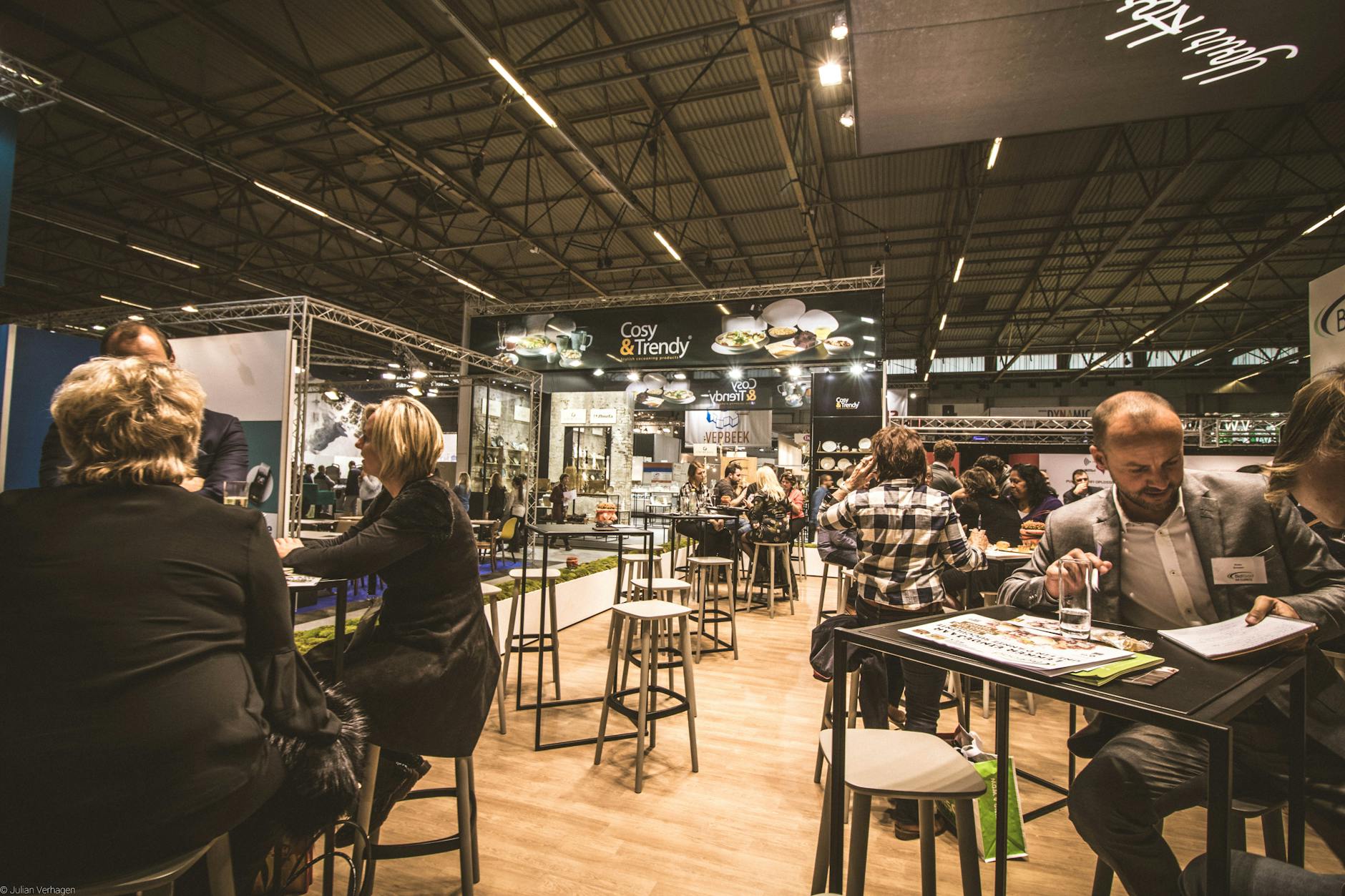
In a world where much B2B sourcing has moved online, in-person trade events in China remain strategically important for several reasons. First, supplier density: at an event like the Canton Fair, you encounter more factories across more product categories in four days than you could visit independently in four months. Second, product inspection: you can physically assess quality, materials, and workmanship before committing to any relationship. Third, market intelligence: walking a trade floor tells you what competitors are selling, what factories are producing speculatively, and where pricing is trending. Fourth, relationship building: in Chinese business culture, face-to-face interaction accelerates trust in ways that email correspondence simply cannot replicate.
For foreign companies at the sourcing or market-entry stage, trade shows are one of the most cost-effective ways to build a vetted supplier shortlist quickly. The key is choosing events that match your actual objectives.
The Canton Fair: Still the Benchmark
The China Import and Export Fair, universally known as the Canton Fair, is the largest trade show in the world by exhibitor count. Held twice annually in Guangzhou (April/May and October/November), it spans three phases across three weeks, with each phase covering different product categories: Phase 1 covers electronics, machinery, and hardware; Phase 2 covers gifts, home, and decor; Phase 3 covers textiles, garments, and footwear.
Canton Fair draws over 200,000 exhibitors and roughly 200,000 foreign buyers annually. The scale is overwhelming by design. The strategy for getting value out of it is focus: register for the specific phase that matches your product category, prepare your supplier requirements in advance, and allocate at least three full days per phase you attend. Walking a hall of 60,000 booths without a research framework is a waste of everyone’s time.
Registration for foreign buyers is free, but you must apply through the official portal and obtain a badge in advance. Accommodation in Guangzhou books out months ahead for Canton Fair weeks. Budget accordingly.
Canton Fair vs. Dedicated Industry Events
For buyers with specific category needs, dedicated industry trade shows often outperform the Canton Fair on depth, even if they cannot match it on breadth. The suppliers at industry-specific events tend to be more specialized, the conversations more technical, and the buyer-to-exhibitor ratio more favorable.
Electronics: Hong Kong Electronics Fair and China Electronic Show
The Hong Kong Electronics Fair (April and October) attracts premium electronics manufacturers who want international buyer exposure. The Hong Kong venue makes visa logistics simpler for many nationalities. The China Electronic Show in Guangzhou is increasingly important for domestic-market-focused tech manufacturers. If electronics or components are your category, both are worth visiting in the same week when they overlap.
Furniture and Home: CIFF Guangzhou and CIFM Canton
The China International Furniture Fair (CIFF) in Guangzhou is one of the world’s largest furniture trade events, typically held in March and September. It draws serious buyers from Europe, the Middle East, and the Americas and features manufacturers ranging from mass-market factories to high-end custom producers. For home goods buyers, CIFF is genuinely indispensable.
Garments and Textiles: Intertextile Shanghai
Intertextile Apparel Fabrics, held in Shanghai each spring and autumn, is the dominant sourcing event for fabric, trim, and garment manufacturers targeting international buyers. Manufacturers at this event are generally more export-oriented and accustomed to working with Western quality and compliance requirements than their counterparts at general-purpose fairs.
Technology and Industrial: CIIF and CAEXPO
The China International Industry Fair (CIIF) in Shanghai covers advanced manufacturing, automation, and industrial technology. It is less relevant for consumer goods buyers but essential for companies sourcing industrial equipment or evaluating Chinese manufacturing technology partners. CAEXPO (China-ASEAN Expo) in Nanning is worth noting for companies operating across Southeast Asian markets alongside China.
How to Prepare for Maximum ROI
Foreign visitors who extract real value from Chinese trade shows share a consistent set of preparation habits:
- Define your supplier criteria before arriving: Know your target price range, MOQ tolerance, certification requirements, and production capacity needs. Without these filters, every booth looks interesting and none are qualified.
- Research the exhibitor list in advance: Most major shows publish exhibitor directories weeks before opening. Pre-identify 20 to 30 target companies and book meetings where possible. Showing up with a schedule beats aimless wandering.
- Bring physical samples or detailed specs: Nothing communicates your requirements as clearly as a physical product or precise technical specification. Bring both if possible.
- Use a translator or local agent for complex conversations: Factory representatives at trade shows speak varying levels of English. For technical or pricing discussions, a skilled interpreter prevents costly misunderstandings.
- Collect and document everything: Business cards, brochures, product samples, and photo documentation of booths and products. The information volume at large shows is disorienting; systematic documentation helps.
The Follow-Up Window Matters
The period immediately after a trade show is when relationships are either advanced or lost. Chinese suppliers expect prompt follow-up from serious buyers. A message within 48 hours referencing your specific conversation signals that you are organized and genuinely interested. Waiting two weeks sends a different message entirely. If you met 15 promising suppliers, rank them by priority and send tiered follow-ups: detailed next-step messages to your top five, courtesy acknowledgments to the rest.
Once you have shortlisted suppliers from a trade show, the next step is verification. Trade show presence is not a quality guarantee. For a structured approach to evaluating Chinese manufacturers after initial contact, see our guide on manufacturing quality control in China and what to expect when you move from introductions to actual production. Our post on setting up a WFOE in China is also relevant if you are approaching the stage of establishing a formal presence to manage supplier relationships directly.
The most productive trade show veterans treat these events as filtering mechanisms, not discovery mechanisms. The goal is not to be amazed by what China makes. The goal is to move from a universe of thousands of potential suppliers to a shortlist of five to ten who meet your actual criteria. With the right preparation, a single well-chosen trade show can accomplish that in four days. Without it, you will spend a week on your feet and come home with a bag of business cards you never use.
For entrepreneurs scaling a product business and evaluating sourcing strategies, Hustlers Library covers the operational side of building a supplier base and managing international procurement as part of a growth-stage business.