
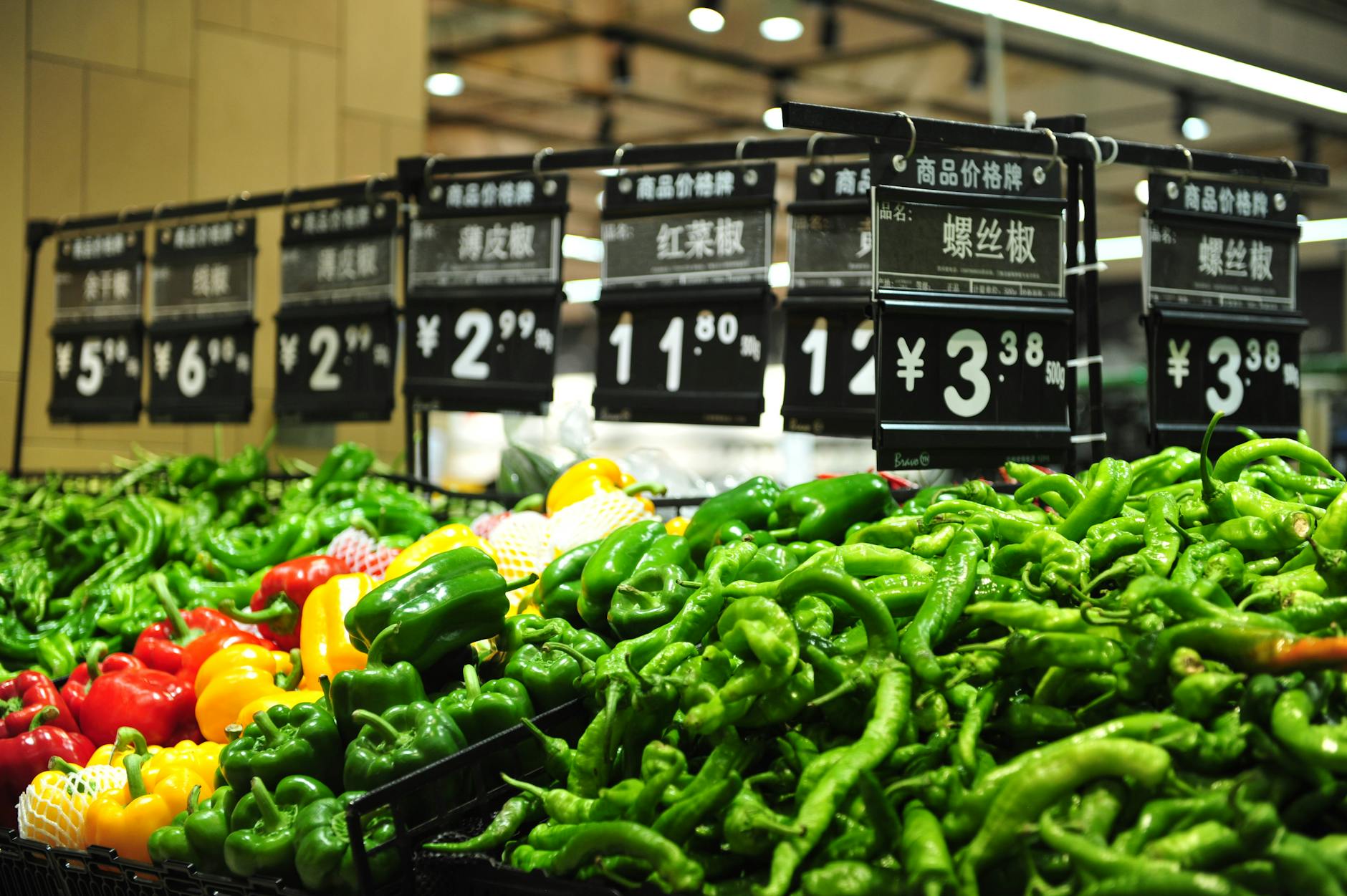
China is the world’s largest retail market by total sales volume, surpassing the United States in 2021 and continuing to grow. For Western brands, it represents one of the highest-potential – and most demanding – markets on earth. Succeeding here requires more than a good product: it demands a distribution strategy built for China’s unique infrastructure, an understanding of how Chinese consumers discover and evaluate brands, and the patience to build a presence before expecting returns.
The Scale of the Opportunity
China’s retail sector encompasses over 1.4 billion consumers, a rapidly expanding middle class, and a digital commerce infrastructure that has no equivalent anywhere else. Online retail alone accounts for roughly 30% of all Chinese retail sales – compared to around 15% in the United States – and that percentage continues to rise. In certain categories such as cosmetics, apparel, and consumer electronics, the online share is even higher.
Several specific dynamics drive the opportunity for Western brands:
- Strong appetite for foreign brands: Chinese consumers in the upper-middle and premium segments actively seek Western brands as signals of quality, status, and lifestyle. Categories including skincare, nutrition, baby products, fashion, and spirits all show sustained demand for imported brands.
- Growing tier 2 and tier 3 cities: Luxury and premium brands have largely saturated Tier 1 cities such as Beijing, Shanghai, and Guangzhou. The next wave of consumer growth is coming from Tier 2 and Tier 3 cities – Chengdu, Xi’an, Hangzhou, Nanjing – where disposable income is rising and Western brand penetration remains relatively low.
- Young, mobile-first shoppers: China’s core consumer demographic is under 35, digitally native, and makes most purchasing decisions through social media research and mobile commerce platforms. Brands that understand how to operate in this environment have a structural advantage.
The Main Entry Channels
Western brands entering China’s retail market have several distribution routes available, each with different capital requirements, speed to market, and control tradeoffs.
Cross-Border E-Commerce (CBEC)
Cross-border e-commerce allows foreign brands to sell to Chinese consumers without establishing a legal entity in China or importing goods through the standard customs process. Products are sold from overseas warehouses and shipped directly to consumers, or held in bonded warehouses within Chinese Free Trade Zones for faster fulfillment.
The primary platforms for CBEC are Tmall Global (operated by Alibaba) and JD Worldwide (operated by JD.com). Both require a formal application process, a minimum brand profile, and category-specific fees, but they provide access to hundreds of millions of active shoppers. CBEC has been the entry point for thousands of Western consumer brands since China expanded the program in 2015.
Key advantages: lower upfront commitment, no need for a China business entity, and direct access to established consumer audiences. Key limitations: less control over brand presentation than a standalone store, dependence on platform algorithms, and restrictions on certain product categories. For a deeper look at how China’s cross-border e-commerce rules work, see our guide on China’s cross-border e-commerce regulations.
Domestic E-Commerce via a WFOE
Brands that establish a Wholly Foreign-Owned Enterprise in China can sell through domestic e-commerce channels – Tmall domestic, JD.com, Pinduoduo – as a fully registered local entity. This opens access to a broader product range, eliminates certain CBEC category restrictions, and enables a more integrated supply chain with local warehousing.
The tradeoff is higher compliance overhead: import tariffs on goods, full Chinese taxation, local employment obligations, and the operational demands of managing a China entity. For brands with sufficient volume and long-term commitment, the economics typically justify the investment. For brands testing the market, CBEC is the better starting point. Our overview of Representative Office vs WFOE structures covers the entity decision in detail.
Social Commerce: Douyin and Xiaohongshu
Two platforms have transformed how consumer brands grow in China and neither fits neatly into the Western category of “e-commerce platform” or “social media.”
Douyin (the Chinese version of TikTok, operated separately from the international product) has become the dominant live-streaming commerce platform in China. Brands partner with Key Opinion Leaders (KOLs) or host their own live-streaming sessions where hosts demonstrate products in real time, answer questions, and drive immediate purchases. The conversion rates from well-executed live commerce can exceed those of conventional product listing pages by multiples.
Xiaohongshu (also called RED or Little Red Book) operates as a social discovery platform where users share product reviews, lifestyle content, and purchase recommendations. It functions as China’s equivalent of Pinterest crossed with Instagram, with deep e-commerce integration. For beauty, fashion, health, and lifestyle brands, Xiaohongshu is often the primary channel where purchase intent is formed, even when the transaction happens elsewhere.
Western brands that have succeeded on both platforms share a consistent approach: they invest in localized content rather than translated global assets, work with Chinese KOLs who genuinely fit their brand aesthetic, and treat the platforms as community-building tools rather than pure sales channels.
Brand Localization: What It Actually Requires
Localization in China goes far beyond translating packaging or running Chinese-language ads. The brands that perform consistently well in the Chinese market make deliberate choices about how they present themselves to Chinese consumers – choices that often differ substantially from their global positioning.
Several dimensions matter:
- Name: Most successful Western brands in China have a Chinese name that either phonetically approximates the English name or carries a meaning relevant to the brand’s values. Coca-Cola’s Chinese name (可口可乐, Kěkǒu Kělè) means “delicious happiness” – a deliberate choice that resonates culturally. A poorly chosen Chinese name can actively damage brand perception.
- Visual identity: Color associations, design preferences, and aesthetic norms differ between Western and Chinese consumers. Red and gold carry positive connotations in Chinese culture that they may not carry in a Western context. Minimalist packaging that performs well in Scandinavia may feel cold or low-status to Chinese shoppers expecting richness and detail.
- Product adaptation: Some categories require product-level localization. Cosmetics brands adapt formulations for different skin types; food brands develop flavors that match local preferences; apparel brands adjust sizing ranges. These investments are not optional for category leadership – they are table stakes in competitive segments.
- Festival and seasonal marketing: Chinese New Year, Singles’ Day (November 11), 618 shopping festival, and Qixi Valentine’s Day are the major retail peaks. Brands that plan campaigns around these events – including limited edition packaging, platform promotions, and KOL activations – generate disproportionate sales and brand visibility.
Common Entry Mistakes
Western brands entering China’s retail market repeatedly make a small set of predictable mistakes. Knowing them in advance is cheaper than learning them through experience.
Underestimating platform competition: Tmall and JD are not passive distribution channels. They are competitive marketplaces where ranking, review volume, promotional spend, and storefront design directly determine visibility. New entrants without a plan for platform activation often find their listings invisible despite having good products.
Relying on a single distributor: Many brands enter China by appointing one distributor and assuming the distributor will handle everything. This sometimes works, but it often results in loss of pricing control, brand dilution, and difficulty recovering the market if the relationship sours. Building in direct-to-consumer capabilities from the start creates leverage.
Skipping the daigou phenomenon: Before entering China officially, many Western brands already have an unofficial presence through daigou – grey market resellers who purchase products abroad and resell in China at a markup. Monitoring and eventually incorporating this demand into a formal channel strategy matters for pricing integrity and consumer trust.
The US International Trade Administration’s China market resources provide current data on market access, tariff schedules, and sector-specific entry guidance for American brands. European brands should reference the EU’s EU-China trade policy pages for comparable frameworks.
The Long-Term Play
China’s retail market rewards patience and penalizes short-term thinking. Brands that enter with a 5-year horizon – investing in brand building, localization, platform presence, and local partnerships before expecting significant returns – consistently outperform those that treat China as a quick export opportunity.
The brands that have built durable positions in China: Apple, Nike, L’Oreal, Estee Lauder, Lululemon, and others did not achieve scale by treating China as a secondary market. They made it a strategic priority, staffed it with people who understood the consumer, and committed to operating within the market’s rules rather than around them.
For Western brands willing to make that commitment, China’s retail market remains one of the most significant growth opportunities available anywhere in the world.