
China’s pilot free trade zones (FTZs) represent the most direct path for foreign companies to access the Chinese market with reduced regulatory friction. Since Shanghai launched the first FTZ in 2013, the network has expanded to 22 zones covering key economic corridors across the country. For foreign businesses evaluating market entry, the FTZ system offers a distinct set of advantages, but it requires understanding what each zone actually delivers, how it differs from the broader investment environment, and where the limitations still apply.
What China’s Free Trade Zones Are (and Are Not)
Chinese FTZs are not duty-free shopping zones or export processing parks in the traditional sense. They are designated geographic areas where China tests liberalized policies before rolling them out nationally. The experiment covers foreign investment rules, financial regulations, customs procedures, and administrative approvals. Policies that prove effective in an FTZ often become national policy within a few years.
For foreign companies, the practical meaning is this: FTZs typically offer a shorter Negative List (the list of sectors restricted or prohibited to foreign investment), faster business registration, streamlined customs clearance, and more flexible cross-border capital management. What FTZs do not provide is tax-free status on all transactions, exemption from Chinese labor law, or immunity from the broader regulatory environment that governs doing business in China.
The Major FTZs and What They Specialize In
Shanghai: Lingang and the Pilot Zone
Shanghai’s FTZ, expanded with the Lingang special area in 2019, remains the most internationally integrated. Lingang offers deeper liberalization than earlier FTZ iterations, including more open rules for financial services, data flows, and advanced manufacturing. The zone has attracted semiconductor, aerospace, and biopharmaceutical investment at scale. For companies in technology-intensive sectors seeking to establish Chinese operations with full foreign ownership, Shanghai’s FTZ is typically the first benchmark to evaluate.
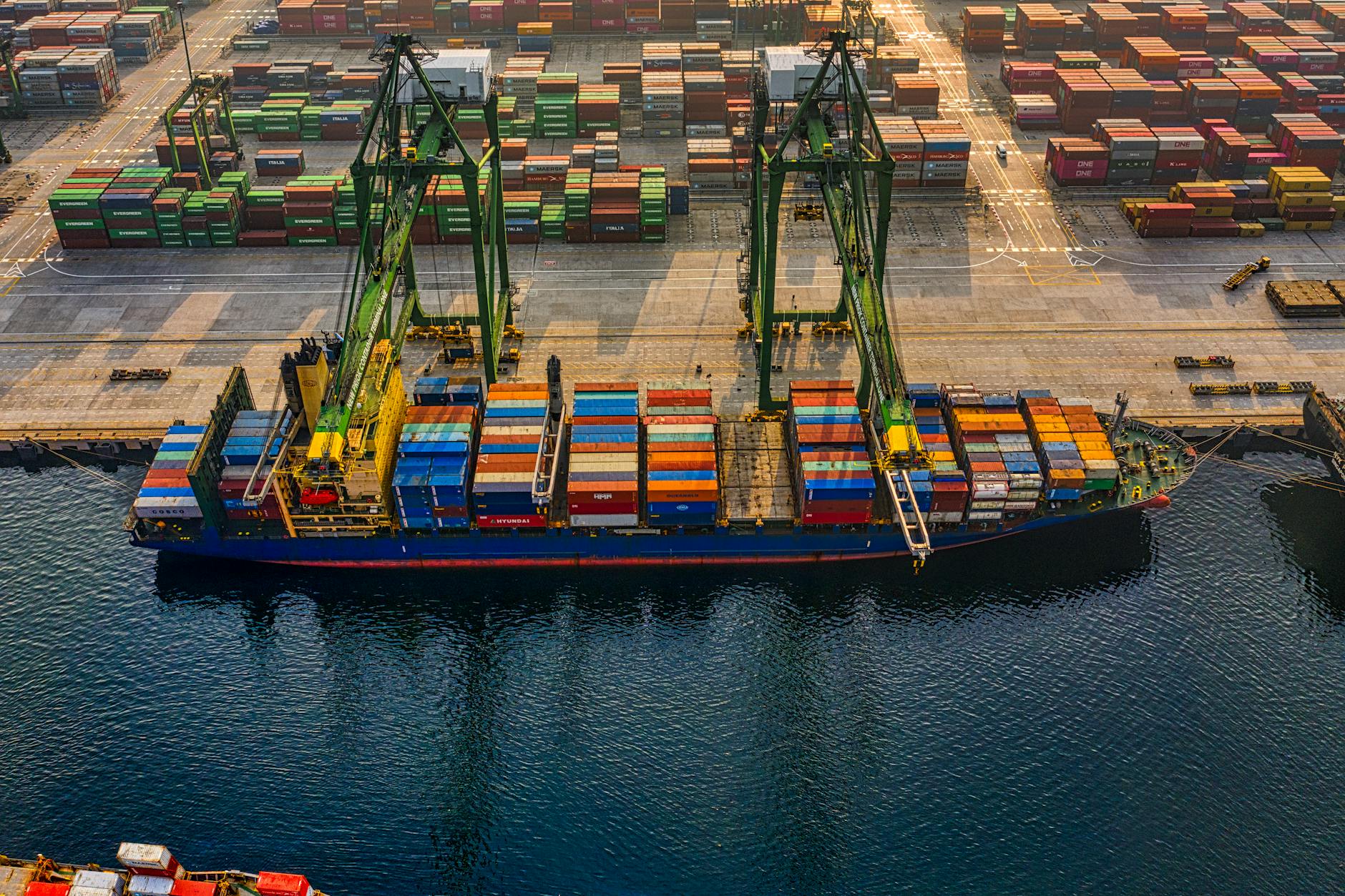
The zone’s customs infrastructure is directly connected to Yangshan Deep-Water Port, giving manufacturing and logistics operations direct access to one of the world’s highest-volume container terminals. Clearance times for bonded goods run faster here than in most other Chinese ports of entry.
Guangdong: Shenzhen, Guangzhou, and Zhuhai
The Guangdong FTZ covers three sub-zones designed to serve different industries. Shenzhen’s Qianhai area focuses on financial services and innovation. Guangzhou’s Nansha sub-zone is oriented toward shipping and advanced manufacturing. Zhuhai’s Hengqin sub-zone, adjacent to Macau, is designed to facilitate tourism and service sector integration. For businesses in financial services, fintech, or those looking to use Macau as a gateway into the Greater Bay Area, Guangdong’s FTZ warrants close examination.
Hainan Free Trade Port
Hainan represents China’s most ambitious liberalization experiment. Unlike the other FTZs, Hainan’s goal is to become a fully free trade port by 2025, with zero tariffs on most goods imported for local consumption, a simplified 15% corporate income tax rate, and significant restrictions lifted on personnel movement and data flows. Foreign companies in tourism, education, healthcare, and consumer goods have strong reasons to evaluate Hainan, particularly for operations serving Chinese high-net-worth consumers. The zone is still maturing, and enforcement consistency is developing alongside the policy framework.
Beijing, Tianjin, and Inland Zones
Beijing’s FTZ emphasizes digital economy, financial services, and science and technology industries. Tianjin focuses on shipping, advanced manufacturing, and financial leasing. The inland zones in Chengdu, Xi’an, Zhengzhou, and Wuhan are designed to capture manufacturing investment moving away from coastal areas, with logistics incentives targeting overland trade to Central Asia and Europe via Belt and Road corridors. For companies with supply chains extending into inland China or with ambitions to serve western Chinese consumer markets, these zones deserve more consideration than they typically receive from foreign investors focused on coastal operations.
Key Benefits for Foreign Companies
Shorter Negative List
Each FTZ operates under a separate, shorter Negative List than the national list that governs foreign investment across the rest of China. The list is administered by China’s Ministry of Commerce (MOFCOM). Sectors that require joint ventures or face ownership caps nationally may be accessible via wholly foreign-owned enterprise (WFOE) structures within an FTZ. This distinction matters most for companies in financial services, healthcare, education, and certain technology sectors. If your sector is restricted nationally but open in an FTZ, registering your entity inside the zone may be the difference between entering with full control and entering through a partnership structure that dilutes your operational independence. For a full breakdown of WFOE structures and how zone selection interacts with entity setup, see our guide on setting up a WFOE in China.
Bonded Logistics and Customs Efficiency
FTZs operate bonded areas where goods can enter, be processed, stored, and re-exported without triggering import duties until the goods enter the domestic Chinese market. This is material for companies that use China as a regional distribution hub, that process goods before final sale, or that need to hold inventory in China without committing to domestic sale. Automotive parts importers, luxury goods distributors, and pharmaceutical companies use bonded FTZ warehousing extensively to manage inventory costs and flexibility.
Cross-Border Capital Management
FTZs allow more flexible RMB and foreign currency management than the standard regulatory environment. Companies in FTZs can open free trade accounts (FT accounts) that provide somewhat more efficient cross-border capital movement. This matters for treasury operations, intercompany fund transfers, and profit repatriation. The advantage is real but should not be overstated: SAFE (State Administration of Foreign Exchange) compliance still governs cross-border capital flows regardless of zone location. For a detailed look at the payment and capital transfer mechanics, see our guide on cross-border payments between China and the West.
Streamlined Administrative Approvals
FTZs have dedicated administrative service centers with expedited processing for business registration, licensing, and approvals. Registration timelines that take 3 to 6 months in other locations routinely complete within 4 to 8 weeks in major FTZs. The quality of the administrative counterparts also tends to be higher: zone officials typically have more experience handling foreign investment and more familiarity with international business norms than their counterparts in smaller Chinese cities.
Practical Considerations Before Committing
Operating from an FTZ makes sense when your business benefits directly from bonded logistics, needs access to sectors restricted outside the zone, or values the administrative efficiency. It makes less sense if your actual operations, suppliers, or customers are primarily outside the zone area, since logistical costs and complexity can offset the regulatory benefits.
Real estate and operating costs in major FTZ areas (particularly Shanghai and Shenzhen) are at the high end of the China market. Labor availability varies: the talent pipeline near Shanghai and Beijing FTZs is strong; newer inland zones require more investment in talent acquisition. Evaluate total operating cost, not just regulatory convenience.
Government relations within FTZ administrations are generally smoother than in other parts of China, but the broader need to build relationships across relevant regulatory bodies still applies. The zone administration facilitates approvals; it does not replace the relationships that determine your long-term operational effectiveness. For context on government relations strategy in China, our guide on the role of government relations in Chinese business covers the fundamentals in detail.
Making the Zone Selection Decision
The right FTZ depends on your sector, operational footprint, and strategic priorities. A financial services company belongs in Shanghai or Guangdong. A consumer goods importer serving coastal China may find Shanghai or Guangdong FTZs optimal for bonded warehousing. A manufacturing company evaluating western China operations for Belt and Road supply chain positioning should look seriously at Chengdu or Xi’an. Hainan is a long-term bet worth monitoring for companies in tourism, healthcare, or premium consumer markets.
Run a systematic comparison: review the sector-specific Negative List for each candidate zone, assess the zone’s administrative track record with companies in your industry, and get current intelligence from advisors who work actively within the zone rather than those relying on materials from two years ago. FTZ policies evolve quickly and the on-the-ground reality often differs from official descriptions.
China’s FTZ network represents a genuine policy commitment to lowering barriers for foreign investment in targeted sectors. For companies that take the time to understand which zone matches their specific situation, the combination of faster entry, better sector access, and more efficient operations creates a meaningful competitive foundation.