
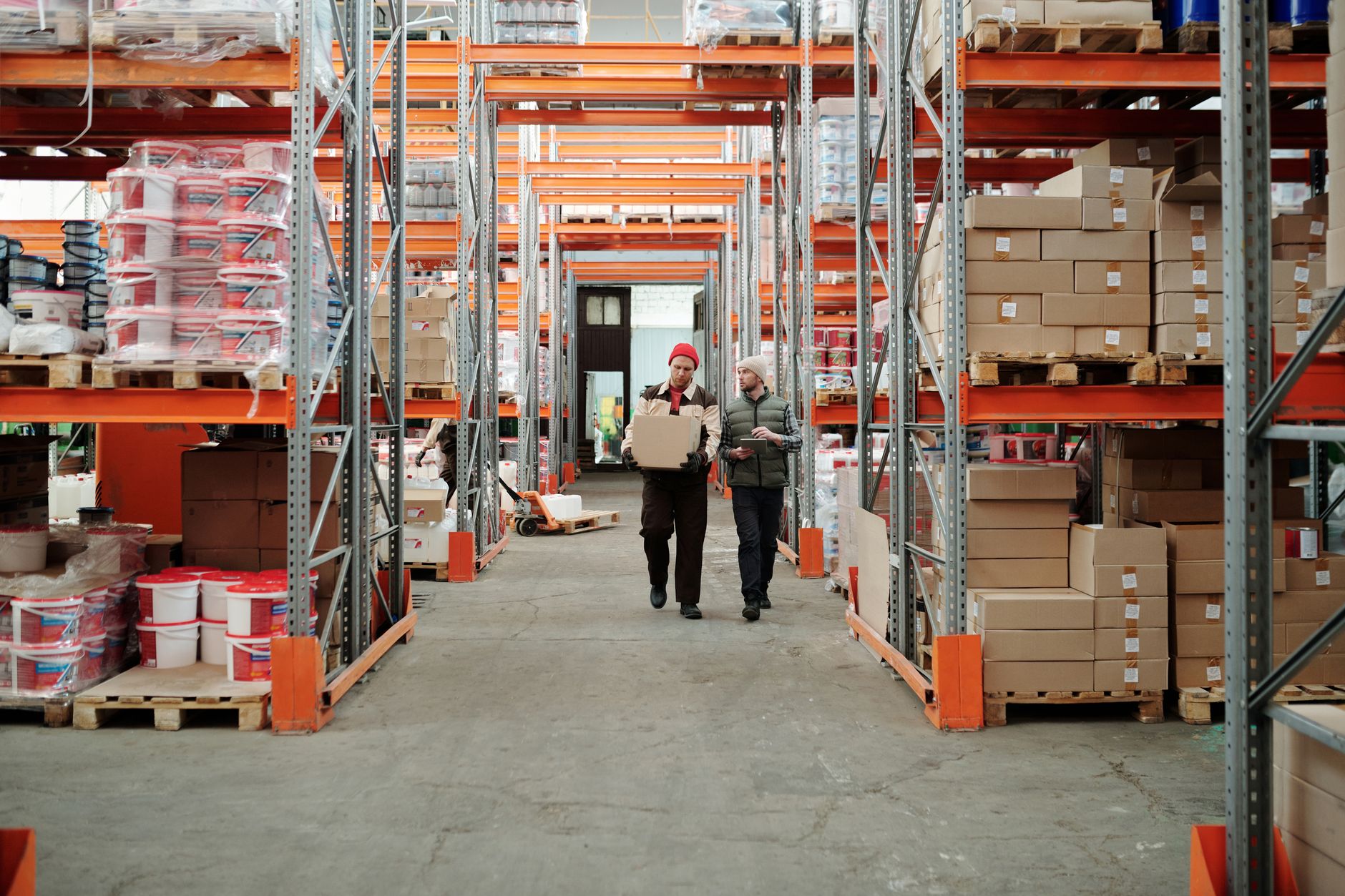
When JD Logistics opened its first fully automated mega-warehouse in Gu’an, Hebei Province in 2017, it processed over 200,000 orders per day with just four human workers on the floor. Sorting robots, autonomous forklifts, and AI-driven inventory systems handled the rest. What made that facility possible was not just technology — it was a revolution in industrial real estate quietly building across China for two decades.
China’s logistics real estate sector is now worth an estimated $300 billion, anchored by three dominant players — GLP (Global Logistic Properties), ESR Group, and Prologis China — who collectively manage over 100 million square meters of modern warehouse space. Understanding who controls this infrastructure and how it intersects with global trade flows is essential for any supply chain professional, investor, or multinational operating in or through China.
Why China Needed a Logistics Real Estate Revolution
Before 2010, China’s warehousing stock was overwhelmingly low-grade: aging single-story sheds scattered around city outskirts, most owned by state enterprises or converted industrial users. China’s modern warehouse space per capita was a fraction of Japan’s, let alone the United States. Then three forces converged: the explosion of e-commerce, the upgrading of manufacturing supply chains, and the entry of global capital hungry for yield in a market suddenly desperate for institutional-grade assets.
Modern logistics facilities — featuring 10 to 14 meter clear heights, wide column spacing, heavy floor loading, and robust power infrastructure — simply did not exist at scale in China. Building them became one of the most consequential infrastructure investments of the past two decades.
GLP: The Company That Defined the Market
Global Logistic Properties began China operations in 2003, listed on the Singapore Exchange in 2010 raising approximately $3 billion, and under CEO Ming Z. Mei built the country’s dominant logistics real estate platform. GLP’s core insight was simple: China’s manufacturers and retailers were moving from owned, fragmented warehousing to leased professional distribution infrastructure. GLP signed long-term leases with anchor tenants — JD.com, Cainiao (Alibaba’s logistics arm), Vipshop, and multinational manufacturers — then developed facilities around those commitments.
By 2017, GLP managed approximately 44 million square meters across more than 50 Chinese cities. In 2018, a consortium led by Hopu Investment, Hillhouse Capital, and Bank of China Group Investment took the company private in an $11.6 billion deal — at the time the largest leveraged buyout in Asian history. GLP today manages over $120 billion in assets globally, with China remaining its largest single-country platform, serving clients from Pinduoduo and Kuaishou to Unilever and Procter & Gamble.
ESR Group: The Pan-Asian Challenger
ESR Group was founded in 2011 by Jeffrey Shen and Stuart Gibson and listed on the Hong Kong Stock Exchange in 2019, raising approximately $1.6 billion. ESR differentiated by targeting second-tier Chinese cities and Southeast Asia earlier than competitors, focusing on mid-sized e-commerce retailers, third-party logistics providers, and cold chain operators that GLP’s premium positioning overlooked.
ESR’s 2022 acquisition of ARA Asset Management created the largest real assets manager in Asia-Pacific outside Japan, with approximately $150 billion under management. In China, it has built strong positions in Zhengzhou, Chengdu, and Xi’an — the inland logistics hubs gaining strategic importance as manufacturers diversify from coastal concentration. ESR has also repositioned as a “new economy” platform spanning both logistics facilities and hyperscale data centers, recognizing their shared infrastructure requirements.
Prologis China: The American Long Play
Prologis, the world’s largest logistics REIT with approximately $200 billion in assets globally, operates a selective China portfolio focused on Shanghai, Beijing, Guangzhou, Shenzhen, Chengdu, and Wuhan. Rather than competing on volume, it targets multinationals in automotive, pharmaceutical, and consumer electronics requiring international-spec facilities and environmental certifications including LEED and BREEAM — increasingly important for companies with Scope 3 emissions commitments.
Prologis data from 2024 showed modern warehouse vacancy rates in prime Pearl River Delta and Yangtze River Delta logistics parks below 8 percent, driven by sustained e-commerce growth and surging cold chain demand.
The E-Commerce Engine Behind It All
China’s e-commerce market processed an estimated 130 billion parcels in 2023, according to the State Post Bureau of China — more than any other country by roughly a factor of four. That volume requires extraordinary fulfillment infrastructure, and the three dominant platforms have taken distinct approaches.
JD.com built its own warehousing and delivery network from the ground up, owning approximately 43 million square meters of warehouse space by 2024. Its Asia No. 1 warehouse projects — super-automated fulfillment centers in major cities — are global benchmarks for e-commerce logistics automation. JD has since spun off JD Logistics as a separately listed Hong Kong entity, which now serves external third-party clients. Cainiao, JD Logistics, and SF International collectively form the backbone of China’s outbound cross-border fulfillment capability, powering billions of dollars of exports to Europe, Southeast Asia, and Latin America each year.
Alibaba’s Cainiao Network operates as a platform coordinating third-party logistics providers, but owns a growing portfolio of bonded warehouses in cross-border free trade zones central to its international expansion. PDD Holdings’ Temu, which reportedly processed over $50 billion in gross merchandise volume globally in 2023, relies on direct-from-factory shipping and partner warehouse networks — generating secondary demand for logistics space from the factory operators in Guangdong and Zhejiang who serve its seller base.
Cold Chain: A Market Within the Market
China’s fresh food e-commerce market reached approximately $80 billion in 2023, driven by Meituan Maicai, JD Fresh, and Hema (Alibaba’s fresh retail chain). This has triggered a cold chain facility development wave. China’s cold storage capacity, while growing rapidly, remains well below developed-market standards relative to population — the gap to Japan’s per capita equivalent is estimated at over 100 million tons of cold storage capacity.
Developers including GLP, ESR, and domestic player CIMC-Enric are building cold chain parks adjacent to agricultural clusters in Shandong, Henan, and Yunnan. The government has made temperature-controlled supply chains a policy priority, offering land subsidies and reduced utility rates to attract qualifying development. China’s Cold Chain Revolution is also generating export infrastructure — cold chain hubs in coastal free trade zones support seafood, fruit, and pharmaceutical exports to ASEAN, the Middle East, and Europe.
What Foreign Businesses Must Know
For multinationals operating supply chains through China, three practical realities define the landscape in 2026.
First, lease availability and facility specification have improved dramatically in Tier-1 and Tier-2 cities. Companies can now lease institutional-grade space from GLP, ESR, or Prologis on terms broadly comparable to European or North American markets, reducing capital requirements for market entry.
Second, landlord concentration means limited negotiating leverage. In high-demand corridors such as Shanghai’s Outer Ring, Guangzhou Nansha, and Shenzhen Longhua, vacancy rates are low. Legal review of long-term leases requires specialist counsel familiar with both domestic property law and the specific operating regulations of free trade zones.
Third, China’s inland logistics buildout is creating supply chain routing options that were impractical five years ago. China’s Five-Year Plans directly target logistics infrastructure as a strategic priority, meaning government co-investment in rail, road, and port connectivity to inland logistics parks in Zhengzhou, Xi’an, and Chongqing structurally underwrites their value in ways pure market analysis underestimates.
The Scale in Numbers
China had approximately 900 million square meters of total warehousing space as of 2023, of which roughly 180 to 200 million square meters met Class A institutional specifications, according to the China Logistics and Purchasing Federation (中国物流与采购联合会). Class A penetration at roughly 20 to 22 percent remains well below the United States at approximately 35 percent and Japan at above 40 percent, indicating substantial runway for continued institutional-grade development.
Prime Shanghai and Beijing logistics yields have compressed to 5 to 6 percent — comparable to European logistics markets — while inland cities still offer 6.5 to 8 percent yields, driving continued Tier-2 capital deployment. The US Trade Representative’s Section 301 documentation has specifically highlighted China’s state-supported logistics infrastructure buildout as a competitive subsidy to Chinese e-commerce and manufacturing exporters — a framing that is shaping US industrial policy discussions around domestic freight real estate investment.
For any business shipping into, out of, or within China, logistics real estate is not background infrastructure — it is a competitive variable. Understanding who owns the warehouses, how they are financed, and what policy environment shapes their development is as commercially important as understanding port congestion or customs procedures. The invisible logistics giants powering China’s global commerce operate from this real estate foundation — and it is a foundation that is still being built.