
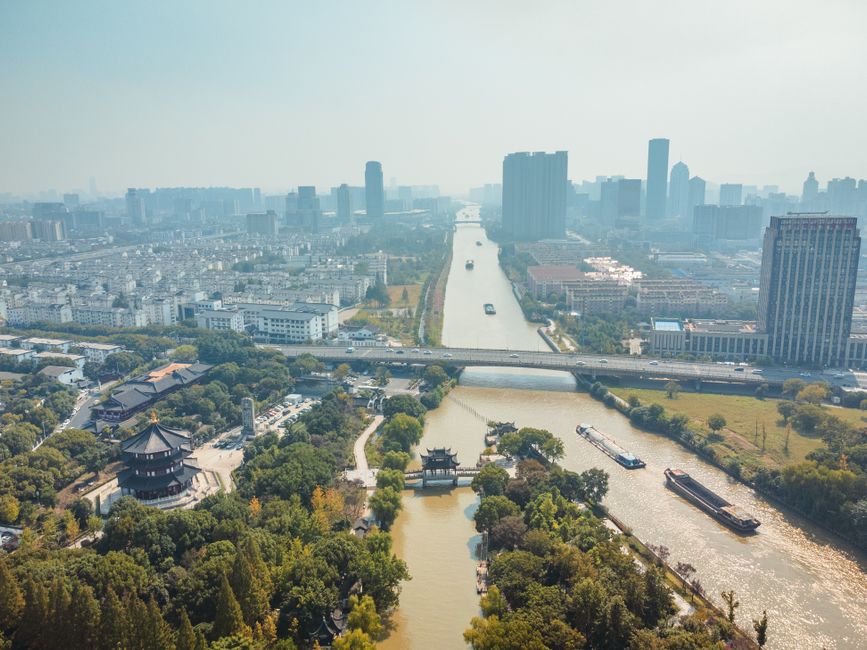
When the Chinese government and the Singapore government agreed in 1994 to jointly develop a 70-square-kilometer patch of land on the eastern edge of Suzhou, they were betting on an experiment. Neither fully understood whether a purpose-built industrial park modeled on Singapore’s Jurong Island could work in China’s then-chaotic regulatory environment. Thirty years later, that bet has returned some of the most astonishing economic numbers in modern development history. Suzhou Industrial Park (SIP) has become the single most referenced template for every special economic zone, high-tech development district, and bilateral investment corridor China has launched since.
For foreign executives considering China market entry, for trade lawyers parsing investment structures, and for supply chain managers evaluating manufacturing locations, understanding SIP is not an academic exercise. It is a practical primer on how China designs industrial policy, attracts foreign capital, and builds the institutional scaffolding that makes complex cross-border business possible.
How Suzhou Industrial Park Was Born
SIP was formally established in February 1994 under a bilateral government agreement between China and Singapore. The project was personally championed by then-Senior Minister Lee Kuan Yew, who envisioned Singapore transferring its urban planning and economic management expertise to China’s reform-era government. The initial Sino-Singapore joint venture, called the China-Singapore Suzhou Industrial Park Development Co., Ltd. (CSSD), held a 65% Chinese stake and a 35% Singapore stake.
The opening years were difficult. Chinese investors and local developers launched a competing zone, Suzhou New District, drawing away some of the foreign investment that SIP was meant to attract. By 1999, the Singapore side had quietly reduced its stake from 35% to 28%, and the Chinese side increased its controlling interest to 65%. What might have looked like a setback was in fact a turning point: with Chinese stakeholders holding a clear majority, local government commitment intensified, land acquisition accelerated, and the bureaucratic bottlenecks that had frustrated early investors began to clear.
Between 2001 and 2010, cumulative utilized foreign investment in SIP grew from approximately USD 4 billion to over USD 18 billion. By 2023, the park hosted more than 5,000 foreign-funded enterprises from over 100 countries, with cumulative utilized foreign investment exceeding USD 40 billion. Annual GDP generated within the park surpassed RMB 330 billion (approximately USD 46 billion) that same year, making SIP one of the highest-output economic development zones in the world on a per-hectare basis.
What Makes SIP Different From a Typical Industrial Zone
China has hundreds of industrial parks, development zones, and high-tech districts. Most offer tax concessions and land at below-market rates. What distinguishes SIP is the degree to which institutional quality and governance were built into the zone’s DNA from the beginning.
Transparent Administrative Services
From the outset, SIP adopted Singapore-influenced administrative practices that prioritized speed, consistency, and transparency in government approvals. The park established a single-window administrative service center where investors could complete business registration, environmental approvals, and construction permits through a unified process. In a country where regulatory opacity often frustrated foreign investors, SIP’s administrative architecture was genuinely differentiated. Singapore’s Economic Development Board (EDB) helped design the workflows. The result: foreign companies operating in SIP reported, in third-party surveys, approval timelines 30 to 50 percent faster than in comparable Chinese development zones.
Integrated Urban Planning
Unlike traditional industrial parks that bolt housing and services onto manufacturing land as afterthoughts, SIP was planned as a complete urban ecosystem. The Jinji Lake business district, a 70-square-kilometer mixed-use development at the heart of the zone, includes Grade-A office towers, international schools, hospitals, and premium residential neighborhoods. Bosch, Samsung, and Siemens anchored early investment partly because the park could house their expatriate executives in a livable environment. This planning philosophy has since been replicated in dozens of Chinese development zones, but SIP pioneered it at scale.
Intellectual Property Protection
SIP was among the first zones in China to establish a dedicated intellectual property protection office with genuine enforcement authority. The park’s IP court, established in 2017, has jurisdiction over patent disputes, trade secret cases, and technology licensing conflicts arising from businesses within the zone. For foreign technology companies, this was significant: the standard advice to multinationals entering China was to localize only non-critical operations and keep core IP offshore. SIP’s IP infrastructure gave companies an alternative calculus. By 2022, SIP housed over 1,200 R&D centers operated by multinational corporations, a density unmatched by any comparable zone in China.
Key Industries and Anchor Tenants
SIP’s sectoral mix has evolved significantly since its early focus on electronics assembly and light manufacturing. Today, the park’s industrial base is concentrated in four clusters: biopharmaceuticals and medical devices, semiconductor and integrated circuit design, advanced manufacturing (robotics and precision engineering), and software and digital services.
In biopharmaceuticals, SIP has become one of China’s most important production and R&D centers. Novartis, AstraZeneca, Pfizer, and China’s own Hengrui Medicine all operate major facilities in the zone. The BioBAY incubator, a public-private platform established in 2007, has catalyzed over 500 biotech startups. By 2024, more than 50 drugs developed within BioBAY had received NMPA regulatory approval. The park’s pharma cluster alone generated revenues exceeding RMB 200 billion in 2023.
In semiconductors, SIP hosts design houses, equipment suppliers, and packaging firms. Renesas, Infineon, and China’s GigaDevice maintain significant presences in the zone. The park’s IC design cluster generated over RMB 50 billion in revenue in 2022, making it the second-largest IC design hub in China after Shanghai’s Zhangjiang district.
Robotics and precision manufacturing anchors are represented by ABB, Trumpf, and a dense cluster of domestic automation firms. Suzhou overall accounts for over 15% of China’s industrial robot deployment, with SIP housing the highest-value robotics applications within the city.
The SIP Model as Policy Export
China’s central government has explicitly used SIP as a template for subsequent bilateral development projects. The China-Malaysia Qinzhou Industrial Park, the China-Indonesia Comprehensive Investment and Cooperation Zone, and the China-Belarus Great Stone Industrial Park all draw directly on SIP’s governance framework, administrative service model, and investor protection mechanisms.
Within China, the Suzhou experience influenced the design of Shanghai’s Pudong New Area, the Shenzhen-Hong Kong Innovation and Technology Cooperation Zone, and Hainan’s Free Trade Port. When Chinese planners talk about building "internationally competitive business environments," SIP is the domestic reference point. Understanding Shanghai’s role as China’s financial capital helps contextualize why SIP positioned itself as a complementary manufacturing and R&D hub rather than a financial services center, creating a productive division of labor within the Yangtze River Delta economic region.
The contrast with other Yangtze Delta manufacturing clusters is instructive. Where Guangzhou and the Pearl River Delta built their competitive advantage on cost-efficient mass manufacturing, SIP deliberately targeted higher-value operations from the start. The park’s minimum investment thresholds, its preference for technology-intensive projects, and its land-use rules that limit labor-intensive assembly all reflect a strategic choice to prioritize quality over volume.
Legal and Compliance Framework for Foreign Investors
Foreign companies entering SIP have access to a range of investment structures that reflect China’s post-2019 Foreign Investment Law. Wholly Foreign-Owned Enterprises (WFOEs) remain the dominant structure for technology companies that want operational independence. Equity joint ventures continue to be used in sectors where local distribution networks or regulatory approvals require a Chinese partner. Variable Interest Entity (VIE) structures are used by a small number of technology companies for businesses in restricted sectors.
SIP operates under the national Negative List system, which defines sectors closed or restricted to foreign investment. For most technology, manufacturing, and services sectors, the Negative List restrictions do not apply in SIP, giving the park a broader investment scope than many other Chinese zones. The park also participates in China’s pilot program for cross-border data flows, allowing certain categories of data to be transmitted internationally under a simplified compliance process, a significant practical advantage for multinational R&D operations.
Foreign investors using bonded warehousing and logistics services within SIP benefit from the zone’s customs facilitation policies. Bonded warehouses in China offer meaningful deferral of import duties and VAT until goods enter domestic circulation, and SIP’s customs collaboration infrastructure makes this particularly efficient for high-value components used in pharmaceutical and semiconductor manufacturing.
Employment law in SIP follows national standards under the Labor Contract Law, with local implementations that tend toward stricter enforcement than in lower-tier cities. Foreign employers operating R&D centers in the park benefit from favorable tax treatment for qualified research personnel, including reduced individual income tax rates for senior foreign experts under China’s talent attraction programs.
What Suzhou Industrial Park Tells Us About China’s Development Approach
SIP is, at its core, a demonstration that China’s government is willing to import and adapt external expertise when it serves a strategic development objective, and that bilateral cooperation at the intergovernmental level can produce durable economic institutions. The Singapore partnership was not merely symbolic. Singapore brought genuine administrative competencies: urban master planning, single-window investor services, IP enforcement frameworks, and an international marketing platform that pre-qualified SIP in the eyes of multinational site selection teams.
The park’s evolution also illustrates how China’s central government uses pilot zones to test policies before national rollout. Cross-border data rules, pharmaceutical fast-track approvals, and talent visa reforms were all trialed in SIP before being applied more broadly. For foreign executives managing compliance across multiple China locations, SIP’s regulatory environment is often the most permissive and predictable in the country.
The lesson for Western companies evaluating China manufacturing or R&D locations is not simply that SIP is a good place to operate, though by most metrics it is. The deeper lesson is about how to read China’s policy signaling. When Beijing designates a zone as a "pilot" for a new regulation, that zone is worth watching closely. SIP has consistently been on the leading edge of China’s reform agenda for thirty years. Whatever the next regulatory liberalization cycle brings, SIP will likely be where it is tested first.
For companies already operating in inland manufacturing hubs like Chongqing or considering a multi-site China footprint, SIP offers a complementary profile: a coastal, high-tech, compliance-optimized environment that can house R&D functions, regulatory affairs teams, and premium manufacturing operations that benefit from proximity to Shanghai’s financial and logistics infrastructure.
Key Facts: Suzhou Industrial Park in 2024
- Total planned area: 278 square kilometers (Sino-Singapore cooperation zone: 80 square kilometers)
- Cumulative utilized foreign investment: Over USD 40 billion
- Foreign-funded enterprises: More than 5,000 from over 100 countries
- Annual GDP: RMB 330+ billion (approx. USD 46 billion)
- R&D centers operated by multinationals: 1,200+
- Biotech startups in BioBAY: 500+
- NMPA-approved drugs from BioBAY: 50+
- Fortune 500 companies with SIP presence: Over 100
External Resources
For official information on Suzhou Industrial Park’s investment policies and sector incentives, the Suzhou Industrial Park Administrative Committee’s English-language portal provides current regulatory frameworks, sector incentive programs, and contact details for the park’s investment promotion team.
For US companies evaluating China market entry, the US Department of Commerce China resources and the International Trade Administration’s China Market Overview provide current-year guidance on regulatory environment, investment climate, and sector-specific market conditions, including the types of special economic zones where US companies operate most successfully.