
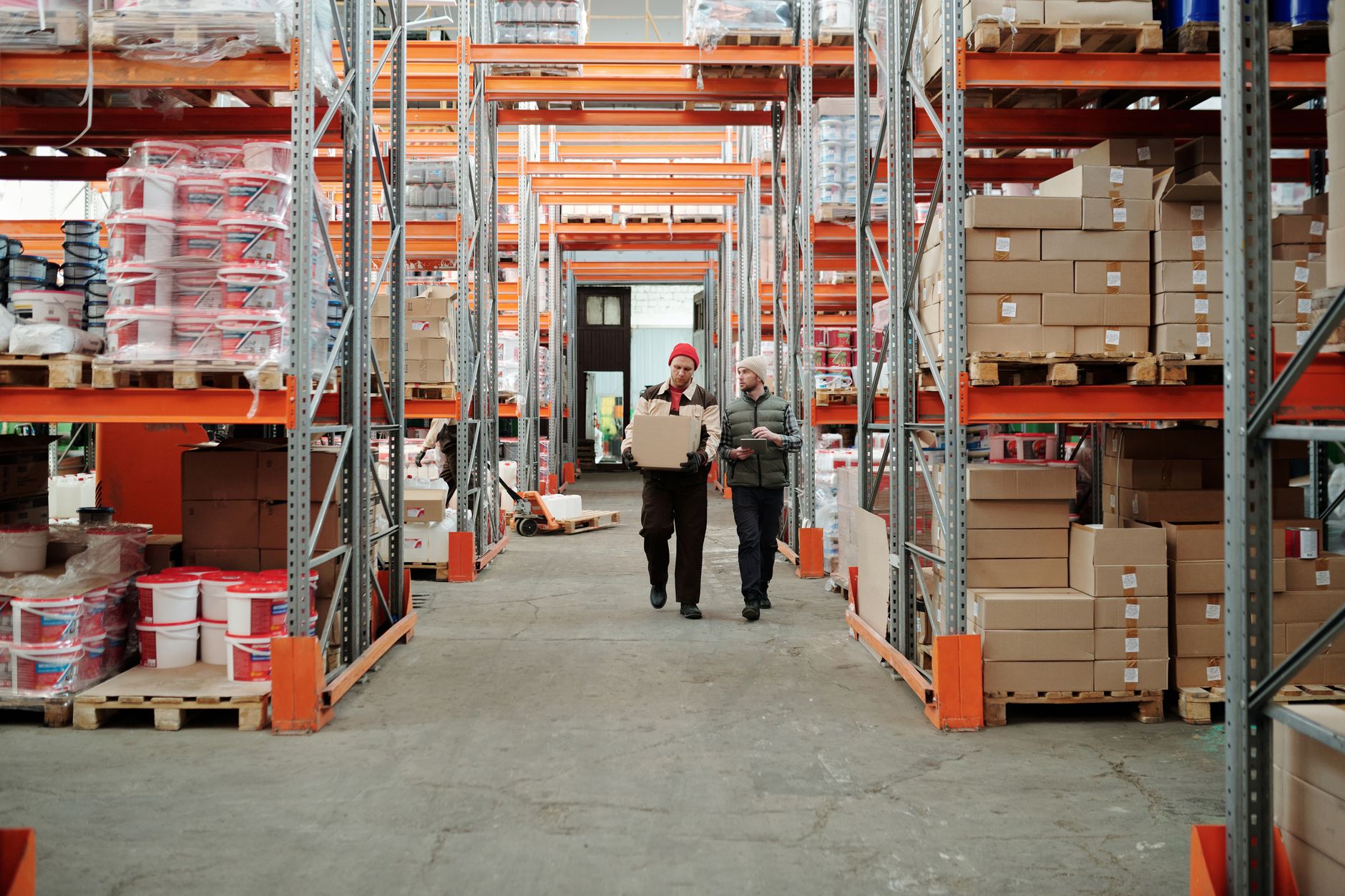
If your company imports goods into China regularly, bonded warehouses are one of the most powerful tools you’re probably underusing. They allow foreign companies to store goods on Chinese soil without immediately triggering import duties, VAT, or customs clearance — holding inventory in a kind of suspended customs status until you’re ready to sell or distribute. For consumer goods companies, manufacturers sourcing components, and cross-border e-commerce operators alike, understanding how to use bonded warehouses strategically can meaningfully reduce costs and accelerate fulfillment.
This guide breaks down how bonded warehouses work in China, the different types available, the regulatory framework governing them, and how to set up operations that run efficiently without tripping over compliance requirements.
What Is a Bonded Warehouse in China?
A bonded warehouse (保税仓库, bǎoshuì cāngkù) is a Customs-supervised storage facility where imported goods can be held without paying import duties or value-added tax (VAT) until those goods are officially cleared for entry into the Chinese domestic market. The legal basis is the Customs Law of the People’s Republic of China (most recently amended in 2021) and the Administrative Measures for Bonded Warehouses issued by the General Administration of Customs (GAC).
The core advantage: you pay duties only when goods move from the bonded facility into domestic circulation. If goods are re-exported, they never trigger Chinese import taxes at all. This is especially valuable for distributors managing uncertain demand, or e-commerce operators who want China-side inventory without over-committing to a full customs entry.
The Three Main Types of Bonded Facilities
China operates several distinct bonded facility types, each governed by its own regulatory structure and suited to different business models.
1. General Bonded Warehouses
These are the simplest form. They’re operated by licensed third-party logistics providers (3PLs) or companies that hold a GAC-issued bonded warehouse license. Foreign companies don’t own these directly; they rent space from licensed operators. General bonded warehouses are suitable for import-for-resale, spare parts storage, and goods awaiting distribution decisions. Duty payment is deferred until goods exit the warehouse into domestic sales.
2. Comprehensive Bonded Zones (CBZs)
Comprehensive Bonded Zones (综合保税区, zōnghé bǎoshuì qū) are designated geographic areas — often adjacent to ports or airports — where a wide range of bonded activities are permitted: manufacturing, processing, warehousing, logistics, and cross-border e-commerce. As of 2025, China has over 170 approved CBZs nationwide, with major ones in Shanghai Pudong, Tianjin Port, Shenzhen Qianhai, and Zhengzhou (the inland logistics hub). CBZs offer the broadest permissions and are preferred by manufacturers who process imported components before re-exporting or selling domestically.
3. Cross-Border E-Commerce Bonded Warehouses
These are a specialized subset operating under China’s cross-border e-commerce (CBEC) policy framework, regulated jointly by the GAC and the Ministry of Commerce (MOFCOM). Under Customs Supervision Code 1210 (CBEC B2C bonded imports), foreign brands can stock goods in a bonded warehouse inside a CBEC pilot zone — currently covering over 130 cities — and fulfill individual consumer orders on demand. Duties and VAT are assessed per-order at preferential CBEC tax rates, which are generally lower than standard import tariff schedules for eligible categories. This model powers the “bonded stocking” strategy used by brands selling through Tmall Global, JD Worldwide, and Kaola.
Regulatory Requirements and Licensing
Setting up bonded warehouse operations requires navigating several approval layers.
For General Bonded Warehouses: The facility operator (not your company) must hold a GAC-issued license. As a foreign company, you simply sign a warehousing agreement with a licensed operator. You’ll need a valid customs registration number (海关注册登记编号) for your company, which you obtain through GAC’s single-window system. You are responsible for maintaining accurate inventory records in the format required by Customs — typically via electronic reporting through the China International Trade Single Window (国际贸易”单一窗口”).
For Operating Inside a CBZ: If you want to establish your own operation inside a Comprehensive Bonded Zone (rather than just renting space), you need approval from the zone management committee, plus a business license issued by the local market regulation authority. Foreign-invested enterprises setting up in CBZs are subject to the same Foreign Investment Law framework that governs other foreign-invested entities in China.
For CBEC Bonded Operations: Your company or your Chinese distribution partner must be registered on the CBEC platform of the relevant pilot zone and appear on GAC’s approved enterprise list. Goods must be included on China’s CBEC positive list (跨境电商零售进口商品清单), which covers most consumer categories but excludes certain pharmaceuticals, live animals, and other restricted items.
The VAT and Duty Mechanics
Understanding exactly when taxes are triggered — and at what rates — is essential for cost modeling.
Under standard import rules, goods entering China’s domestic market face import duty (rates vary by HS code, ranging from 0% to over 50% for some categories), plus a 13% VAT for most goods (9% for agricultural products and certain others), and in some cases a consumption tax. Under China’s VAT system, import VAT is creditable for B2B transactions, but for CBEC B2C sales, it’s assessed on a per-transaction basis.
In a CBZ or CBEC bonded arrangement, goods in the warehouse are not yet subject to these taxes. When a consumer places an order, Customs calculates duty and VAT on that individual parcel. For CBEC, the applicable rate is 70% of normal import duty plus 70% of normal VAT — a significant discount for most categories. There’s also a personal duty exemption threshold of RMB 5,000 per transaction (RMB 26,000 annual cap per individual), below which goods may enter duty-free.
For re-exports (goods moving out of the bonded warehouse back abroad), no Chinese import taxes apply at all. This makes bonded warehouses useful as regional distribution hubs, not just China-entry points.
Operational Considerations for Western Companies
Choose the Right CBZ Location
Location matters more than it might seem. Shanghai’s Waigaoqiao Free Trade Zone and Lingang Special Area offer the best-developed infrastructure and highest transaction volumes for consumer goods. Zhengzhou CBZ is strategically positioned for inland China distribution and has become the preferred base for bonded food and pharmaceutical imports. Shenzhen’s CBZ network supports electronics and tech components. If you’re running a CBEC operation targeting national coverage, Hangzhou’s CBEC pilot zone — China’s first and still one of the most active — has a deep ecosystem of experienced logistics and customs brokers.
Inventory Accounting and Record-Keeping
GAC requires real-time inventory reconciliation. Every inbound shipment must be declared electronically within 24 hours of arrival. Every outbound movement — whether domestic sale, return, or re-export — requires a corresponding Customs declaration. Discrepancies trigger audits. Most operators use a bonded warehouse management system (WMS) that integrates directly with GAC’s single-window system. If you’re using a 3PL, verify that their WMS has current GAC integration — it’s a basic due diligence step, but one that’s often skipped.
For an overview of what to look for when vetting logistics partners, see our guide on conducting due diligence on Chinese suppliers and partners.
Managing the Import Licensing Layer
Certain product categories require import licenses or permits before goods can exit the bonded zone into domestic circulation — even if they’ve been in the warehouse for months. Food products require China Food Safety registration with SAMR; cosmetics need NMPA filing or registration depending on category; medical devices require NMPA approval. Getting these clearances should happen in parallel with your warehouse setup, not after. See our guide to China’s import licensing system for a product-category breakdown.
Handling Returns
Returns are a significant operational variable for CBEC operations. Under current GAC rules, returned goods from CBEC orders can re-enter the bonded zone within 30 days of the original export declaration, with previously paid duties and VAT refunded. The logistics for this are non-trivial: returned goods must be inspected, repackaged if necessary, and declared back into inventory. Build this process into your warehouse agreement from day one.
Strategic Use Cases
Consumer goods brands use bonded stocking to offer faster delivery to Chinese consumers (same-day or next-day from a CBZ, versus 7-14 days from an overseas warehouse) while preserving the tariff-advantaged CBEC tax structure. This is increasingly necessary to compete with domestic brands on platforms like Tmall and JD.
Industrial component suppliers use CBZ bonded facilities to hold safety stock for manufacturing clients in China without triggering full import duties until components are actually consumed in production. This is particularly common in automotive, aerospace, and semiconductor supply chains.
Distributors use bonded warehouses to delay duty payment until they have confirmed purchase orders from Chinese buyers, improving cash flow and reducing the risk of overpaying duties on goods that are ultimately re-exported or returned.
These logistics decisions also interact closely with broader trade strategy. Companies operating bonded facilities as part of a manufacturing or distribution footprint in China should understand how this fits into China’s Dual Circulation strategy, which explicitly encourages foreign companies to deepen domestic market participation through compliant structures like CBZs.
Key Authorities and Resources
The primary regulatory authority for bonded warehouses is the General Administration of Customs (GAC). MOFCOM sets policy for CBEC pilot zones. The State Administration of Foreign Exchange (SAFE) governs foreign currency flows related to cross-border transactions, which affects payment settlement for CBEC orders.
For foreign companies doing initial research, the MOFCOM policy release portal publishes English-language updates on CBEC regulations and free trade zone policies. The US-China Business Council’s market access resources also provide practical guidance on navigating bonded zone entry requirements, particularly for industries facing additional regulatory scrutiny.
Getting Started
The practical first step for most foreign companies is identifying a GAC-registered customs broker and a 3PL with bonded warehouse licenses in the CBZ or pilot zone most relevant to your distribution geography. Many of the major logistics providers — including Kerry Logistics, Sinotrans, and DHL Supply Chain China — operate bonded facilities inside multiple CBZs and offer turnkey bonded warehousing services for foreign brands.
From there, the setup process typically takes four to eight weeks: customs registration, warehousing agreement execution, product filing for any category-specific permits, and system integration with your broker’s GAC reporting interface. The upfront investment is modest relative to the duty deferral and cash flow benefits, particularly for companies moving significant inventory volume into China.
Done right, a bonded warehouse strategy doesn’t just save money on duties — it fundamentally changes how quickly and flexibly you can serve the Chinese market. That competitive advantage compounds over time.