Sourcing from China offers compelling advantages in cost, scale, and manufacturing expertise. But the risks are equally real: quality failures, disappearing deposits, sanctions exposure, and IP theft have collectively cost Western companies billions. Most of those losses trace back to a single gap — insufficient due diligence before signing a contract or cutting a wire transfer.
Conducting proper supplier due diligence in China requires a layered approach that goes well beyond a factory visit and a few reference calls. This guide walks through the full process using the actual tools, registries, and verification methods that experienced sourcing professionals use.
Why Standard Due Diligence Falls Short in China
Western buyers often apply frameworks built for domestic or European suppliers and expect them to translate. They don’t. Several factors make Chinese supplier verification uniquely challenging:
- Fragmented registration data: Business registrations, tax IDs, export licenses, and certifications are maintained across separate government databases, not a single unified source.
- Trading companies vs. manufacturers: A significant share of suppliers on Alibaba and Global Sources are trading companies, not factories. They present themselves as manufacturers, source from third parties, and often lack the quality control leverage of a direct relationship.
- Shell and nominee structures: Some Chinese companies are registered under nominee shareholders with beneficial ownership hidden offshore. Without piercing the corporate veil, you may not know who you’re actually dealing with.
- Sanctions risk: As of 2026, the U.S. Commerce Department Entity List, Treasury OFAC SDN List, and Defense Department’s 1260H list collectively name hundreds of Chinese companies. Doing business with listed entities can trigger export control violations and financial penalties.
Step 1: Business Registration Verification
Every legitimate Chinese company has an 18-digit Unified Social Credit Code (统一社会信用代码). This is the primary business identifier and should be the first thing you verify. Look up a company’s registration status at China’s National Enterprise Credit Information Publicity System (NECIPS), maintained by the State Administration for Market Regulation (SAMR) at gsxt.gov.cn.
From a NECIPS search you can confirm the registered name, legal representative, registered capital, business scope, operational status, shareholder structure, and any administrative penalty records. One frequent red flag: a supplier with registered capital of RMB 500,000 (~$70,000) requesting a $200,000 deposit. Extreme mismatches between capital and contract value warrant immediate scrutiny.
Step 2: Export License and Certification Checks
Verify the supplier’s export license through China’s Ministry of Commerce (MOFCOM), which maintains directories of approved exporters by category including food and agricultural products, chemicals, textiles, and dual-use items.
For product certifications relevant to your destination market, verify directly with the issuing body rather than relying on documents the supplier provides. Common certificates to verify independently include CE marking (via the EU’s NANDO database), FDA registration (via accessdata.fda.gov), and ISO certifications (by contacting the issuing certification body directly). Certificate forgery is not uncommon in lower-tier supply chains. Independent verification takes 15 minutes and eliminates an entire category of risk.
Step 3: Sanctions and Entity List Screening
Before engaging any Chinese supplier, screen the company name, its legal representative, and affiliated entities against the BIS Entity List, OFAC SDN List, Defense Department 1260H list, and Commerce Department Unverified List. Use the U.S. government’s Consolidated Screening List at trade.gov to run all checks simultaneously.
For ongoing supplier relationships, set up automated re-screening on a quarterly basis or whenever a list update is published. This step is especially important for products involving semiconductors, advanced materials, defense-adjacent technologies, or dual-use components subject to the Export Administration Regulations (EAR).
Step 4: Financial Health Assessment
For suppliers you intend to place large or recurring orders with, a financial health check is worth the investment:
- Credit reports: Providers such as Dun & Bradstreet China, Sinosure, and local bureaus offer company credit reports that include payment history, litigation records, and financial ratios. These cost $100 to $500 and are far cheaper than a bad payment.
- Tax compliance status: China’s State Taxation Administration (STA) rates companies A through D. Request the supplier’s most recent tax rating certificate. Grade A means compliant; Grade D signals serious violations.
- Litigation records: Search the China Judgments Online platform (wenshu.court.gov.cn) for court judgments involving the supplier. A history of payment disputes, labor claims, or contract violations is a significant warning sign.
For strategies on reducing single-source dependency and limiting exposure to supplier financial distress, see our guide on building a resilient supply chain in 2026.
Step 5: Factory Audits and On-Site Verification
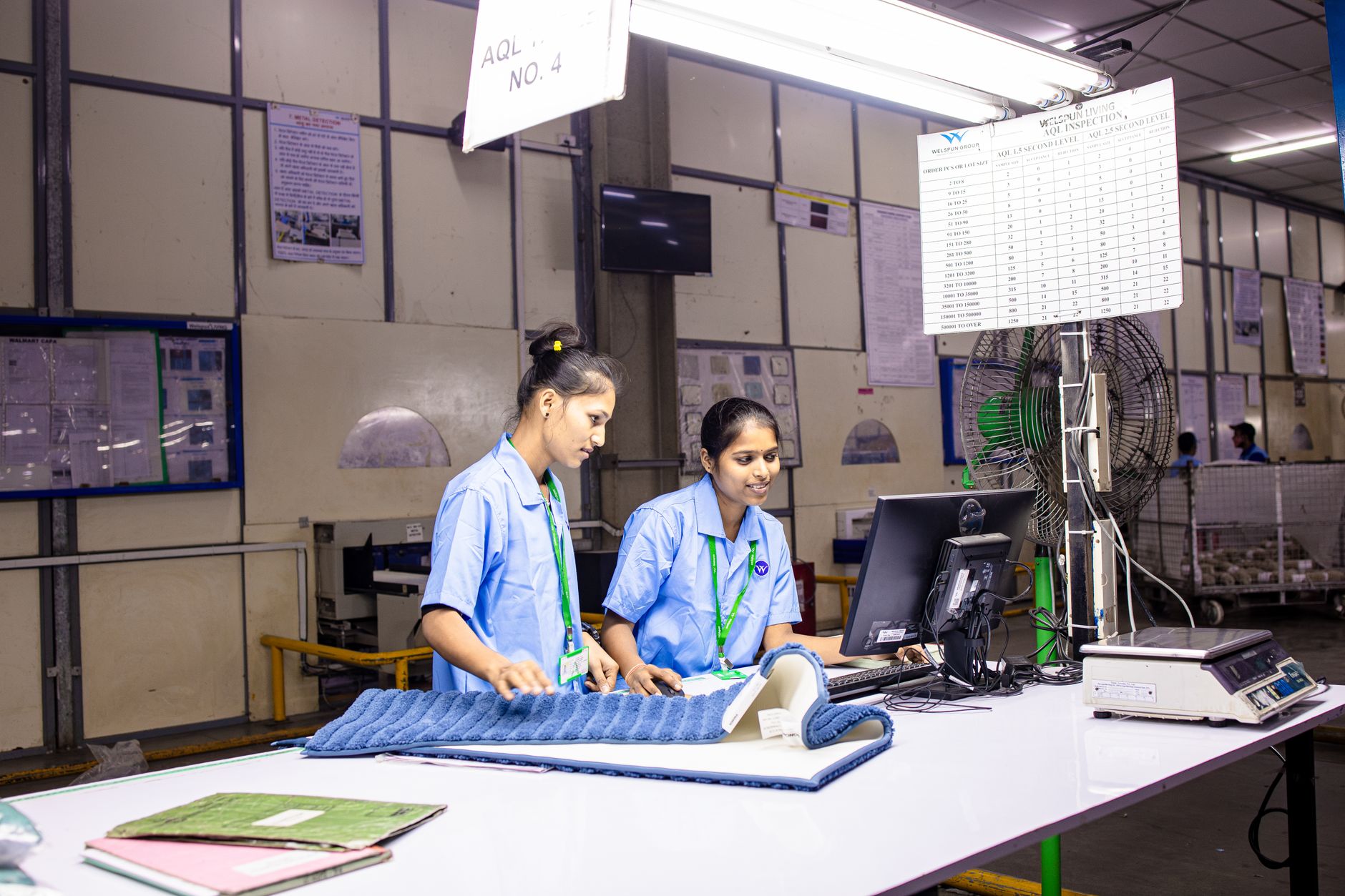
No amount of document review substitutes for boots on the ground. A factory audit confirms the supplier actually has manufacturing capacity and assesses whether that capacity can meet your quality and volume requirements.
Third-Party Audit Firms
Firms such as SGS, Intertek, Bureau Veritas, and QIMA conduct structured factory assessments with standardized scoring across production capacity, quality management systems, worker conditions, and environmental compliance. Costs range from $400 to $1,200 per audit depending on scope and location. Social compliance audits (SA8000, SMETA/Sedex) are increasingly required by Western retailers and publicly traded brands with ESG commitments.
Confirming Factory vs. Trading Company
One of the most important things a site visit reveals is whether you’re dealing with a manufacturer or an intermediary. Ask to see the factory’s own business license and compare the entity name to what appears in NECIPS. If they’re different, you’re dealing with a trading company. That’s not automatically disqualifying, but your quality control leverage now sits one layer further from the production floor.
Step 6: Contractual Protections
Due diligence identifies risk. Contracts allocate it. Several clauses matter most when contracting with Chinese suppliers:
- Quality specifications as an exhibit: Attach a detailed technical specification as an exhibit with tolerance ranges, testing protocols, and approved samples. Don’t just reference “agreed specs” in the contract body.
- Inspection and rejection rights: Specify pre-shipment inspection rights, the standard for rejection, and who bears the cost of rework or replacement.
- IP ownership: Explicitly state that all tooling, molds, and designs funded by you remain your property. Register key trademarks and patents in China before sharing them with any supplier.
- Payment terms: Avoid 100% upfront payment. A standard structure is 30% deposit, 70% against bill of lading or after pre-shipment inspection.
- Dispute resolution: Specifying CIETAC (China International Economic and Trade Arbitration Commission) arbitration is generally more enforceable than pursuing a foreign court judgment in China. Chinese courts enforce CIETAC awards; foreign court judgments require a separate recognition proceeding.
For a deeper look at structuring enforceable agreements, our guide on how to negotiate contracts with Chinese companies covers the full drafting process.
Step 7: Ongoing Monitoring
Due diligence is not a one-time event. Supplier situations change: ownership transfers, financial distress, sanctions additions, and quality drift all happen between contract signing and your fifth reorder. Build a monitoring cadence into your supplier management process:
- Re-screen against Entity List and SDN List quarterly
- Review NECIPS records annually for ownership or license changes
- Conduct a re-audit every 12 to 18 months for strategic suppliers
- Track on-time delivery rates, defect rates, and response times as leading indicators of supplier health
For context on how Chinese manufacturing has shifted since the 2018 tariff cycles and what that means for sourcing strategy, see our analysis of China’s manufacturing shift. And for new entrants conducting their first significant sourcing operation, understanding China’s import licensing system is a parallel process worth completing before your goods reach customs.
Red Flags That Should Pause Any Engagement
Some findings during due diligence don’t require deeper analysis. They require you to stop:
- Company registered within the last 6 months asking for large deposits
- Legal representative appears on OFAC or BIS lists
- Factory address doesn’t match what’s on the business license
- Certificates issued by unaccredited or non-existent third-party labs
- Refusal to allow any third-party audit or site visit
- Pricing 40% or more below market rate (indicates subcontracting or materials substitution)
- Multiple business names sharing a single legal representative across unrelated industries
Any single red flag warrants a conversation. Multiple red flags together usually mean you should walk.
The Bottom Line
Proper supplier due diligence in China requires methodical execution across parallel tracks: registration verification, certification validation, sanctions screening, financial assessment, and physical audit. Each layer catches what the others miss.
The cost of a comprehensive due diligence process on a new strategic supplier typically runs $1,500 to $5,000, depending on audit scope and third-party reports engaged. Against the risk of a fraudulent prepayment, a quality failure, or a sanctions violation, that investment is marginal. Against the cost of doing nothing, it’s essential.