
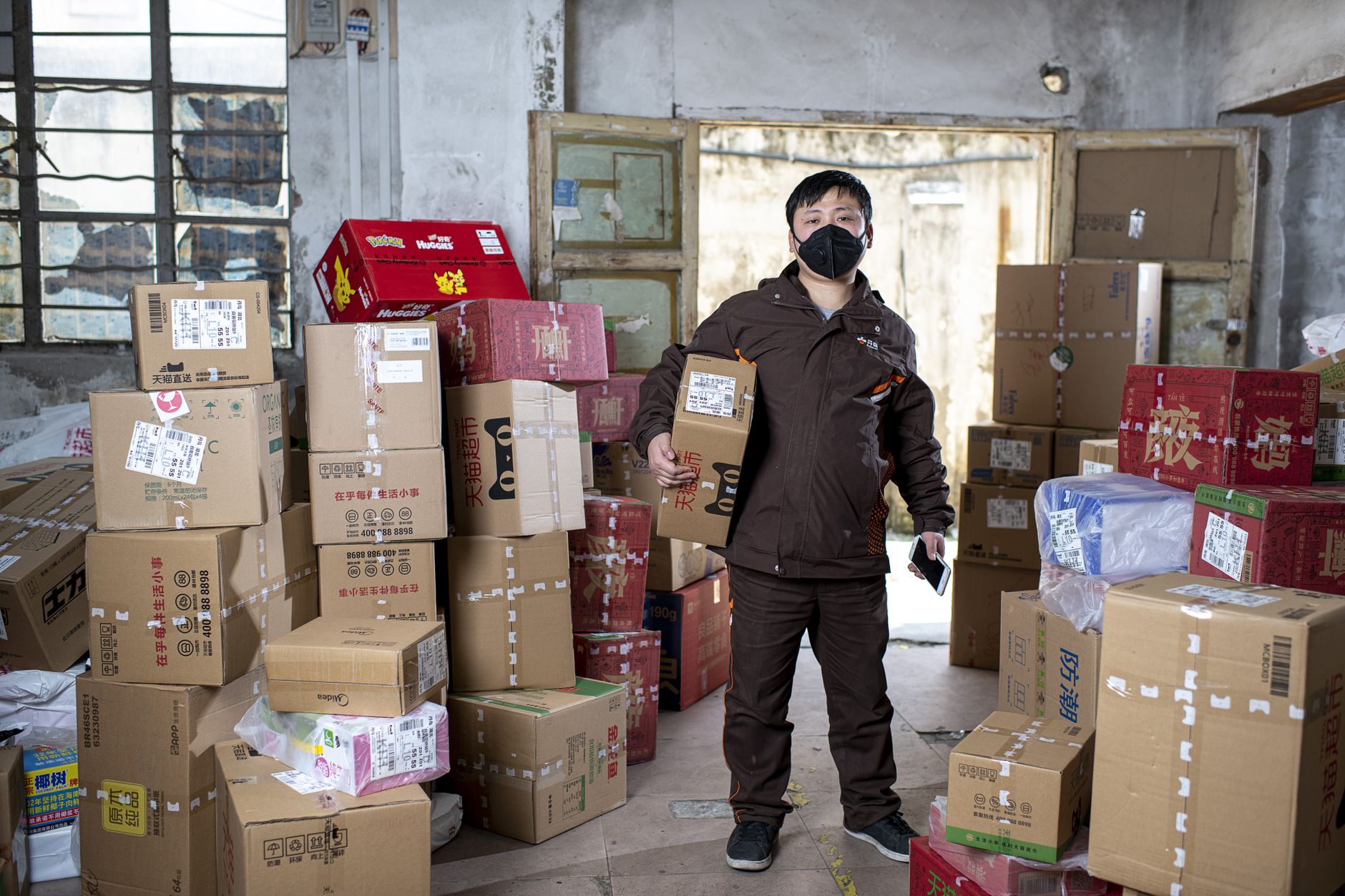
China’s domestic logistics network is, by almost every measurable standard, the most sophisticated in the world. In 2024, Chinese courier companies handled over 172 billion parcels — roughly eight times the volume of the United States — with major platforms routinely delivering within 24 hours in tier-1 and tier-2 cities. For Western companies selling into or sourcing from China, understanding how this infrastructure works is not a nice-to-have; it’s a precondition for competitive pricing, customer satisfaction, and regulatory compliance.
This guide breaks down the key players, cost structures, regulatory constraints, and practical strategies Western sellers need to navigate China’s logistics and last-mile delivery ecosystem in 2026.
The Big Four: Who Actually Moves the Parcels
China’s express delivery market is dominated by a handful of private carriers known collectively as the “Tongda” networks, plus two platform-affiliated logistics arms:
- SF Express (顺丰速运): The premium carrier. Faster, more reliable, significantly more expensive. Preferred for high-value goods, pharmaceuticals, and time-sensitive shipments. SF maintains its own aircraft fleet and cold-chain network.
- ZTO Express, YTO Express, STO Express, Yunda (Best): The Tongda group. Franchise-based networks that compete on price. Rates as low as ¥3–5 per parcel in major corridors. Reliability varies significantly by region and franchise operator.
- Cainiao (菜鸟): Alibaba’s logistics orchestration arm. Not a carrier itself but a platform layer that aggregates carrier capacity, manages warehouse networks, and handles fulfillment for Taobao, Tmall, and Lazada sellers. Integration with Cainiao is essentially mandatory for Alibaba ecosystem merchants.
- JD Logistics (京东物流): JD.com’s in-house carrier, now available to third parties. Operates its own warehouses and delivery fleet. Known for the best last-mile reliability — especially same-day and next-day in 300+ cities. Higher cost than Tongda.
For Western companies selling through Chinese e-commerce platforms, your logistics provider is often determined by the platform itself. Tmall sellers default to Cainiao; JD flagship stores use JD Logistics; independent sellers on Pinduoduo have more flexibility but also more volatility.
Cross-Border vs. Domestic Fulfillment: Two Very Different Models
Western sellers typically choose between two fulfillment models, each with distinct cost, speed, and compliance implications:
1. Cross-Border E-Commerce (CBEC) — Ship from Abroad
Under China’s Cross-Border E-Commerce (跨境电商) framework, foreign sellers can ship goods directly to Chinese consumers without requiring a China entity, full customs clearance, or product registration in many categories. Packages enter through designated CBEC customs supervision zones — Hangzhou, Shanghai, Shenzhen, Guangzhou, and others — under a simplified tariff and tax regime.
Key features of CBEC logistics:
- Bonded warehouse model: You pre-position inventory inside a Chinese bonded zone. Orders trigger domestic delivery, with same-day dispatch possible. This is the fastest CBEC option.
- Direct mail model (直邮): Ship each order internationally from origin country. Slower (4–14 days typically), but no upfront inventory commitment. Best for low-volume, high-SKU sellers.
- Tax treatment: CBEC orders under ¥5,000 per transaction (and ¥26,000 annual per-person limit) benefit from reduced or zero import VAT in many categories. Orders above thresholds face full general trade tariffs.
The regulatory framework for CBEC is governed by the General Administration of Customs (GAC) and the Ministry of Commerce (MOFCOM). The US-China Business Council maintains updated guidance on which product categories qualify for CBEC treatment and which require full general trade registration.
2. General Trade — Domestically Warehoused
Selling through general trade means importing goods through standard customs clearance, paying full tariffs and VAT, and warehousing domestically. This model unlocks the full domestic logistics network — all platforms, all speed tiers — but requires either a Chinese entity (WFOE or JV) or a bonded trading company partner to act as the importer of record.
General trade is essential for product categories excluded from CBEC (certain food products, cosmetics requiring NMPA registration, medical devices) and for companies targeting offline retail alongside e-commerce. For those routes, working with established China sourcing and distribution partners who already have customs relationships significantly reduces friction.
Last-Mile Reality: Tier 1 vs. Tier 3 and Below
The gap between China’s logistics performance in major cities and its performance in lower-tier cities and rural areas is substantial — and it matters enormously for Western brands targeting beyond the top 10 metro markets.
In Beijing, Shanghai, Shenzhen, and Guangzhou, JD Logistics and SF Express routinely deliver within 12–24 hours. Automated sorting centers, dense locker networks (Hive Box / Fengchao is the dominant player with 300,000+ smart locker locations), and digital tracking are standard.
In tier-3 and tier-4 cities — which collectively represent a larger consumer market than tier-1 combined — the picture is different. Tongda franchise quality becomes the variable. Delivery times stretch to 3–5 days. Rural villages may receive service only through the Cainiao Rural logistics network (菜鸟乡村), which operates through village agents rather than direct delivery.
Practical implication for Western brands: if you’re targeting China’s emerging middle class beyond coastal cities, build your logistics SLA expectations around tier-3 performance, not tier-1 showcase metrics. Overpromising delivery times based on Shanghai pilots is a common source of negative reviews and lost repeat customers.
Returns: The Infrastructure Most Western Sellers Underestimate
China’s e-commerce return rates are high by global standards — apparel returns on Tmall frequently reach 20–40%. The regulatory environment reinforces this: the E-Commerce Law (电子商务法), effective 2019, mandates a 7-day no-questions-asked return right (七天无理由退货) for most goods sold online.
Managing returns from a Western home base is operationally prohibitive. The economics only work if you have either a bonded warehouse inside China (returns go back to the bonded zone without re-importing) or a local returns processing partner. Several third-party logistics providers (3PLs) specialize in China e-commerce returns — including Zongteng Group, 4PX, and Winit — and offer reverse logistics services bundled with outbound fulfillment.
For Western sellers navigating cross-border e-commerce regulations, building a returns strategy before launch is not optional. Platforms will suppress your product listings if your return metrics fall below thresholds.
Cold Chain and Specialized Freight
China’s cold chain logistics sector is growing rapidly but remains underdeveloped relative to the size of the market. The Ministry of Agriculture and Rural Affairs (MARA) estimates that cold chain losses for agricultural products still run at 10–25% nationally — compared to under 2% in Japan.
For Western food, beverage, pharmaceutical, or cosmetic brands requiring temperature control:
- SF Express Cold Chain: The most reliable domestic option. Operates dedicated refrigerated facilities in 30+ cities. Premium pricing reflects the infrastructure investment.
- JD Logistics Fresh (京东物流·生鲜): Strong in major metros; relies on third-party partners in lower-tier coverage areas.
- China Post / EMS: Covers rural areas that private carriers won’t serve, but cold chain capability is limited outside provincial capitals.
Import cold chain adds another layer: bonded cold storage in CBEC zones is available but in short supply. Pre-booking refrigerated bonded space, particularly ahead of peak seasons (Chinese New Year, 618, Double 11), is essential and should be contracted months in advance.
Platform-Specific Logistics Requirements
Each major Chinese e-commerce platform has its own logistics rules, and compliance is non-negotiable:
- Tmall / Taobao: Strongly preferred logistics partners are Cainiao-integrated carriers. Sellers using non-integrated carriers face lower search ranking visibility. Tmall Global (跨境) requires CBEC-registered warehouse or direct mail through approved channels.
- JD.com: First-party (JD direct) products must use JD Logistics. Third-party sellers can choose providers but are ranked partly on delivery speed metrics — a strong incentive to use JD Logistics if cost allows.
- Pinduoduo / Temu: Extremely price-sensitive. Temu’s managed model for Western sellers means Temu handles all China-side logistics; sellers ship to Temu’s origin-country warehouse. Domestic Pinduoduo sellers face aggressive shipping cost pressure.
- Douyin (TikTok) Commerce: Fast-growing. Integrated with both JD Logistics and Cainiao. Live-commerce orders require rapid fulfillment — a spike of hundreds of orders in 30 minutes is normal during a successful stream. Logistics readiness for demand volatility is critical.
Technology Integration: Mandatory, Not Optional
Chinese logistics operates on a level of digital integration that often surprises Western sellers. Every carrier provides real-time tracking via API. Warehouses use automated sorting systems with 99%+ scan accuracy. Consumer expectations for push notifications, minute-level delivery tracking, and electronic proof of delivery are set by domestic competitors — and you’ll be measured against them.
For Western companies building China operations, integration with a Warehouse Management System (WMS) that connects to Chinese carrier APIs is table stakes. Cainiao Open Platform, JD Open Platform, and SF API all offer developer documentation and sandbox environments. If you’re using a 3PL, verify their API integration capabilities before signing — manual logistics management at Chinese e-commerce volumes is not viable.
The US Commercial Service’s China team maintains a directory of vetted 3PL and logistics service providers specifically serving US exporters, which is a useful starting point for due diligence.
Cost Benchmarks for 2026
Logistics costs in China are the lowest in the world for domestic small parcel, but cross-border and specialized costs are significantly higher. Rough benchmarks for 2026:
- Domestic small parcel (Tongda, 1kg, major corridor): ¥3–6 (~$0.40–0.85)
- Domestic small parcel (SF Express, 1kg): ¥12–18 (~$1.65–2.50)
- CBEC direct mail (US to China, 0.5kg): $8–15 depending on carrier and speed
- CBEC bonded warehouse pick-and-pack + domestic delivery (1kg): $3–6 total (warehouse fees + last-mile)
- Cold chain surcharge (domestic, SF): 30–80% premium over ambient rate
These costs need to be modeled against your product margin structure before committing to a China e-commerce channel. Premium products with margins above 60% can absorb CBEC logistics costs; commodity or low-margin goods rarely pencil out without a domestic manufacturing or warehousing presence.
Building Your China Logistics Stack
The practical architecture for a Western brand entering China e-commerce through legitimate channels typically looks like this:
- Start with CBEC direct mail to test product-market fit and manage cash risk. Use a bonded warehouse for your top-selling SKUs once you’ve validated demand.
- Partner with a specialist CBEC fulfillment provider (4PX, Winit, or similar) rather than trying to build direct carrier relationships from Day 1.
- Integrate returns handling from the outset — even if volume is low initially, the process needs to exist before you scale.
- Move to general trade for best-selling SKUs once you have enough volume to justify the compliance overhead and a reliable importer of record.
- Budget for peak seasons: Double 11 (November 11) and 618 (June 18) drive 30–50% of some brands’ annual China revenue in a 24-hour window. Logistics capacity needs to be reserved 60–90 days in advance.
For companies already managing supply chain complexity with Chinese manufacturers, the logistics layer for selling back into China through e-commerce is a natural extension — but it requires a dedicated operational effort. Understanding how to build a resilient China supply chain is the prerequisite; logistics for inbound sales is the next step in that operational maturity curve.
China’s logistics infrastructure is a genuine competitive advantage for any brand that learns to use it well — and a friction-filled obstacle for those who approach it with assumptions built from Western fulfillment experience. The difference is almost always preparation and local expertise, not the infrastructure itself.