
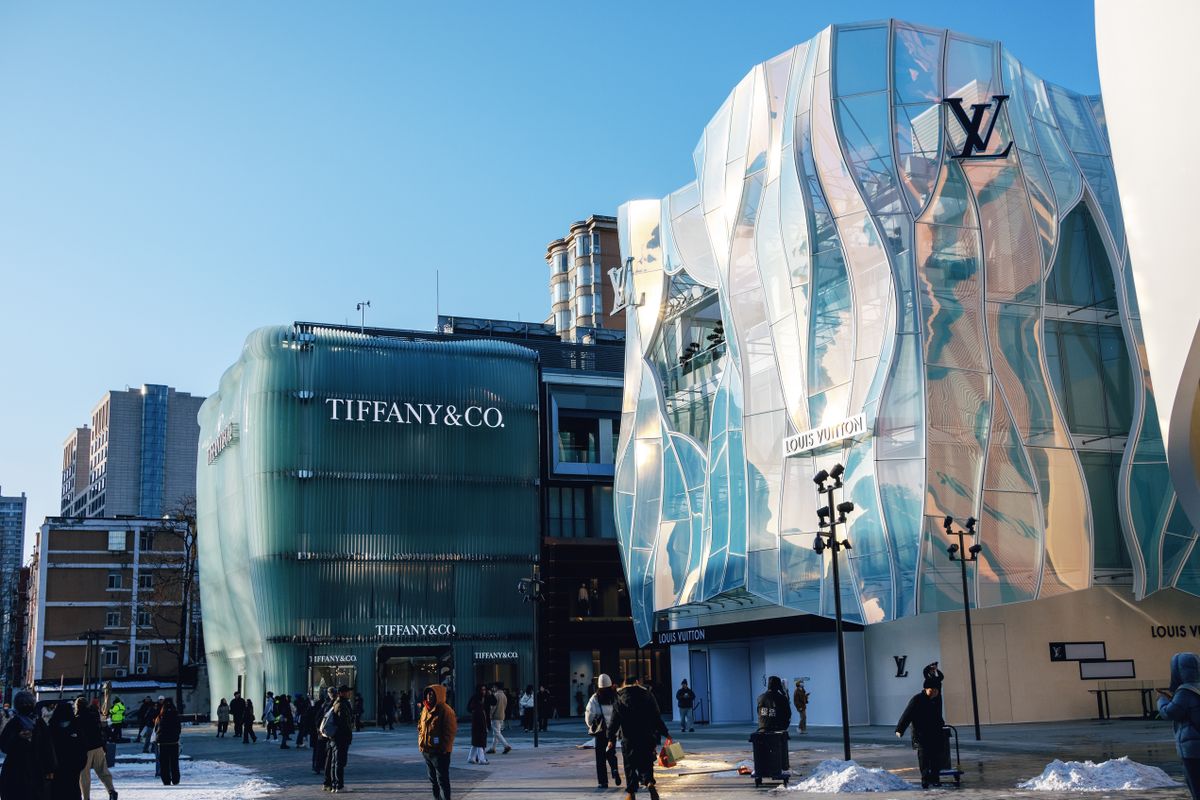
China has roughly 1.4 billion consumers, a growing middle class with strong brand aspirations, and a digital commerce ecosystem unlike anything in the West. Yet for every Starbucks or Lululemon that has built genuine resonance there, a dozen well-funded Western brands have quietly exited. The difference, consistently, comes down to localization — not the cosmetic kind, but a deep, structural rethinking of how the brand presents, communicates, and operates on Chinese soil.
This guide lays out the practical framework: from naming strategy and packaging adaptation to regulatory compliance and digital-channel fit.
Why Generic Translation Fails: The Naming Problem
A brand name in China is not a transliteration exercise. It is a strategic asset. Chinese consumers interact with names that carry meaning — phonetic, semantic, or both — and a Western brand that ignores this starts at a disadvantage.
The three primary approaches are:
- Phonetic (音译, yīnyì): The Chinese name mirrors the sound of the original. Coca-Cola became 可口可乐 (Kěkǒu Kělè) — not just phonetically close, but meaning “delicious happiness.” That was deliberate, not lucky.
- Semantic (意译, yìyì): The name is translated based on meaning rather than sound. Apple became 苹果 (Píngguǒ), the Chinese word for apple — simple, clean, memorable.
- Hybrid: Both sound and meaning are approximated. Nike became 耐克 (Nài Kè), meaning “enduring and overcomes” — aspirational, athletic, and phonetically close.
Getting this wrong has real consequences. A name that sounds like an insult, a funeral reference, or a competitor’s product will circulate on social media before your launch campaign is even over. Before finalizing a Chinese name, test it with native speakers from multiple regions — Mandarin, Cantonese, and Shanghainese phonology can produce very different associations from the same characters.
Packaging and Visual Identity: The Rules Have Changed
China’s General Administration of Customs (GACC) and the State Administration for Market Regulation (SAMR) both impose requirements on product labeling. For food and beverage, the GB 7718-2011 national standard mandates Chinese-language labels covering product name, ingredient list, allergen information, net content, manufacturer details, and shelf life. These are not suggestions — non-compliant labeling is grounds for customs detention and SAMR fines.
Beyond compliance, effective packaging for the Chinese market incorporates:
- Color psychology: Red signals luck and celebration; gold signals premium status. White and black are associated with mourning — acceptable in luxury contexts but risky in mass-market food and personal care.
- Festival-driven SKUs: Limited packaging for Chinese New Year, Mid-Autumn Festival (月饼 mooncake box designs), and 618/Double 11 shopping festivals drives significant revenue. Starbucks’ annual Lunar New Year merchandise generates outsized media attention relative to its production cost.
- QR codes and traceable packaging: Chinese consumers increasingly scan QR codes to verify authenticity — critical for premium, health, and imported categories. Integrating compliant QR authentication systems from the packaging stage prevents counterfeiting issues downstream.
Digital Ecosystem Adaptation: You Cannot Port Your Global Stack
The assumption that a brand’s global website, social channels, and CRM system can simply operate in China is consistently wrong. The Great Firewall blocks Google, Facebook, Instagram, Twitter/X, and most Western ad-tech infrastructure. Brands need a parallel digital presence built natively on Chinese platforms.
The core stack for most consumer brands entering China:
- WeChat Official Account (微信公众号): The primary owned-media channel. Brands publish long-form content, manage CRM via Mini Programs, and run customer service here. A verified subscription account requires a Chinese business registration or a partnership with a qualified local entity.
- Weibo: The equivalent of Twitter/X for announcements, campaigns, and influencer collaborations. Verification requires a Chinese business license (营业执照).
- Xiaohongshu (小红书 / RED): The platform of record for beauty, fashion, food, and lifestyle product discovery. Reviews on RED influence purchase decisions at a rate comparable to Google search in other markets.
- Douyin (抖音): The Chinese version of TikTok, running on entirely separate infrastructure with its own algorithm and creator ecosystem. Short-video commerce through Douyin’s in-app shopping features has become a primary sales channel for fashion, cosmetics, and food brands.
Understanding how to use KOLs and platform-native influencer marketing is essential — organic reach on these platforms without paid amplification or KOL partnerships is limited, especially for foreign brands without existing Chinese brand equity.
Regulatory Compliance for Brand Claims
The Advertising Law of the People’s Republic of China (2021 revision) imposes strict rules on how brands can describe their products. Key prohibitions include:
- Absolute superlatives (“best,” “number one,” “most”) are prohibited unless backed by verified third-party data and approved by the State Administration for Market Regulation (SAMR).
- Health and efficacy claims for food products require approval from the National Health Commission (NHC) under the Healthy Food (保健食品) registration process.
- Comparative advertising (explicitly naming a competitor) is allowed only under narrow conditions and routinely triggers SAMR complaints.
Foreign brands frequently run afoul of these rules by importing copy from global campaigns without legal review. SAMR has issued six-figure fines (in RMB) and compelled public retractions from well-known international companies. A Chinese advertising law specialist review is not optional — it is a pre-launch cost of doing business.
For further guidance, the US Commercial Service China office at trade.gov/china publishes regularly updated market briefs that cover regulatory changes affecting foreign brands, including advertising law enforcement trends.
Pricing Architecture: Premium vs. Value Positioning
China’s consumer market is stratified, and brand positioning must reflect the tier you are targeting. The tiering commonly used by multinational consumer goods companies breaks into:
- Tier 1 cities (Beijing, Shanghai, Guangzhou, Shenzhen): High disposable income, strong brand awareness, heavy luxury and premium-goods spending. Price sensitivity is lower, but expectations for brand authenticity and story are high.
- Tier 2-3 cities (Chengdu, Xi’an, Wuhan, Hangzhou, etc.): Fastest-growing consumer base. Pinduoduo’s explosive growth was built on this demographic. Price-value equation is more important; “premiumization” is still happening but at a lower price point.
- Lower-tier markets and rural areas: Accessible primarily through Pinduoduo, Taobao, and JD’s village agent networks. Volume-driven, not brand-driven — only relevant for FMCG categories at scale.
Brands that price uniformly across tiers leave money on the table in Tier 1 and lose competitiveness in Tier 2+. Regional SKU differentiation — different packaging sizes, formulations, or bundling — is standard practice among successful FMCG entrants.
The Local Partner Question
Many Western brands try to operate their China localization effort entirely from headquarters. This rarely works well. Chinese consumers detect inauthenticity quickly, and campaign creative that was produced by non-Chinese teams often misses cultural context in ways that trigger negative social media reactions.
The structural options:
- Wholly Foreign-Owned Enterprise (WFOE): Full ownership, full control. Requires Chinese business registration, is subject to all local labor laws and tax obligations, and demands significant operational investment. Best for brands committing to long-term China presence.
- Joint Venture (JV): Shared ownership with a Chinese partner. The partner brings distribution relationships, regulatory knowledge, and consumer trust; the foreign brand brings product, IP, and global cache. JVs require careful IP structuring — protecting your intellectual property in China before entering any partnership is non-negotiable.
- Distributor / Tmall Global (天猫国际) model: Lower investment, faster market test. A qualified TP (Tmall Partner) agency manages the storefront, customer service, and logistics. This is the standard entry point for mid-size Western brands testing Chinese demand before committing to a WFOE.
The China market entry step-by-step guide on GreatHandshake walks through the structural tradeoffs in detail, including the specific registration documents required for each entity type.
Measuring Success in China: Different Metrics, Different Timelines
Western brands accustomed to measuring brand investment through quarterly ROI cycles often misread China’s market. Building genuine brand equity — the kind that survives a product recall, a social media controversy, or a competitor’s aggressive discount campaign — takes three to five years of consistent presence.
The metrics that matter in China:
- Search index on Baidu and WeChat Search: Brand name search volume is a leading indicator of consumer awareness. Rising search index ahead of a product launch indicates your KOL and PR strategy is working.
- RED review volume and sentiment: Xiaohongshu reviews drive purchase intent in a way that no paid media can replicate. Brands track RED note volume and comment sentiment as a real-time brand health signal.
- Repeat purchase rate on Tmall/JD: First-time purchase conversion is easily inflated by discounting. Repeat purchase rate — measured at the 30, 60, and 90-day marks — tells you whether the product is delivering on its promise in-market.
The US-China Business Council publishes an annual member survey at uschina.org that includes reported business conditions, market access barriers, and brand performance benchmarks from companies operating across industries. It is the most credible benchmarking source available for companies evaluating their China brand investment against peer performance.
The Bottom Line
Localizing a Western brand for China is not a marketing project. It is an operational, legal, and strategic undertaking that touches naming, packaging, digital infrastructure, compliance, pricing, and partnership structure. Brands that approach it as a checklist exercise — translate the website, open a WeChat account, run a CNY campaign — reliably underperform.
The brands that win in China treat localization as a core competency, invest in Chinese-speaking teams with real market authority, and build for the long arc. The market rewards that commitment with access to a consumer base that, at scale, rivals the entirety of Western Europe.