
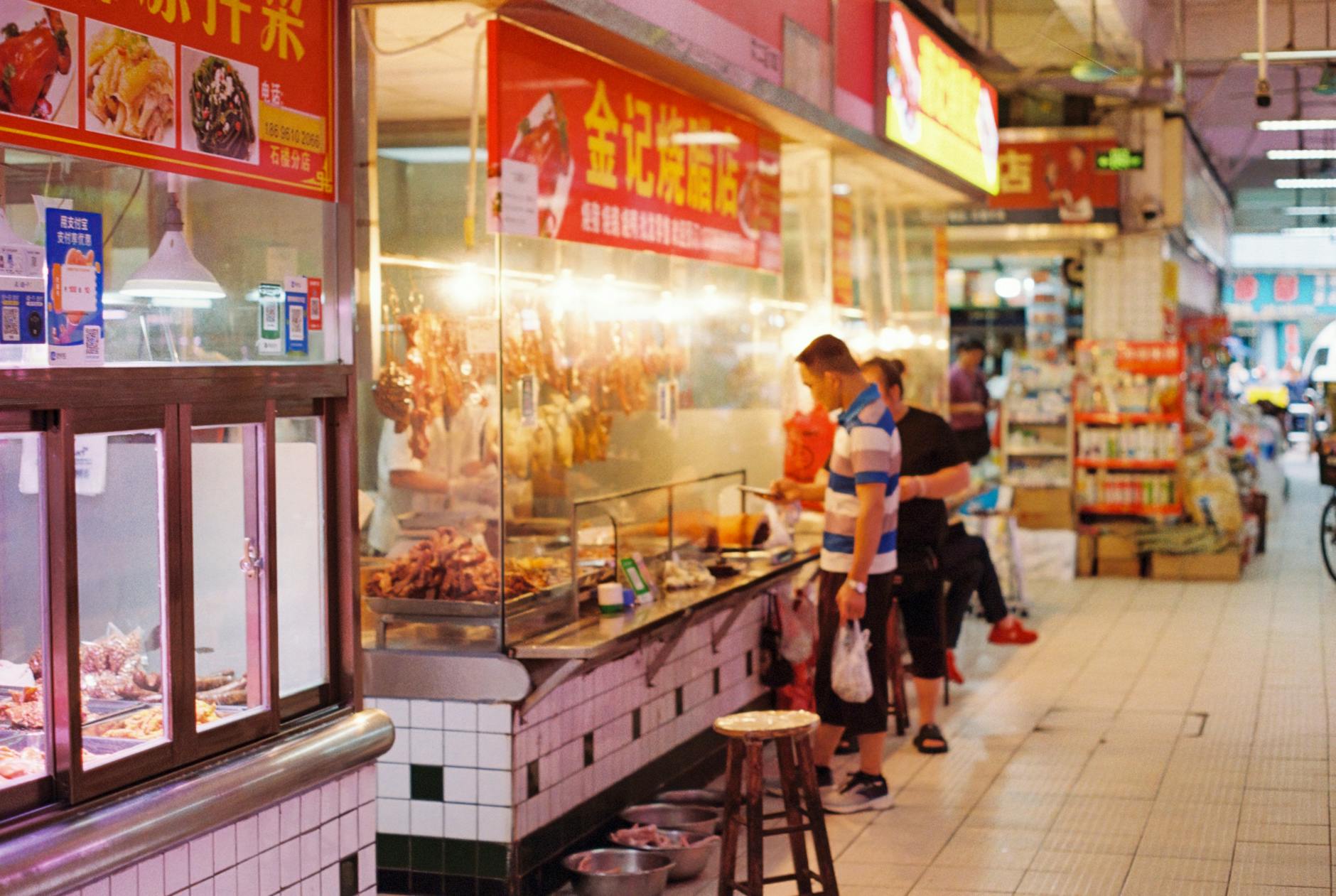
China’s middle class is frequently cited as a macroeconomic trend. What that framing misses is the operational detail – which segments are spending, on what, through which channels, and how loyalty actually forms in a market where domestic alternatives have never been stronger. For Western brands, understanding these mechanics is the difference between a successful China entry and an expensive lesson in assumptions.
Who Is China’s Middle Class – and How Large Is It?
The most commonly cited figure comes from McKinsey and the China National Bureau of Statistics: roughly 400 to 500 million people in China can be classified as middle class, defined as households earning between RMB 60,000 and RMB 229,000 per year (approximately USD 8,300 to USD 31,500). By 2030, that cohort is projected to expand toward 800 million – making it the largest middle-class consumer base on earth.
But income brackets obscure important nuance. China’s middle class is not a monolithic block. The upper-middle tier (household incomes above RMB 160,000) skews toward Tier 1 and New Tier 1 cities like Shanghai, Beijing, Chengdu, and Hangzhou. This segment is brand-conscious, internationally traveled, and comparatively loyal to premium foreign brands. The mass middle – the far larger segment spread across Tier 2, 3, and 4 cities – is more value-sensitive, more reliant on social proof, and increasingly captured by domestic brands that understand their price-quality expectations better than most foreign entrants do.
For market entry decisions, this bifurcation matters enormously. A luxury skincare brand and a mid-range kitchen appliance company face almost entirely different consumers, even if both are targeting “the Chinese middle class.”
The Rise of Aspirational Spending – and Its Limits
Through the 2010s, China’s middle class drove explosive growth in aspirational categories: international travel, luxury goods, premium infant formula, and imported cosmetics. That era is not over, but it has matured. Several dynamics are reshaping spending behavior:
Post-Pandemic Confidence Shifts
The three years of COVID-19 restrictions fundamentally altered discretionary spending patterns. Domestic travel surged as international tourism became inaccessible, accelerating the development of local leisure and hospitality markets. Consumer confidence, measured quarterly by the National Bureau of Statistics, has recovered but remains below pre-2020 levels, with households showing greater preference for savings and value-oriented purchases in categories like food, apparel, and home goods.
Guochao: The Domestic Brand Renaissance
Guochao – loosely translated as “national trend” or “China chic” – is not a marketing gimmick. It reflects a genuine shift in brand preference among younger middle-class consumers, particularly those born after 1995. Domestic brands like Li-Ning in sportswear, Perfect Diary in cosmetics, and Xiaomi in consumer electronics have captured significant market share from foreign incumbents by combining competitive pricing with culturally resonant branding. Western companies entering China in 2026 must account for domestic competition that is now sophisticated, well-funded, and genuinely preferred by a growing segment of middle-class buyers.
The Premiumization Paradox
At the same time, premiumization continues in specific categories. Chinese middle-class consumers are willing to pay premium prices for products where the quality differential is perceived as real: imported wine, specialty coffee, imported dairy, high-end baby products, and premium healthcare. The key word is “perceived.” Foreign brands that rely on country-of-origin cachet alone – without demonstrably better quality, safety credentials, or experience – find that premium positioning erodes quickly once domestic competitors enter the same segment.
Where the Middle Class Shops: Channel Dynamics
Understanding the Chinese middle class requires understanding how they discover, evaluate, and purchase products. The channel landscape is unlike anything in Western markets.
Social Commerce as the Default Discovery Layer
Chinese consumers – particularly in the 25-45 age bracket that forms the core of the middle class – rely overwhelmingly on social platforms for product discovery. Xiaohongshu (RED) functions as a combination of Pinterest and product review platform; a single authentic review from a real user carries more weight than a polished advertising campaign. Douyin (Chinese TikTok) has built a live-commerce ecosystem where billions of RMB change hands during prime-time broadcasts. Weibo remains relevant for brand announcements and trending topics.
For Western brands, this means the traditional model of brand-building through mass advertising does not translate. Social media presence – built through genuine content, collaborations with Key Opinion Leaders (KOLs) and Key Opinion Consumers (KOCs), and authentic reviews – is the primary awareness driver. As covered in our guide on how to use Daigou and KOLs to enter the Chinese market, the influencer ecosystem in China requires a different investment model than Western influencer marketing.
Platform Diversity Beyond Tmall
The default entry point for most Western brands is Tmall Global, Alibaba’s cross-border e-commerce platform. That remains a viable channel, but it is no longer the only one. JD.com’s cross-border platform (Jingdong Quanqiu Gou) is particularly strong in electronics, home appliances, and premium goods. Pinduoduo, long associated with discount shopping, has moved upmarket in certain categories. Xiaohongshu now operates a native commerce function where discovery and purchase happen in the same session. For a full breakdown of platform dynamics, see our analysis of China’s e-commerce platforms beyond Alibaba.
Offline Is Not Dead
For categories like premium food, cosmetics, and fashion, offline retail continues to drive meaningful conversion. The concept of xinling xiaofei (experiential consumption) has fueled investment in flagship stores, pop-up experiences, and curated retail concepts in Tier 1 cities. LVMH, Estée Lauder, and Lululemon have all expanded their physical footprints in China during periods when Western analysts were predicting the death of offline retail. For middle-class consumers who want to verify quality before purchasing, tactile retail remains a trust-building mechanism.
Sector Opportunities Tied to Middle-Class Growth
Certain categories track middle-class expansion more directly than others. Foreign companies planning market entry should prioritize sectors where middle-class behavior creates structural demand that domestic supply has not yet fully captured.
Healthcare and Wellness
China’s middle class spends an increasing share of income on preventive healthcare, dietary supplements, fitness, and medical aesthetics. The market for imported health supplements alone exceeded USD 5 billion in 2024, per data from the China Chamber of Commerce for Import and Export of Medicines and Health Products. Regulatory entry requires product registration with the National Medical Products Administration (NMPA) – a process that demands careful planning but provides durable competitive protection once completed. The healthcare market entry guide on this site covers the NMPA registration pathway in detail.
Education and Skill Development
Despite the Ministry of Education’s 2021 “double reduction” policy (shuangjian) that banned for-profit tutoring in core academic subjects for K-9 students, the education market has not contracted – it has pivoted. Middle-class parents continue to spend heavily on STEM enrichment, arts, sports, language acquisition (English and increasingly other languages), and vocational skills for older children. Adult professional development – particularly in technology, finance, and management – is a growing segment with relatively light regulatory burden compared to K-12 education.
Premium Food and Beverage
Food safety concerns, post-melamine scandal awareness, and rising disposable incomes have created durable demand for imported and premium domestic food products. Categories seeing sustained growth include specialty coffee (China’s coffee shop count surpassed South Korea to become the world’s largest in 2023), craft spirits, premium dairy, and health-oriented snack foods. Western food brands entering China should note that product labeling, import permits, and General Administration of Customs (GAC) registration requirements are enforced strictly; non-compliance leads to shipment detention at ports of entry.
Sustainable and Ethical Products
ESG consciousness is rising among China’s urban upper-middle class, particularly in the 25-40 age bracket. Demand for environmentally certified products, sustainably sourced materials, and transparent supply chains is not yet as strong as in European markets, but it is growing measurably. Brands that have built genuine sustainability credentials – backed by third-party certifications recognizable to Chinese consumers – can command modest price premiums in categories like outdoor apparel, personal care, and food.
Pricing Strategy: The Most Common Strategic Error
Western brands consistently overprice at market entry, relying on imported goods tariffs, logistics costs, and brand premium assumptions that do not hold in today’s environment. The structural issue: cross-border e-commerce platforms have dramatically reduced the price gap between imported goods and domestic alternatives. Chinese consumers can easily compare prices across platforms, and domestic competitors price aggressively.
The pricing decision requires analysis of total landed cost (import duties, VAT, platform commission, logistics, KOL marketing), target margin, and competitive positioning. For most consumer goods categories, this means Western brands enter at prices 20-40% above equivalent domestic products – which is defensible only if quality differentiation is clear and credible. Our detailed breakdown of how to price products for the Chinese market addresses the cost-structure analysis needed before setting retail prices.
What Established Brands Get Wrong
The failure record of Western brands in China is not a short list. The common threads in high-profile exits are instructive: underinvestment in local management and decision-making authority, over-reliance on global brand templates that don’t resonate with Chinese cultural preferences, failure to adapt product formulations or sizes to local tastes, and delayed responses to fast-moving competitive dynamics. Home Depot, Mattel’s Barbie flagship stores, and multiple international fast-food chains have all experienced the same pattern – a culturally uninformed entry followed by a costly retreat.
The US-China Business Council, in its annual member survey, consistently identifies “understanding local consumer preferences” and “adapting products and services to local needs” as the top two success factors for foreign companies operating in China. These are not soft considerations; they are operational imperatives. The lessons from Western brand failures in China are detailed and worth reviewing before finalizing any market entry plan.
Regulatory and Structural Considerations
Access to China’s middle-class consumer market is not purely a marketing challenge. Several regulatory dimensions affect what foreign brands can and cannot do:
- Cross-border e-commerce (CBEC) rules: Products sold via CBEC platforms benefit from reduced import tariffs and simplified customs clearance under the Catalogue of Cross-border E-commerce Retail Imports. Products outside the catalogue face standard import duties and licensing requirements. MOFCOM maintains the current catalogue list, updated periodically via mofcom.gov.cn.
- Product registration: Categories including food, health supplements, cosmetics, and medical devices require pre-market registration with relevant Chinese authorities (NMPA, GACC, or Ministry of Agriculture depending on category) before sale through any channel.
- Advertising law: The 2015 Advertising Law (amended 2021) imposes strict limits on superlative claims, endorsements by minors, and environmental claims. Violations carry fines and platform delisting. The US Commercial Service China team at trade.gov/china provides market intelligence briefs covering current enforcement trends.
- Data localization: Companies collecting consumer data in China through apps or platforms must comply with the Personal Information Protection Law (PIPL), which imposes data localization requirements similar in some respects to GDPR but with distinct enforcement mechanisms.
Building a Position That Lasts
The companies that have built durable positions in China’s middle-class market share common characteristics: they localized product and marketing decisions at the country level, they invested in understanding regional variation within China (a consumer in Chengdu behaves differently from one in Shenzhen), they built genuine social media presence before relying on paid acquisition, and they planned for a 3-5 year investment horizon before expecting profitability.
China’s middle class is not a market you can enter with a global playbook and a local distributor. It requires the same level of strategic investment that companies make when entering any major market – perhaps more, given the competitive intensity and the speed at which consumer preferences shift. The payoff, for brands that execute well, is access to the world’s largest and fastest-growing consumer cohort at a scale unmatched anywhere else on earth.