
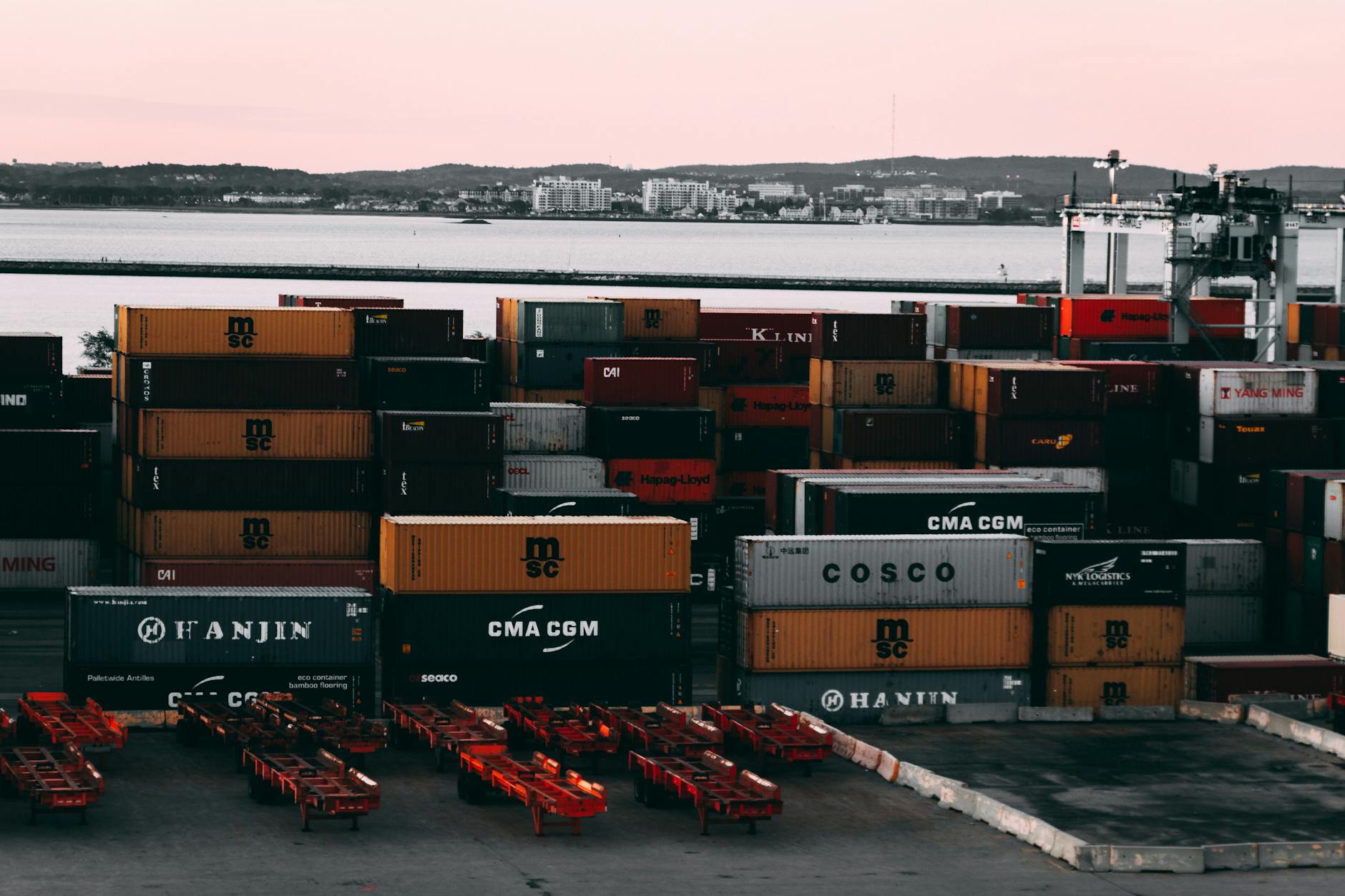
Since 2018, the tariff war between the United States and China has fundamentally altered how goods move across the Pacific. What began as a targeted set of Section 301 duties on Chinese technology goods has grown into a sprawling web of retaliatory levies, exemptions, exclusions, and rerouting strategies that continues to reshape global trade today. For Western businesses sourcing from or selling into China, understanding how these shifts work is no longer optional — it is a core operational requirement.
The Tariff Landscape in 2026
The United States currently maintains duties of 7.5% to 25% on several hundred billion dollars worth of Chinese imports across four tranches. Additional targeted levies on strategic goods — semiconductors, electric vehicles, solar panels, and battery components — push effective tariff rates significantly higher in those categories. China’s retaliatory tariffs on American agricultural products, aircraft, and select industrial goods remain in place, creating a two-way cost burden that neither side has fully unwound.
The practical effect: direct US-China trade has become more expensive, more complicated, and for some product categories, no longer the default route.
How Trade Routes Have Actually Shifted
The most significant consequence of the tariff regime has been the acceleration of trade triangulation — routing goods through third countries to alter their country of origin status. Vietnam, Mexico, Thailand, and Malaysia have all seen dramatic surges in manufacturing investment and re-export activity as a result.
Here is how it typically works in practice:
- Partial processing in a third country: Chinese-made components are shipped to Vietnam or Malaysia, undergo substantial transformation, and are then exported to the US under Vietnamese or Malaysian origin. When done legitimately — meeting rules of origin requirements — this is legal and commonly used.
- Full factory relocation: Larger manufacturers, especially in electronics, furniture, and apparel, have moved entire production lines to avoid tariff exposure. Many Chinese-owned factories in Vietnam are now exporting directly to Western markets.
- Mexico nearshoring: The combination of USMCA preferential treatment and proximity to US consumers has made Mexico an increasingly attractive final-assembly destination for goods with Chinese-sourced components.
For sourcing managers and import teams, this means verifying country of origin has become a more demanding process. US Customs and Border Protection has significantly increased origin fraud enforcement, and penalties for misclassification are severe. Buyers working with suppliers who have recently shifted operations should conduct independent origin audits before relying on new country-of-origin claims. See our guide on how to conduct due diligence on Chinese business partners for a framework that applies equally well to third-country suppliers.
What This Means for Western Companies Sourcing from China
If you are importing Chinese-made goods into the US, the first step is to get clear on your actual landed cost including tariffs — not just the factory price. Many sourcing teams are still using pre-tariff cost models that understate true expense by 15 to 30 percent.
Key actions for sourcing teams:
- Audit your HTS classifications: Tariff rates vary significantly at the 8 and 10-digit HTS code level. A professional customs broker can often identify classification opportunities that reduce your duty exposure without any change to the product itself.
- Apply for exclusions: USTR has periodically issued product-specific exclusions from Section 301 tariffs for goods where no viable US or alternative-country supply exists. Monitor the USTR exclusion process and apply where you have a legitimate case.
- Diversify incrementally: Full supply chain migration is expensive and disruptive. Most experienced operators recommend a China Plus One approach: maintain your Chinese supplier relationships while qualifying one alternative-country supplier for 20 to 30 percent of volume. This creates leverage and resilience without abandoning proven quality.
- Review First Sale valuation: If you are importing through a trading company or middleman, you may be able to use the factory-level price (first sale) rather than the intermediary price for customs valuation, reducing the duty base.
For a deeper look at managing your supply chain exposure, see our article on quality control in Chinese manufacturing, which covers factory auditing and supplier qualification.
What This Means for Western Companies Selling Into China
Chinese retaliatory tariffs have hit American agricultural exporters hardest — soybeans, pork, corn, and dairy products all face elevated duties that have redirected US farm exports to other markets while China has deepened ties with Brazilian and Argentine suppliers. American industrial manufacturers have also faced headwinds in sectors where Chinese domestic alternatives now exist.
For Western companies trying to grow China revenue, the tariff environment reinforces a well-established strategic principle: manufacture locally, sell locally. Companies with Wholly Foreign-Owned Enterprises (WFOEs) or joint ventures in China that produce domestically are largely insulated from import tariffs. This structure also aligns with Chinese regulatory preferences and often results in faster market access and lower distribution costs.
Companies without a local manufacturing presence should model their China pricing carefully to account for import duties, VAT on imports, and the additional logistics cost of cross-border shipping. In categories where Chinese domestic competitors operate tariff-free, building a convincing premium positioning is essential to justify the landed cost gap.
The Political Dimension: Planning for Volatility
Tariff policy between the US and China has proven to be a variable and politically driven instrument. Rates have been raised, paused, partially rolled back, and reimposed across multiple administrations. The WTO’s dispute settlement processes have produced findings against both US and Chinese measures, but neither side has fully complied with adverse rulings.
For business planning purposes, the most prudent assumption is that tariff volatility will persist for at least the next five years. US-China trade policy is now deeply embedded in domestic political narratives on both sides, and neither administration is likely to pursue a comprehensive rollback before it is politically advantageous to do so.
According to analysis from the US International Trade Administration, US-China bilateral trade has nonetheless remained substantial despite tariff pressures, with services trade and investment flows partially offsetting goods trade friction. Businesses that engage China only through goods trade are getting an incomplete picture of the full commercial relationship.
Practical Steps for Right Now
- Run a tariff exposure audit: Map every Chinese-origin product you import or export, its HTS code, and the applicable duty rate. This baseline is essential for any strategic planning.
- Build scenario models: Prepare financial models for tariff rates 10 points higher and 10 points lower than current. Know your break-even on alternative sourcing before you need it.
- Engage a licensed customs broker and trade attorney: The rules of origin regulations, exclusion processes, and classification strategies are complex enough that professional guidance pays for itself quickly.
- Stay current: The Federal Register, USTR website, and China’s MOFCOM all publish tariff-related notices on a rolling basis. Assign someone on your team to monitor these or use a trade intelligence service.
The tariff environment between the US and China is unlikely to normalize soon. But businesses that treat it as a permanent structural feature — rather than a temporary inconvenience — are better positioned to compete on both sides of the Pacific.